
Nature is beautiful, but it can also be incredibly unforgiving. While some predators rely on brute strength or razor-sharp claws, the most venomous animals on the planet use chemical warfare to subdue their prey. These toxins are often so potent that a single drop is enough to end a human life in minutes. From the depths of the Australian oceans to the dense jungles of the Amazon, danger lurks in the most unexpected places.
Understanding these creatures is not just about fear; it is about respecting the complex evolutionary biology that created such efficient killers. Just as we marvel at the most expensive substances synthesized in labs, nature has synthesized its own “liquid gold” in the form of neurotoxins and hemotoxins. According to the World Health Organization, venomous bites are a major global health issue. Here are the 10 most venomous animals you should never mess with.
Venom vs. Poison: What is the Difference?
The distinction between venomous and poisonous animals lies in the delivery method. Venom must be injected into the bloodstream through a bite, sting, or spur (like a snake or spider), whereas poison is harmful when swallowed, inhaled, or absorbed through the skin (like a poison dart frog or pufferfish).
Toxicity Scale (LD50 Rating)
| Animal | Type | Primary Danger |
|---|---|---|
| Inland Taipan | Reptile | Neurotoxic venom (most potent) |
| Box Jellyfish | Cnidarian | Cardiac arrest in minutes |
| Blue-Ringed Octopus | Cephalopod | Paralysis (Tetrodotoxin) |
| Stonefish | Fish | Extreme pain & tissue death |
| Brazilian Wandering Spider | Arachnid | Neurotoxic shock |
Table of Contents
1. Inland Taipan (Australia)
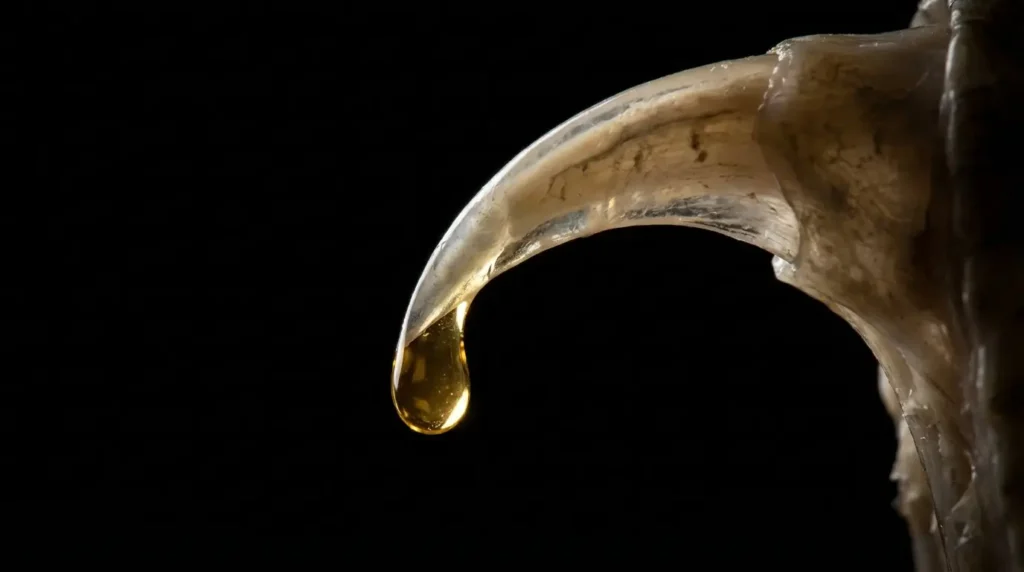
The Inland Taipan is widely regarded as the snake with the most toxic venom of any reptile on Earth. A single bite contains enough lethality to kill roughly 100 fully grown men or 250,000 mice. Its venom is specially adapted to hunt warm-blooded mammals, causing rapid paralysis and hemorrhaging.
Despite its terrifying reputation as one of the most venomous animals, the Inland Taipan is actually quite shy and reclusive. It lives in the remote, semi-arid regions of central east Australia and rarely encounters humans. There have been very few recorded fatalities because bites are treated quickly with antivenom, but without treatment, death could occur in under 45 minutes.
2. Box Jellyfish (Indo-Pacific)
Floating like a ghostly lantern in the ocean, the Box Jellyfish is often cited as the most venomous marine creature known to science. Its tentacles are covered in millions of cnidocytes (stinging cells) that act like microscopic hypodermic needles. The venom acts terrifyingly fast, attacking the heart, nervous system, and skin cells simultaneously.
The pain is so overwhelming that human victims often go into shock and drown before they can even reach the shore. Survivors are often left with permanent, whip-like scars. This transparency and lethality make it one of the premier most venomous animals in the tropical waters of Australia and Southeast Asia.
3. Blue-Ringed Octopus (Pacific Ocean)
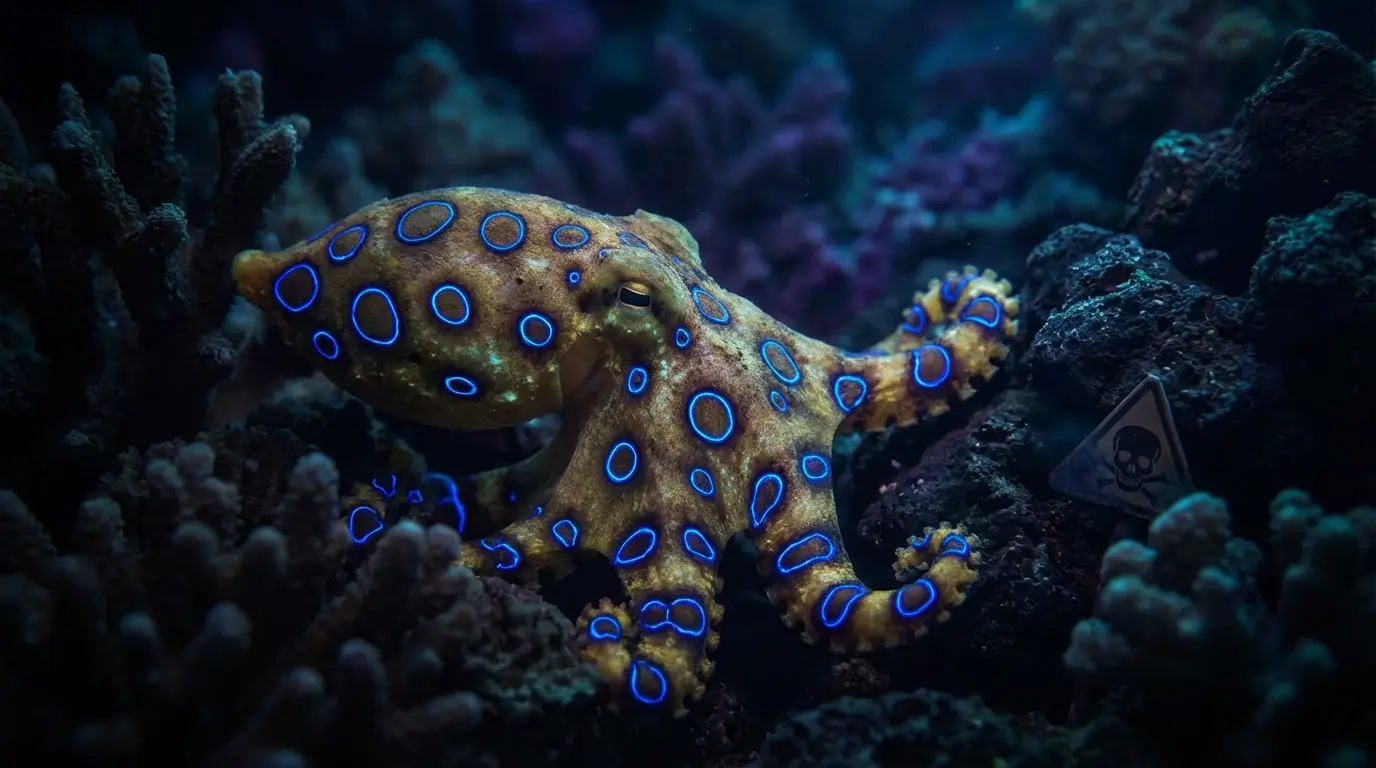
Do not let its size fool you. The Blue-Ringed Octopus is no larger than a golf ball, but it carries enough venom to kill 26 adult humans within minutes. When threatened, its dull skin flashes with bright, iridescent blue rings as a warning. It is one of the most deceptively beautiful most venomous animals in the ocean.
Its venom contains tetrodotoxin, a neurotoxin 1,200 times more powerful than cyanide. The bite is often painless, so victims may not realize they have been envenomated until respiratory paralysis sets in. There is no known antivenom; the only treatment is artificial respiration until the toxin leaves the body.
4. Stonefish (Indo-Pacific)
The Stonefish holds the title of the most venomous fish in the world. It is a master of camouflage, looking exactly like an encrusted rock or a piece of coral on the sea floor. The danger comes when an unsuspecting swimmer steps on it. The fish has 13 sharp dorsal spines that can pierce through reef shoes.
The venom causes excruciating pain, which has been described as the worst pain known to man. It can lead to tissue necrosis, shock, and heart failure. As one of the most venomous animals lurking in shallow waters, it is a primary reason why you should never walk on coral reefs.
5. Brazilian Wandering Spider (South America)
Also known as the Banana Spider, this arachnid is aggressive and highly toxic. Unlike many spiders that build webs and wait, the Brazilian Wandering Spider actively hunts the jungle floor at night. It often wanders into human settlements, hiding in shoes, clothes, or banana crates, making it one of the most dangerous urban pests.
Its venom is a potent neurotoxin that causes loss of muscle control, severe pain, and respiratory paralysis. Interestingly, a bite can also cause an unwanted and painful erection (priapism) in men that can last for hours, a side effect that researchers are studying for potential medical treatments.
6. Black Mamba (Africa)
The Black Mamba is not the most toxic snake on the list, but it is arguably the most feared. It is the fastest land snake in the world, capable of moving at speeds up to 12.5 mph. It is highly aggressive when cornered and strikes with deadly accuracy, often biting multiple times in quick succession.
Its venom is a fast-acting neurotoxin. Before the development of antivenom, a bite from a Black Mamba was 100% fatal, usually within 20 minutes to a few hours. Its combination of speed, aggression, and toxicity secures its place among the most venomous animals in Africa.
7. Sydney Funnel-Web Spider (Australia)
Found exclusively within a 100-mile radius of Sydney, this spider is a nightmare for Australian residents. The male Sydney Funnel-Web is significantly more dangerous than the female. Its venom contains a compound called Robustoxin, which specifically targets the nervous systems of primates and humans, while being harmless to other mammals like dogs or cats.
The spider is aggressive and will rear up, displaying massive fangs that are strong enough to pierce through a fingernail or soft shoe. Thanks to a successful antivenom program developed in 1981, there have been no confirmed deaths since, but it remains one of the most venomous animals in urban environments.
8. King Cobra (Asia)
The King Cobra is the longest venomous snake in the world, reaching lengths of up to 18 feet. While its venom is not the most potent drop-for-drop, the sheer volume it delivers in a single bite is massive. One bite can deliver enough neurotoxin to kill an Asian Elephant or 20 people.
It is unique among snakes because it builds nests for its eggs and guards them ferociously. The King Cobra feeds almost exclusively on other snakes, including other venomous species. Its iconic hood and intimidating growl make it a legend among the most venomous animals of the Asian forests.
9. Deathstalker Scorpion (North Africa/Middle East)
With a name like “Deathstalker,” this arachnid warns you before you even see it. It is responsible for over 75% of scorpion-related deaths annually. Its venom is a powerful cocktail of neurotoxins that causes extreme pain, convulsions, paralysis, and fluid buildup in the lungs.
While a sting is usually not fatal to a healthy adult, it is highly lethal to children and the elderly. Ironically, components of its venom are being researched for treating brain tumors and diabetes, proving that even the most venomous animals can have medical value.
10. Pufferfish (Global Oceans)
The Pufferfish (or Fugu) might look goofy when inflated, but it is the second most poisonous vertebrate on Earth. Its skin, liver, and ovaries contain tetrodotoxin, the same deadly substance found in the Blue-Ringed Octopus. There is enough toxin in one fish to kill 30 adult humans.
Despite this, it is considered a delicacy in Japan. Chefs must undergo years of rigorous training to learn how to prepare the fish by carefully removing the toxic parts. One slip of the knife can result in a meal that is literally to die for, securing its spot on the list of the most venomous animals (or technically, poisonous).
Conclusion
The most venomous animals in the world are a reminder that size does not equal power. A creature smaller than a coin can end a life faster than a lion. Respecting their habitats and maintaining a safe distance is the only way to coexist with these biological marvels. If you are interested in more dangerous locations where these creatures might live, check out our guide to dangerous islands you should avoid.