
Throughout history, civilizations have risen and fallen, leaving behind only whispers of their existence. While some metropolises remain the subject of myth and speculation, archaeologists have successfully uncovered Lost Cities that were hidden from the world for centuries.
Much like the Lost Treasures we discussed recently, these sites were once thought to be fiction. Here are 10 legendary Lost Cities that were actually found.
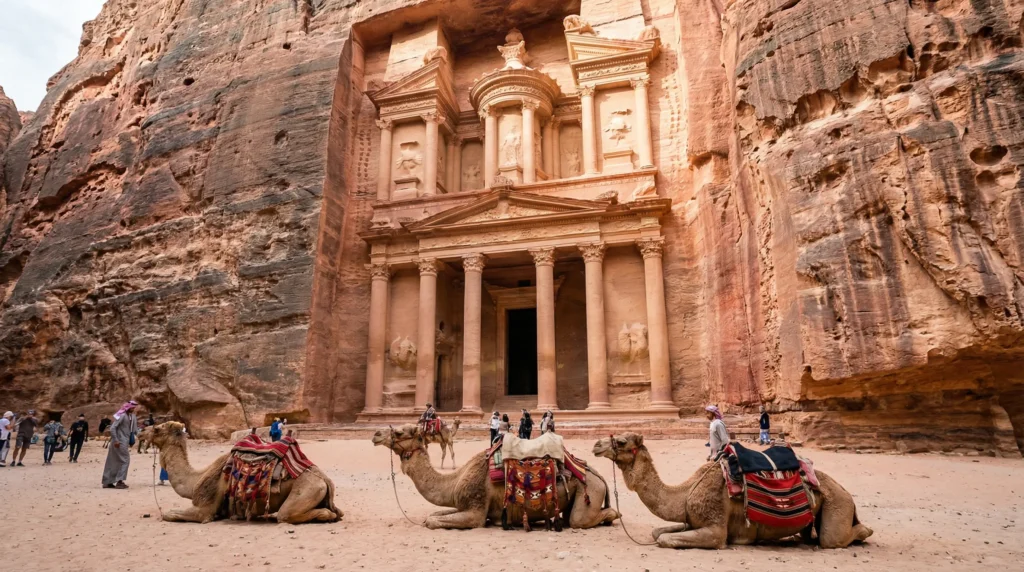
Table of Contents
1. Pompeii (Italy)
Pompeii was a thriving Roman resort town until Mount Vesuvius erupted in 79 AD, burying it under 20 feet of ash. It was lost for over 1,500 years until its accidental rediscovery in 1599.
The ash acted as a seal, preserving buildings, frescoes, and even loaves of bread perfectly. It is the most famous of all Lost Cities due to this preservation.
⚡ Fun Fact: The ash preserved the voids of victims’ bodies, allowing archaeologists to make plaster casts of them.
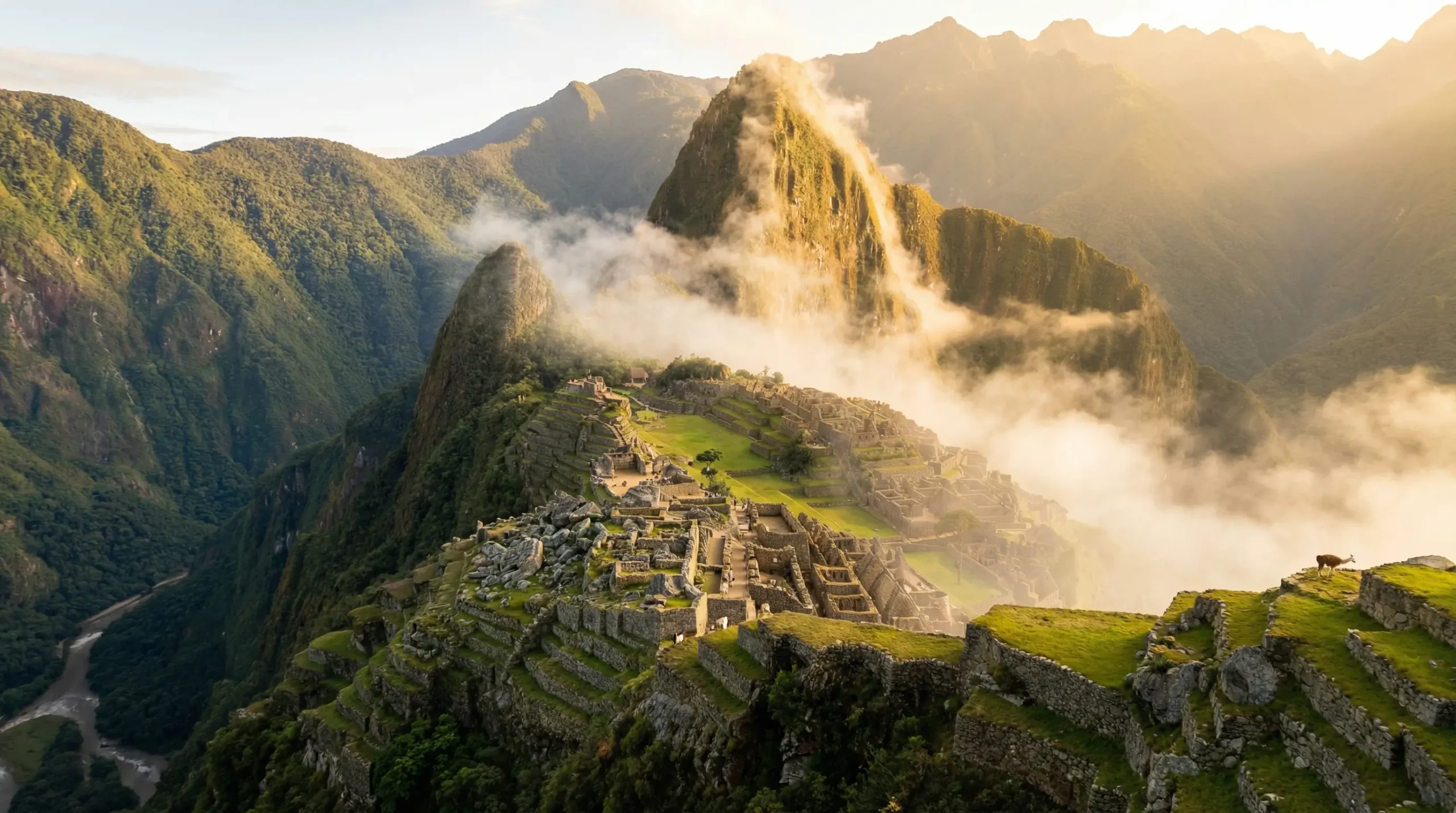
2. Machu Picchu (Peru)
Hidden high in the Andes, this Inca city was never found by the Spanish conquistadors. It remained unknown to the outside world until 1911 when Hiram Bingham rediscovered it.
It served as a royal estate or religious site. The stones were cut so precisely that not even a knife blade can fit between them.
⚡ Fun Fact: It was built without the use of wheels or iron tools.
3. Petra (Jordan)
Known as the “Rose City,” Petra was carved directly into pink sandstone cliffs. It was abandoned after an earthquake in 363 AD and changes in trade routes.
Swiss explorer Johann Ludwig Burckhardt tricked his way into the site in 1812, revealing the magnificent Treasury to the world.
⚡ Fun Fact: Only about 15% of Petra has been excavated; the rest is still underground.
4. Angkor Wat (Cambodia)
This massive temple complex was the center of the Khmer Empire. After the empire collapsed in the 15th century, the jungle consumed the city.
French explorers in the 19th century helped bring global attention to it. New laser scanning reveals that the city was far larger than anyone imagined.
⚡ Fun Fact: It is the largest religious monument in the world.
5. Troy (Turkey)
For centuries, Troy was considered a myth from Homer’s “Iliad.” In the 1870s, Heinrich Schliemann excavated a site in Turkey and proved it was real.
He found not just one city, but nine cities built on top of each other. One layer shows signs of fire, consistent with the legendary war.
⚡ Fun Fact: Schliemann actually damaged the site because he dug too fast and too deep.
[ADSENSE-MID-CONTENT]
6. Tikal (Guatemala)
Deep in the rainforest, Tikal was a powerful Maya kingdom. It was abandoned mysteriously around 900 AD and swallowed by the jungle.
It was officially rediscovered in 1848. Its massive limestone temples rise above the tree canopy, some standing over 200 feet tall.
⚡ Fun Fact: It was used as the rebel base location in the original “Star Wars” movie.
7. Great Zimbabwe (Zimbabwe)
This mysterious city in southern Africa was built with massive stone walls without any mortar. Early European explorers refused to believe Africans built it, but they were wrong.
Archaeology proved it was built by the ancestors of the Shona people. It was a wealthy trading hub connected to the Indian Ocean.
⚡ Fun Fact: The country of Zimbabwe is named after these ruins (meaning “houses of stone”).
8. Teotihuacan (Mexico)
The Aztecs found this abandoned city and named it “The Place Where the Gods Were Created.” Its original builders remain a mystery.
It features the massive Pyramid of the Sun and a precisely planned urban grid. It was once one of the largest cities on Earth before its collapse in the 6th century.
⚡ Fun Fact: The Pyramid of the Sun is the third-largest pyramid in the world.
9. Terracotta City of Xi’an (China)
In 1974, farmers digging a well found fragments of pottery. They had stumbled upon a necropolis containing 8,000 life-sized clay soldiers.
Built to protect Emperor Qin Shi Huang in the afterlife, the underground complex mimics a city layout. It is one of the greatest archaeological finds of all time.
⚡ Fun Fact: Every single soldier has a unique face.
10. Heracleion (Egypt)
For centuries, this city was thought to be a legend. It collapsed into the sea around the 2nd century BC due to soil liquefaction.
In 2000, underwater archaeologist Franck Goddio found it submerged in the Mediterranean. Divers found colossal statues and temples perfectly preserved underwater.
⚡ Fun Fact: It is one of the few lost cities you can only visit with scuba gear.
Uncovering the Past
These Lost Cities challenge our understanding of history. They remind us that nature eventually reclaims everything we build.
Which of these ruins would you most like to explore? Read more archaeology news at Archaeology Magazine. [ADSENSE-BEFORE-CONCLUSION]