
History is often presented as a clear timeline of progress, but the world is scattered with Mysterious Ancient Structures that refuse to fit neatly into our understanding of the past. From massive stone circles in England to underwater monoliths in Japan, these sites challenge the capabilities we typically attribute to our ancestors. Are these Mysterious Ancient Structures proof of lost technology, or simply feats of forgotten human ingenuity?
While we have successfully identified many Lost Cities like Pompeii and Machu Picchu, other ruins remain shrouded in enigma. Who built them, how did they move such massive stones, and perhaps most importantly, why? Here are 10 Mysterious Ancient Structures that continue to baffle scientists and historians alike.
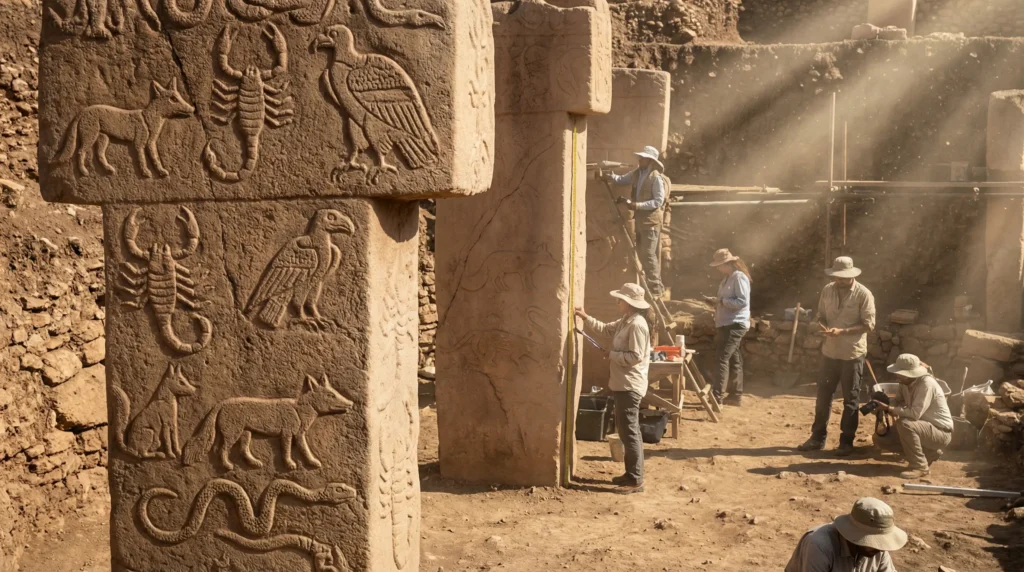
Table of Contents
1. Stonehenge (England)
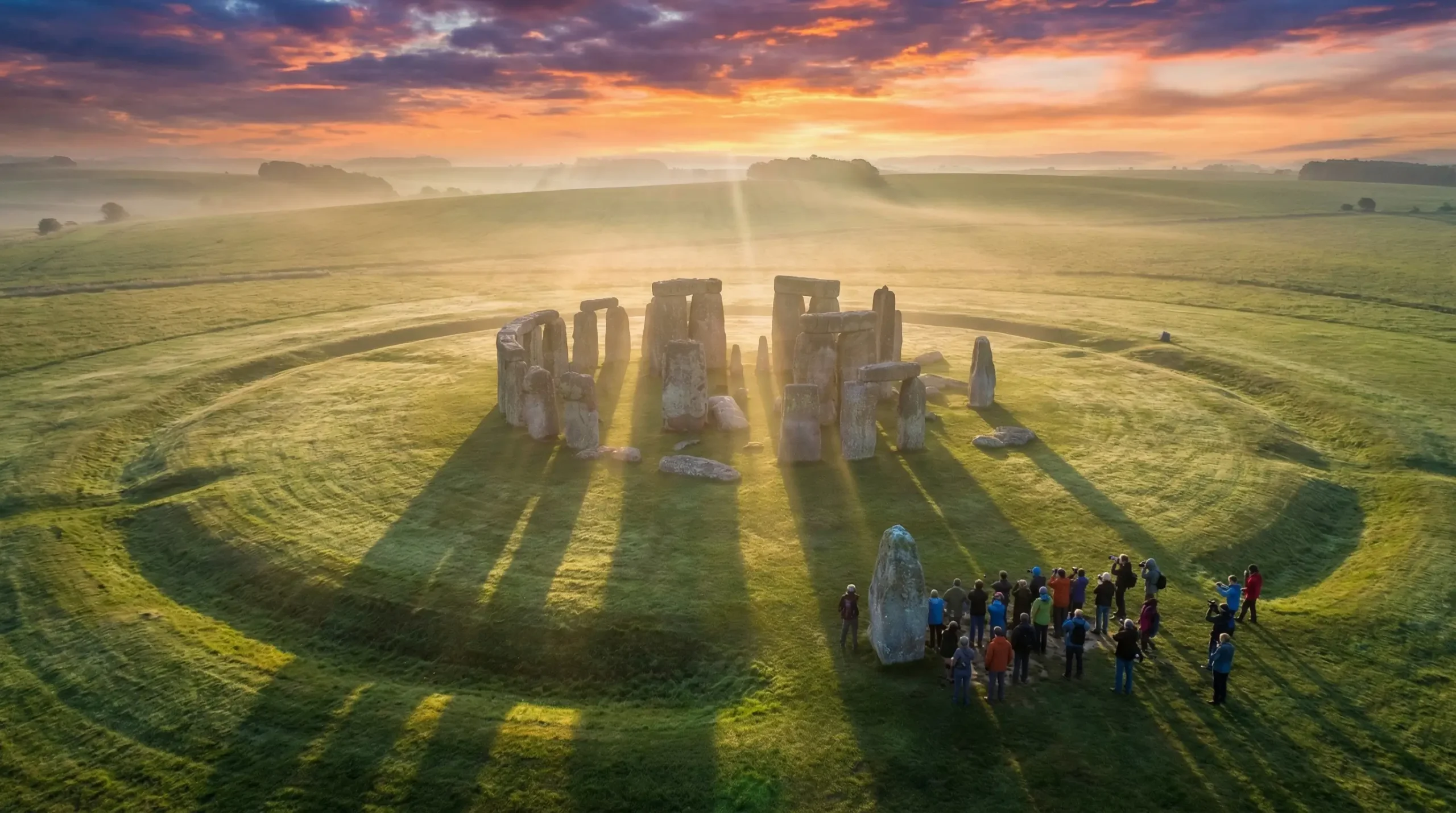
Built between 3000 BC and 2000 BC on the Salisbury Plain in Wiltshire, Stonehenge is perhaps the most famous of all Mysterious Ancient Structures in the world. The monument consists of a ring of standing stones, each around 13 feet high and weighing close to 25 tons. For centuries, antiquarians like William Stukeley in the 18th century attributed the site to Druids, but modern radiocarbon dating proves it was constructed at least 1,000 years before the Celts arrived in the region.
The true mystery lies in the engineering and logistics required to build these Mysterious Ancient Structures. The smaller “bluestones” were transported from the Preseli Hills in Wales, over 150 miles away, likely using sledges and rafts. Archaeologist Mike Parker Pearson has recently suggested the site was a center for ancestor worship, linked to the nearby settlement of Durrington Walls. Despite extensive study, the exact method of moving these stones remains a subject of intense debate.
2. Göbekli Tepe (Turkey)
Discovered in the 1990s by German archaeologist Klaus Schmidt, Göbekli Tepe completely rewrote the history of human civilization and is one of the most significant Mysterious Ancient Structures ever found. Dating back to approximately 9500 BC, it predates Stonehenge by over 6,000 years and the invention of agriculture itself. The site consists of massive T-shaped stone pillars arranged in circles, intricately carved with reliefs of foxes, lions, scorpions, and vultures.
Before this discovery, historians believed that complex religion and monumental architecture could only develop after humans settled into farming communities. Göbekli Tepe suggests the opposite: that the urge to worship at these Mysterious Ancient Structures brought people together, which then necessitated the invention of farming to feed the workforce. The site was intentionally buried by its builders around 8000 BC, preserving it perfectly in the dry soil.
3. Easter Island Moai (Chile)
The remote island of Rapa Nui (Easter Island) is home to nearly 900 monumental statues called Moai, created by the early Rapa Nui people between 1250 and 1500 AD. Carved from compressed volcanic ash at the quarry of Rano Raraku, these figures average 13 feet tall and weigh 14 tons. Early explorers like Katherine Routledge in 1914 were baffled by how a stone-age society could move such Mysterious Ancient Structures across the island’s rugged terrain.
Recent experiments suggest the statues were “walked” into place using ropes and a rocking motion, rather than rolled on logs as previously thought. In 2012, excavations revealed that the heads actually have full bodies buried beneath the soil, complete with detailed petroglyphs carved into their backs. The collapse of the Rapa Nui civilization is often cited as a warning about environmental over-exploitation, leaving these Mysterious Ancient Structures as lonely sentinels.
4. The Great Sphinx of Giza (Egypt)
Standing guard on the Giza Plateau, the Great Sphinx is the oldest known monumental sculpture in Egypt, commonly believed to have been built by Pharaoh Khafre around 2500 BC. Carved directly from a single mass of limestone, it depicts a mythical creature with the body of a lion and the head of a human. Despite its fame, there are no known inscriptions from the Old Kingdom that mention its construction or its original purpose, making it one of the most enigmatic Mysterious Ancient Structures.
The mystery deepened when geologist Robert Schoch proposed the “water erosion hypothesis,” suggesting the vertical weathering patterns on the Sphinx enclosure were caused by heavy rainfall. This would imply the structure dates back to a much wetter climate period, thousands of years before the pharaohs, though mainstream Egyptologists strongly dispute this. Among all Mysterious Ancient Structures, the Sphinx has been buried by sand up to its neck for most of its history, which helped protect it from total erosion.
5. The Nazca Lines (Peru)
Etched into the arid desert floor of southern Peru lie the Nazca Lines, a series of enormous geoglyphs created between 500 BC and 500 AD. There are over 800 straight lines, 300 geometric figures, and 70 animal and plant designs, including a hummingbird, spider, and monkey. Because they are so vast—some measuring up to 1,200 feet across—they act as Mysterious Ancient Structures that can only be fully appreciated from the air, leading to wild theories about alien runways.
Archaeologists like Maria Reiche spent decades studying the lines, proposing they served as an astronomical calendar. More recent research suggests they were part of elaborate rituals to summon water from the gods, a critical resource in one of the driest places on Earth. These Mysterious Ancient Structures were made simply by removing the reddish-brown iron oxide pebbles to reveal the light-colored earth underneath.
6. Carnac Stones (France)
While Stonehenge gets all the attention, the Carnac stones in Brittany, France, represent the largest collection of megalithic standing stones in the world. Erected between 4500 BC and 3300 BC, the site features over 3,000 prehistoric menhirs arranged in near-perfect parallel lines stretching for miles. These Mysterious Ancient Structures have sparked legends that claim they were a Roman legion turned to stone by Merlin.
Unlike other monuments that are circular, the linear arrangement here is unique. Theories range from an elaborate earthquake detector to an astronomical observatory for the moon. The sheer scale of the project implies a highly organized Neolithic society capable of mobilizing a massive workforce over centuries to create these Mysterious Ancient Structures.
7. Olmec Colossal Heads (Mexico)
The Olmec civilization, the “mother culture” of Mesoamerica, left behind 17 gigantic stone heads carved from basalt boulders. Dating from at least 900 BC, these heads weigh between 6 and 50 tons and portray mature men with fleshy cheeks, flat noses, and distinctive helmets. They were rediscovered in the late 19th century buried in the jungles of Veracruz and Tabasco, adding to the list of Mysterious Ancient Structures in the Americas.
The logistics of their creation are mind-boggling. The basalt was quarried in the Tuxtla Mountains, over 90 miles away from where the heads were found. Without the wheel or beasts of burden, the Olmecs likely floated these massive Mysterious Ancient Structures on rafts along rivers. Most archaeologists believe the heads are portraits of powerful rulers, each wearing a unique headdress representing their distinct lineage.
8. Yonaguni Monument (Japan)
Off the coast of the Ryukyu Islands in Japan lies a submerged rock formation that has sparked a fierce debate between geologists and historians. Discovered by a diver in 1986, the Yonaguni Monument features sharp 90-degree angles, flat terraces, and pillars that resemble a man-made pyramid. If it is one of the Mysterious Ancient Structures made by humans, it would have been carved roughly 10,000 years ago during the last Ice Age.
Marine geologist Masaaki Kimura argues it is the ruin of a “Japanese Atlantis” destroyed by an earthquake. However, skeptics point out that the rock is sandstone, which naturally fractures along straight planes. While mainstream science leans towards it being a natural formation, the precision of the “steps” and “passageways” keeps the mystery alive for divers and explorers investigating these Mysterious Ancient Structures.
9. Newgrange (Ireland)
Newgrange is a prehistoric monument in County Meath, Ireland, built around 3200 BC, making it older than both Stonehenge and the Egyptian pyramids. It is a large circular mound with a stone passageway and inner chambers. For thousands of years, it was dismissed as a simple hill until excavation in the 1960s revealed its true purpose as a passage tomb, cementing its place among significant Mysterious Ancient Structures.
The engineering brilliance of Newgrange is revealed once a year. Above the entrance is a perfectly aligned “roof box.” At dawn on the winter solstice, a beam of sunlight penetrates the roof box and travels up the 19-meter passage, illuminating the central chamber for about 17 minutes. This precise astronomical alignment indicates a sophisticated understanding of time and the cosmos by the builders of these Mysterious Ancient Structures.
10. Plain of Jars (Laos)
Scattered across the Xieng Khouang plateau in Laos are thousands of megalithic stone jars. These massive vessels, some weighing up to 14 tons, date back to the Iron Age (500 BC to 500 AD). Local legends say they were created by a race of giants to brew rice wine, but archaeologists view them as Mysterious Ancient Structures likely used for burial practices.
Excavations led by French archaeologist Madeleine Colani in the 1930s suggested the jars were used for distillation, where bodies may have been placed inside to decompose before the bones were buried nearby. The site remains dangerous to study today due to thousands of unexploded bombs left over from the Vietnam War, leaving much of the area regarding these Mysterious Ancient Structures unexplored.
Written in Stone
These Mysterious Ancient Structures serve as enduring puzzles that challenge our modern arrogance. Just like the Ancient Mysteries we try to solve, these stone giants remind us that the past was far more complex and capable than we often give it credit for. Investigating Mysterious Ancient Structures connects us to our shared heritage.
As technology like LiDAR and ground-penetrating radar improves, we may one day solve these riddles. Until then, these Mysterious Ancient Structures remain silent witnesses to lost chapters of human history. Read more about these sites at the UNESCO World Heritage List.