
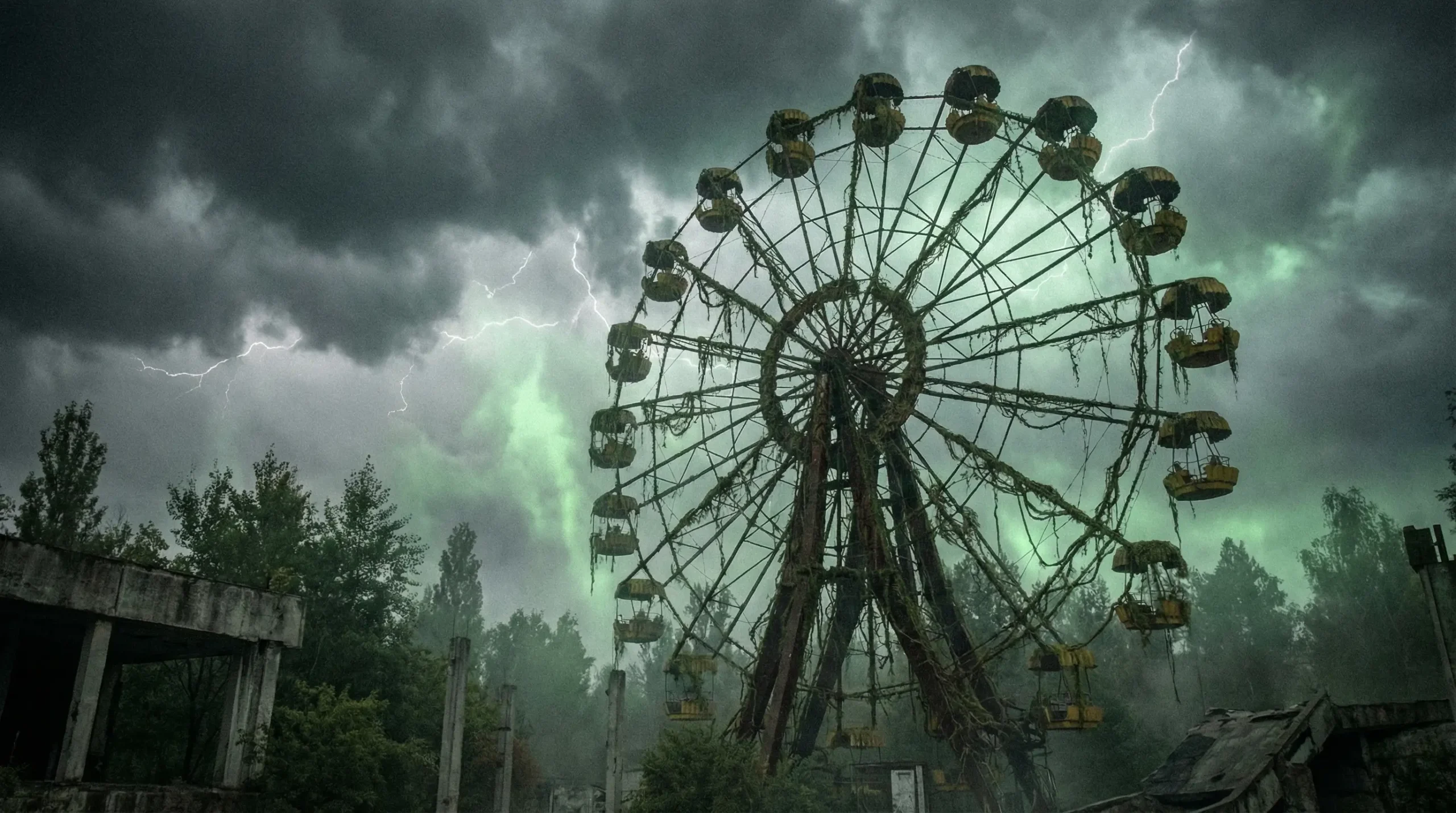
Radiation is an invisible killer. While nuclear energy powers our cities, the waste and accidents it leaves behind have created the Most Radioactive Places on the planet. These zones are so toxic that spending just a few minutes in some of them could prove fatal.
Unlike the Deadly Plants that warn you with bright colors, radiation has no smell or taste. From abandoned Soviet test sites to tropical islands buried under concrete, here are the 10 Most Radioactive Places on Earth that you should definitely avoid.
Table of Contents
1. Chernobyl (Ukraine)
The 1986 explosion at the Chernobyl Nuclear Power Plant remains the worst nuclear disaster in history. The “Exclusion Zone” covers 1,000 square miles and will remain uninhabitable for humans for at least 20,000 years. Inside the basement of Reactor 4 lies the “Elephant’s Foot,” a mass of melted nuclear fuel so toxic that looking at it for 300 seconds would kill you.
While tourists can now visit the outer zones, the reactor core remains one of the Most Radioactive Places in existence. Scientists are currently building a new confinement arch to prevent the crumbling sarcophagus from releasing more radioactive dust into the atmosphere.
2. Fukushima Daini (Japan)
In 2011, a massive earthquake and tsunami triggered a meltdown at the Fukushima Daiichi nuclear plant. It was the most significant nuclear incident since Chernobyl. Three of the six reactors melted down, releasing massive amounts of radioactive material into the Pacific Ocean and surrounding towns.
Today, the site is filled with thousands of steel tanks holding over a million tons of contaminated water. The Japanese government has begun releasing treated water into the ocean, sparking global controversy. The cleanup is expected to take another 40 years to complete.
3. The Polygon (Kazakhstan)
During the Cold War, the Soviet Union used this vast area in Kazakhstan as its primary nuclear test site. Between 1949 and 1989, they detonated 456 nuclear bombs here. The local population was rarely warned, and hundreds of thousands of people were exposed to fallout.
Today, “The Polygon” holds the record for the highest concentration of nuclear explosions in the world. Visitors can technically enter without protective gear, but prolonged exposure to the soil creates a high risk of cancer. It is a haunting monument to the nuclear arms race.
4. Hanford Site (USA)
Located in Washington State, Hanford produced the plutonium for the atomic bomb dropped on Nagasaki in WWII. Today, it is widely considered the most toxic place in the Western Hemisphere. It holds 53 million gallons of high-level radioactive waste in leaking underground tanks.
Cleanup efforts have been ongoing for decades, costing billions of dollars, but the technology to safely dispose of the waste effectively doesn’t fully exist yet. It remains one of the Most Radioactive Places in America, largely hidden from public view.
5. Mailuu-Suu (Kyrgyzstan)
This town was a secret uranium mining hub for the Soviet Union. When the mines closed, 23 unstable dumps of uranium waste were left behind on the hillsides. The region is prone to earthquakes and landslides, which threatens to push the radioactive waste into the river.
If a landslide were to occur, the toxic waste would contaminate the water supply for millions of people in the Fergana Valley. It is currently ranked as one of the top 10 most polluted places on the planet.
6. Sellafield (UK)
Sellafield is a nuclear fuel reprocessing plant in England. Over the decades, it has been the site of several accidents and leaks, releasing radioactive plutonium into the Irish Sea. Greenpeace claims the Irish Sea is the most radioactively contaminated sea in the world because of this plant.
The site stores a massive amount of the UK’s nuclear waste. While safety standards have improved, the legacy of dumping waste into the ocean has left the seabed permanently contaminated, cementing its status as one of the Most Radioactive Places in Europe.
7. The Somali Coast
Taking advantage of the lack of government in Somalia during the 1990s, European companies illegally dumped hazardous nuclear waste off the coast to avoid disposal fees. When the 2004 Tsunami hit, hundreds of rusting barrels washed up on the beaches.
Locals began suffering from radiation sickness, hair loss, and skin burns. It is an environmental crime scene where the beautiful ocean hides a deadly secret. It remains an unregulated danger zone.
8. Mayak (Russia)
Lake Karachay near the Mayak Production Association is often called the “most polluted spot on Earth.” For years, the Soviet Union dumped radioactive waste directly into the lake. In the 1990s, standing on the shore for just one hour would give you a lethal dose of radiation.
The entire lake has since been filled in with concrete blocks to prevent radioactive dust from blowing away. However, the groundwater remains heavily contaminated, posing a threat to the nearby Techa River and local villages.
9. Goiania (Brazil)
This isn’t a power plant, but the site of a tragic accident. In 1987, scavengers stole a radiotherapy device from an abandoned hospital. They broke it open and found a glowing blue stone (Cesium-137), which they distributed to friends and family as a curiosity.
Four people died, and hundreds were contaminated. Several houses had to be demolished and the soil removed. It is considered one of the worst radiological incidents in history, proving that Most Radioactive Places can sometimes be created by simple ignorance.
10. The Runit Dome (Marshall Islands)
After conducting 67 nuclear tests in the Marshall Islands, the US military bulldozed contaminated soil and debris into a bomb crater on Runit Island. They covered it with an 18-inch thick concrete dome, locally known as “The Tomb.”
The dome was only meant to be temporary, but it is still there. Rising sea levels are now cracking the concrete, threatening to spill plutonium into the Pacific Ocean. Locals are terrified that the structure will eventually fail.
Invisible Danger
These Most Radioactive Places serve as a permanent reminder of the power and danger of nuclear technology. While nature has reclaimed some sites like Chernobyl, the radiation lingers in the soil, water, and buildings.
Humanity is still learning how to clean up these mistakes. Until we do, these zones remain forbidden territories. Read more about radiation safety at the International Atomic Energy Agency.