
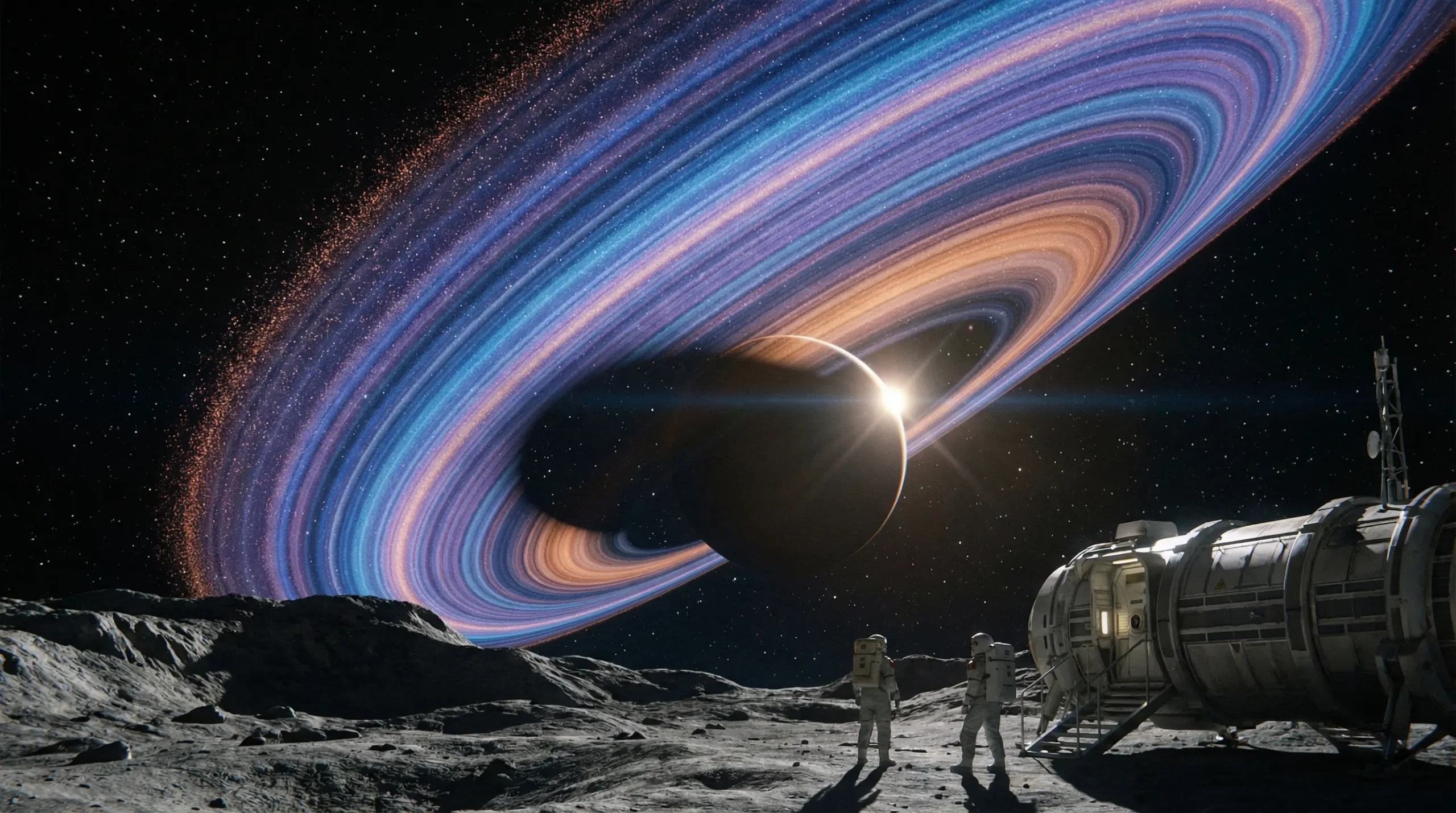
Space is far stranger than fiction. While we are used to the rocky and gas worlds of our own solar system, astronomers have discovered Strangest Planets in the Universe that defy our understanding of physics. These alien worlds, known as exoplanets, exhibit characteristics so extreme that they seem like they belong in a fantasy novel rather than reality.
Unlike the Terrifying Space Phenomena that threaten us, these worlds are stable environments, albeit incredibly bizarre ones. From worlds made of solid diamond to planets where it rains glass sideways, the cosmos is full of surprises. Here are the 10 Strangest Planets in the Universe that scientists have actually found.
Table of Contents
1. 55 Cancri e (The Diamond Planet)
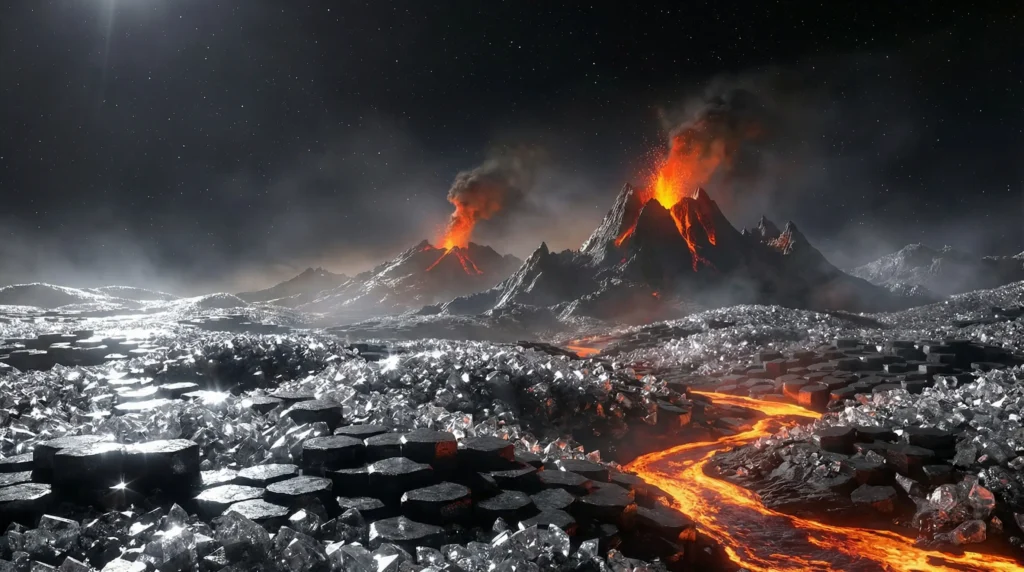
Located 40 light-years away in the constellation Cancer, 55 Cancri e is one of the most valuable Strangest Planets in the Universe. This “super-Earth” is twice the size of our planet but eight times more massive. Because it orbits so close to its carbon-rich star, scientists believe the intense heat and pressure have turned its carbon mantle into solid diamond.
If this theory is correct, a third of the planet’s mass could be pure diamond. That would be worth approximately $26.9 nonillion dollars (that’s 26.9 followed by 30 zeros). However, visiting is impossible; the surface temperature is a scorching 3,900 degrees Fahrenheit (2,150 degrees Celsius), making it a glittering but deadly jewel in the sky.
2. HD 189733b (Rains Glass Sideways)
At first glance, HD 189733b looks like a peaceful, deep blue marble similar to Earth. But don’t be fooled; this is one of the Strangest Planets in the Universe and certainly one of the deadliest. The blue color comes from silicate particles in its atmosphere, which scatter blue light.
The weather on this gas giant is horrific. Winds howl at speeds of up to 5,400 mph (8,700 km/h), which is seven times the speed of sound. Because the atmosphere is rich in silicates, the extreme heat condenses them into glass shards. The violent winds then whip these glass shards sideways, essentially shredding anything that enters the atmosphere.
3. J1407b (Super Saturn)
We all know Saturn has impressive rings, but J1407b puts it to shame. Discovered in 2012, this brown dwarf or massive exoplanet boasts a ring system that is 200 times larger than Saturn’s. This colossal feature easily earns it a spot among the Strangest Planets in the Universe.
If J1407b replaced Saturn in our solar system, its rings would be so massive that they would dominate Earth’s sky, appearing far larger than the full moon. The rings are estimated to contain roughly an Earth’s worth of mass in dust and rock. Astronomers have even detected gaps in the rings, suggesting that “exomoons” are forming within them.
4. GJ 504b (The Pink Planet)
Space isn’t just black and white; it can be incredibly colorful. GJ 504b is a gas giant that glows with a distinct magenta or cherry-blossom pink color. This vibrant hue is due to its youth. The planet is still relatively newly formed, and the heat from its creation causes it to glow brightly in infrared light.
What makes it one of the Strangest Planets in the Universe is its location. It orbits its star at 43 times the distance between Earth and the Sun. According to current planetary formation models, a gas giant shouldn’t be able to form that far out, challenging our understanding of how solar systems are built.
5. Kepler-16b (The Real Tatooine)
For fans of Star Wars, Kepler-16b is a dream come true. It was the first confirmed circumbinary planet, meaning it orbits two stars instead of one. If you could stand on its surface, you would experience a double sunset, just like Luke Skywalker on Tatooine.
However, unlike the movie, Kepler-16b is a cold gas giant similar to Saturn, not a desert world. It sits outside the habitable zone, so it’s unlikely to support life. Still, its discovery proved that Strangest Planets in the Universe with multiple suns are not just science fiction but a common reality in our galaxy.
6. TrES-2b (The Darkest Planet)
TrES-2b is darker than coal. In fact, it reflects less than 1% of the light that hits it, making it the darkest planet ever discovered. It is essentially a black void absorbing almost all solar energy falling upon it. A faint red glow emanates from it due to its intense heat, resembling a burning ember in the dark.
Why is it so dark? Scientists aren’t entirely sure, but they suspect its atmosphere contains light-absorbing chemicals like vaporized sodium and potassium or gaseous titanium oxide. Its eerie, pitch-black appearance cements its status as one of the Strangest Planets in the Universe.
7. WASP-12b (The Egg-Shaped Planet)
Most planets are spherical, but WASP-12b breaks that rule. It orbits so close to its parent star that the immense tidal forces act like a stretching rack, pulling the planet into the shape of an egg. It is literally being ripped apart and consumed by its own sun.
This process, known as accretion, means WASP-12b is doomed. It is losing its atmosphere to the star at a rate of 6 billion metric tons per second. In about 10 million years—a blink of an eye in cosmic time—this member of the Strangest Planets in the Universe club will be completely devoured.
8. HAT-P-7b (Rains Rubies and Sapphires)
Weather reports on HAT-P-7b would be expensive. This gas giant, located 1,000 light-years away, has clouds made of corundum—the same mineral that forms rubies and sapphires. Because of the planet’s violent winds, these gemstones are likely circulated across the planet.
However, you wouldn’t want to catch them. The jewels aren’t solid rocks but likely liquid droplets or fine dust driven by powerful storms. The discovery of such exotic weather patterns highlights why these exoplanets are considered the Strangest Planets in the Universe.
9. KELT-9b (The Hottest Planet)
KELT-9b is hotter than many stars. With a dayside temperature reaching 7,800 degrees Fahrenheit (4,300 degrees Celsius), it is the hottest exoplanet ever discovered. The heat is so extreme that molecules can’t even hold together; hydrogen gas is ripped apart into its atomic components.
It orbits a massive blue A-type star, which blasts it with ultraviolet radiation. This causes the planet’s atmosphere to boil away into space, creating a glowing tail like a comet. It pushes the definition of what a planet can be, earning its place among the Strangest Planets in the Universe.
10. Gliese 436b (The Burning Ice Planet)
Physics seems to break down on Gliese 436b. It is a Neptune-sized planet located very close to its star, with temperatures around 820 degrees Fahrenheit (439 degrees Celsius). Despite this oven-like heat, its surface is covered in ice. But this isn’t normal ice; it’s a special form called “Ice-X.”
The immense gravity of the planet compresses water vapor so tightly that it remains solid even at high temperatures. So, you have a world where the ice is literally on fire, constantly evaporating while remaining solid. This paradox makes it one of the absolute Strangest Planets in the Universe.
Infinite Possibilities
These Strangest Planets in the Universe remind us that our solar system is just one tiny, normal corner of a vast and weird cosmos. Just like the Mysterious Ancient Structures on Earth, these worlds challenge our imagination.
As telescopes like James Webb continue to peer deeper into space, we will undoubtedly find even weirder worlds. Who knows what other impossibilities are waiting to be discovered? Read more about exoplanets at NASA Exoplanet Exploration.