
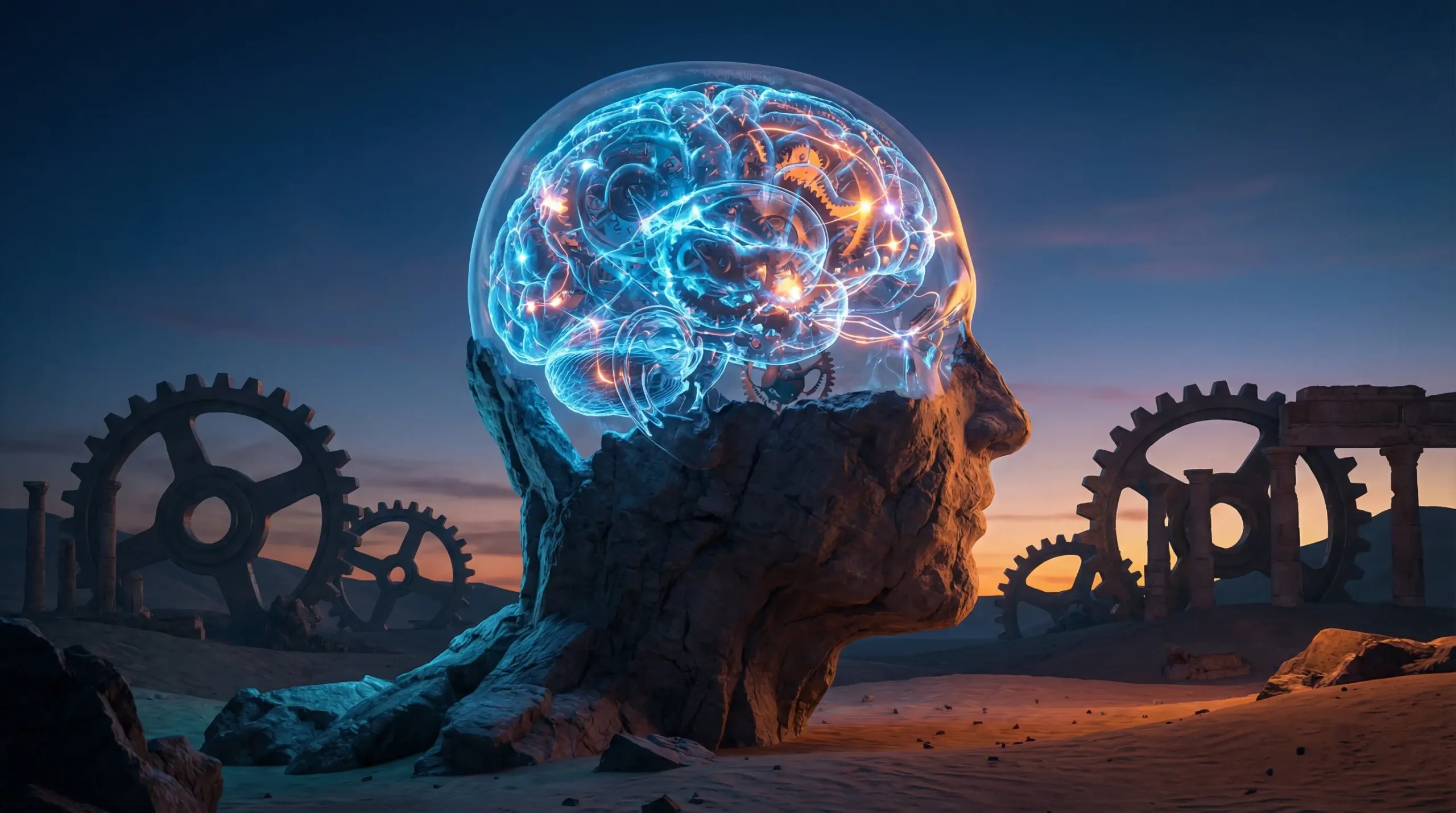
Do you think you are in complete control of your decisions? Think again. Our brains are wired with shortcuts and glitches known as Psychological Effects that influence everything from what we buy to how we judge other people. These cognitive biases operate in the background, often making us irrational without us even realizing it.
Unlike the external threats of Terrifying Space Phenomena, these “glitches” exist inside your own head. Understanding them is the first step to taking back control. Here are 10 powerful Psychological Effects that control your mind every single day.
Table of Contents

1. The Placebo Effect
The Placebo Effect is perhaps the most famous of all Psychological Effects. It occurs when a patient experiences a real improvement in their condition after receiving a treatment that has no therapeutic value, simply because they believe it will work. Your brain convinces your body to heal itself, releasing endorphins and pain-relieving chemicals.
This isn’t just “all in your head”; the physiological changes are measurable. Studies have shown that placebo pills can lower blood pressure, reduce anxiety, and even ease the symptoms of Parkinson’s disease. It demonstrates the terrifyingly powerful link between the mind and the body, and how Psychological Effects can physically alter reality.
2. The Dunning-Kruger Effect
Have you ever met someone who is terrible at something but insists they are an expert? That is the Dunning-Kruger Effect. It is a cognitive bias where people with low ability at a task overestimate their ability. Essentially, they lack the knowledge to realize how little they know.
Conversely, true experts often underestimate their competence because they realize how complex a subject actually is. This is one of the Psychological Effects that explains why the internet is full of confident ignorance. It reminds us that humility is often a sign of true intelligence.
3. The Bystander Effect
This is one of the darker Psychological Effects on this list. The Bystander Effect states that the more people are present during an emergency, the less likely any single individual is to offer help. Everyone assumes that someone else will call the police or intervene, leading to a paralysis of action.
This diffusion of responsibility can have tragic consequences. Psychologists suggest that if you are ever in trouble in a crowd, you shouldn’t shout “Help!” to everyone. Instead, point to one specific person and say, “You in the red shirt, call an ambulance!” This breaks the spell of this dangerous cognitive bias.
4. The Halo Effect
The Halo Effect creates a blind spot in our judgment. It is the tendency for an impression created in one area to influence opinion in another area. For example, if a person is physically attractive, we subconsciously assume they are also smart, kind, and funny, even if we have no evidence for it.
This bias affects everything from job interviews to court sentences. Attractive defendants are statistically more likely to receive lighter sentences than unattractive ones. It is one of the most pervasive Psychological Effects that dictates social hierarchy and success, often unfairly.
5. The Spotlight Effect
Have you ever spilled coffee on your shirt and felt like everyone was staring at you? That is the Spotlight Effect. It is the tendency to overestimate how much other people notice about us. In reality, most people are too focused on their own lives and insecurities to pay attention to your minor mistakes.
We are the center of our own universe, so we assume we are the center of everyone else’s. Understanding this can be incredibly liberating. It is one of the most comforting Psychological Effects to learn about because it reduces social anxiety significantly.
6. Confirmation Bias
Confirmation Bias is the reason why arguing politics on the internet is useless. It is the tendency to search for, interpret, and recall information in a way that confirms our pre-existing beliefs. If you believe the earth is flat, you will only search for “proof the earth is flat” and ignore thousands of photos from space.
This brain glitch filters out facts that challenge our worldview, creating “echo chambers.” It is one of the most dangerous Psychological Effects in the modern information age, as algorithms often feed us content that reinforces what we already think.
7. The Baader-Meinhof Phenomenon
Also known as the Frequency Illusion, this happens when you learn a new word or buy a new car, and suddenly you see it everywhere. It feels like the universe is sending you a sign, but it’s just your brain paying attention.
Your brain ignores 99% of the sensory data it receives. Once you “flag” a specific item as important (like a new car model), your reticular activating system starts highlighting it. Among Psychological Effects, this one makes the world feel surprisingly small and connected.
8. The Gambler’s Fallacy
This is the belief that if an event happens more frequently than normal during a period, it will happen less frequently in the future. For example, if a coin lands on heads 10 times in a row, you might think “tails is due.”
In reality, the probability remains 50/50 every single time. The universe has no memory. This error in logic is responsible for billions of dollars lost in casinos. It is one of the Psychological Effects that proves humans are naturally bad at statistics.
9. The Anchoring Bias
Anchoring is the tendency to rely too heavily on the first piece of information offered (the “anchor”). Marketers use this all the time. If you see a watch priced at $500 marked down to $200, you think it’s a steal because $500 was the anchor. If you just saw it at $200 initially, you might think it was expensive.
This bias affects salary negotiations, real estate prices, and shopping habits. It is one of the most profitable Psychological Effects for businesses and one of the most costly for consumers who aren’t aware of it.
10. The Paradox of Choice
We assume that having more choices is always better, but psychology disagrees. The Paradox of Choice states that having too many options causes anxiety and paralysis. If you have to pick from 50 types of toothpaste, you become stressed and fear making the “wrong” choice.
This often leads to dissatisfaction with the final decision. People are generally happier when they have fewer, clearer options. This entry in the list of Psychological Effects explains why scrolling through Netflix for an hour often feels more exhausting than actually watching a movie.
Master Your Mind
These Psychological Effects are hardwired into our biology, but being aware of them breaks their power. The next time you feel pressured to buy a “discounted” item or feel anxious in a crowd, remember that your brain might be playing tricks on you.
By understanding these mental shortcuts, you can make better decisions and understand human behavior on a deeper level. Read more about cognitive science at Psychology Today.