
In a world of smartphones, satellites, and instant connectivity, it seems impossible that there are still people who have no idea that the rest of us exist. Yet, deep in the Amazon rainforest and on remote islands, there are the Most Isolated Tribes who have rejected modern civilization. These uncontacted peoples live exactly as their ancestors did thousands of years ago, hunting with bows and arrows and living in complete harmony with nature.
Unlike the Mysterious Ancient Structures left behind by lost civilizations, these cultures are alive today. However, they face constant threats from loggers, miners, and diseases. From the hostile Sentinelese to the tree-dwelling Korowai, here are the 10 Most Isolated Tribes in the world that prove humanity is not all the same.
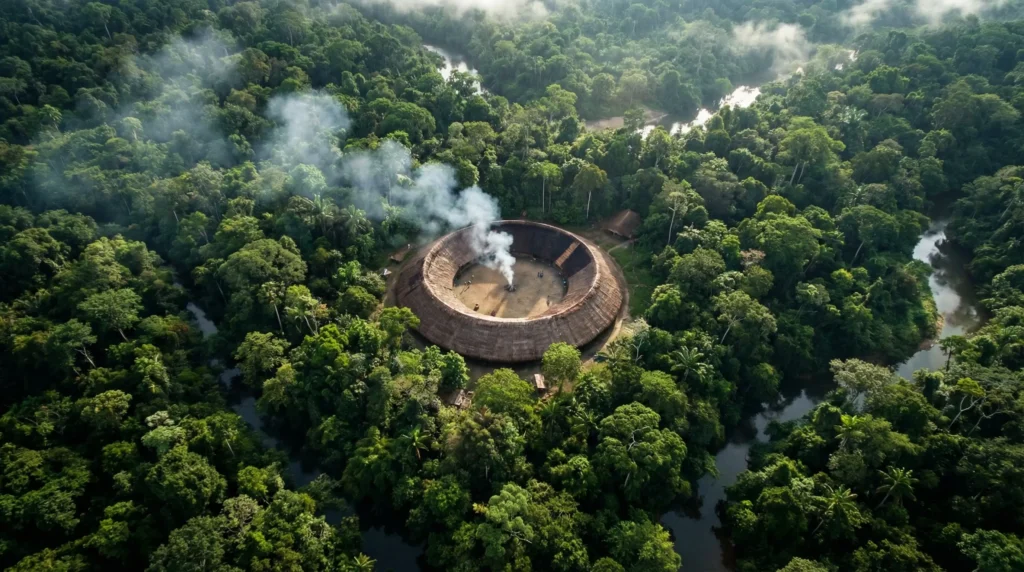
Table of Contents
1. The Sentinelese (Andaman Islands)
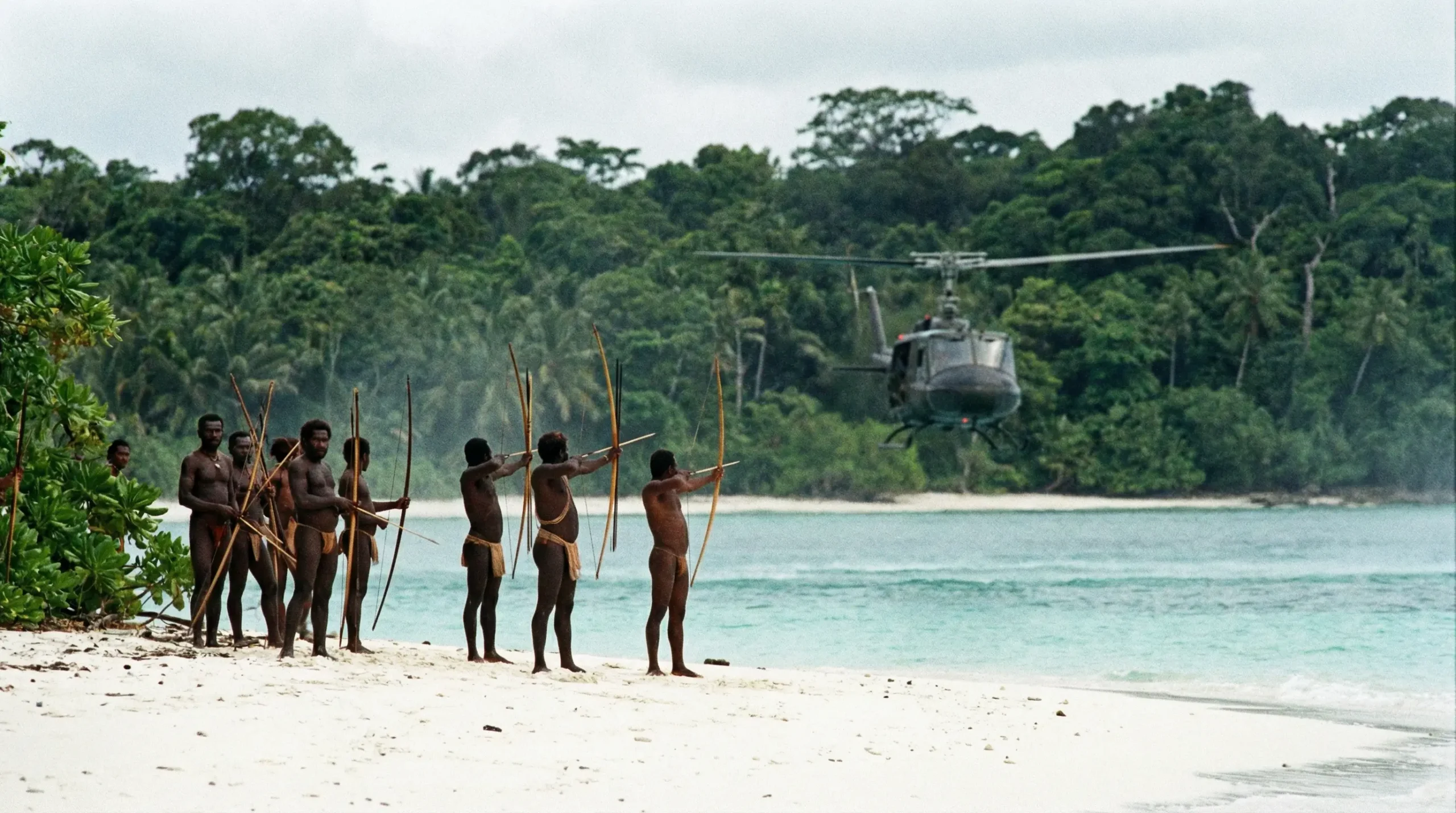
The Sentinelese are arguably the most dangerous and hostile of the Most Isolated Tribes on Earth. Living on North Sentinel Island in the Bay of Bengal, they have violently rejected all contact with the outside world for centuries. When helicopters fly over the island, the tribesmen rush to the beach to fire arrows and throw stones at the aircraft.
They are believed to have lived on the island for 60,000 years. In 2018, an American missionary named John Allen Chau illegally tried to land on the island to convert them to Christianity and was killed by the tribe. The Indian government has established a 3-mile exclusion zone around the island to protect both the tribe from modern diseases and outsiders from their arrows.
2. The Yanomami (Brazil/Venezuela)
The Yanomami are the largest relatively isolated tribe in South America, living in the rainforests and mountains of northern Brazil and southern Venezuela. While some Yanomami have had contact with outsiders, there are groups within the territory, known as the Moxihatetema, who remain completely uncontacted. They live in large communal circular structures called “shabonos.”
They are currently facing a massive crisis due to illegal gold miners invading their land. The miners pollute the rivers with mercury and bring diseases like flu and measles, to which the Yanomami have no immunity. Protecting these Most Isolated Tribes is now a major human rights issue in Brazil.
3. The Korowai (Papua New Guinea)
Until 1974, the Korowai people of Papua New Guinea didn’t know that anyone else existed on Earth. They are famous for being the “Treehouse People.” To protect themselves from rival tribes and evil spirits, they build their homes up to 140 feet (45 meters) high in the canopy of the jungle.
They are one of the last reported tribes to have practiced cannibalism in the past, though most anthropologists believe this practice has died out. Their incredible engineering skills using only primitive tools make them unique among the Most Isolated Tribes. They live in small clans and are fiercely independent.
4. The Mashco-Piro (Peru)
The Mashco-Piro are nomadic hunter-gatherers inhabiting the remote regions of the Amazon rainforest in Peru. For decades, they actively avoided contact, disappearing into the forest whenever outsiders approached. However, in recent years, they have been spotted more frequently on riverbanks asking for food and tools from passing boats.
This change in behavior is likely due to illegal logging and drug trafficking pushing them out of their territory. The Peruvian government forbids physical contact with them because a common cold could wipe out the entire tribe. They remain one of the most vulnerable of the Most Isolated Tribes.
5. The Ayoreo (Paraguay)
The Ayoreo are the last uncontacted indigenous group outside of the Amazon basin. They live in the Gran Chaco, a vast dry forest that stretches across Paraguay, Bolivia, and Argentina. Unlike Amazonian tribes who use canoes, the Ayoreo are land-based hunter-gatherers who hunt wild pigs and tortoises.
Their existence is under extreme threat as cattle ranchers bulldoze their forest to create grazing land. Many Ayoreo have been forced out of the forest, but a small group remains in hiding, constantly on the run from the bulldozers. Their struggle highlights the conflict between the Most Isolated Tribes and modern industry.
6. The Awá (Brazil)
Survival International has called the Awá the “Earth’s most threatened tribe.” There are only about 350 Awá people left, and around 100 of them have no contact with the outside world. They live in the eastern Amazon of Brazil, an area that has been heavily deforested.
They are incredible hunters and are known for their deep connection with animals; Awá women have been known to breastfeed orphaned monkeys. They are nomadic, carrying everything they own—bows, arrows, and embers for fire—as they move through the dwindling forest to escape loggers who hunt them.
7. The Jarawa (Andaman Islands)
Neighbors to the Sentinelese, the Jarawa live on the Andaman Islands and resisted contact until 1998. Since then, they have started to come out of the forest, but the results have been devastating. A “human safari” industry has sprung up, where tourists pay bribes to drive through their reserve and throw biscuits at them like animals.
Despite this, many Jarawa still choose to live deep in the forest, hunting pigs and lizards and gathering fruit. They have an immense knowledge of over 150 plant species and their medicinal uses. They serve as a warning of what happens when Most Isolated Tribes are forced into contact with the modern world.
8. The Fleicheros (Brazil)
Known as “The Arrow People,” the Fleicheros are a mysterious group living in the Javari Valley in Brazil. Very little is known about them because they are extremely aggressive toward outsiders. They are known for their deadly poison-tipped arrows, which they use to defend their territory.
Unlike other tribes that might be curious, the Fleicheros seem to have decided that the outside world is an enemy. This hostility has likely saved them. They have managed to avoid the diseases and exploitation that have destroyed other Most Isolated Tribes in the region.
9. The Kawahiva (Brazil)
The Kawahiva are a nomadic tribe in Brazil’s Mato Grosso state. They are often called the “Short People” or the “Head Cutters” by neighboring tribes. For years, their existence was only rumored until logging crews stumbled upon their abandoned camps, finding arrows, baskets, and hammocks.
In 2013, rare footage showed them walking through the forest, proving their existence to the world. They are on the brink of extinction, constantly fleeing from loggers who are illegally clearing their land. They have stopped having children, a sign of a society in extreme stress and decline.
10. The Man of the Hole (Brazil)
This is perhaps the saddest story of all. For nearly 26 years, a single man lived alone in the Brazilian Amazon. He was the last survivor of his tribe, the rest having been massacred by ranchers in the 1990s. He became known as “The Man of the Hole” because he dug deep holes in his huts to trap animals or hide.
He refused all contact, shooting arrows at anyone who came near. In August 2022, he was found dead in his hammock, covered in macaw feathers, having apparently prepared for his own death. With him, an entire culture, language, and history vanished forever, reminding us of the fragility of the Most Isolated Tribes.
Guardians of the Past
These Most Isolated Tribes are the guardians of our human past. They show us alternative ways of living, thinking, and interacting with the natural world. Their knowledge of the forest is irreplaceable.
Respecting their desire to be left alone is not just about preserving history; it is about human rights. As the modern world encroaches on their lands, their survival hangs in the balance. Read more about the fight to protect them at Survival International.