
10 Most Dangerous Airports in the World Where Pilots Need Nerves of Steel (2026)
Flying is statistically the safest way to travel, but landing is another story entirely. While most airports offer miles of smooth concrete and automated guidance systems, the Most Dangerous Airports in the world demand manual precision, perfect timing, and nerves of steel. At these locations, a single mistake—a gust of wind, a second’s delay—can lead to disaster.
Just as drivers face perils on the Most Dangerous Roads, pilots landing here must battle geography itself. From runways that end in sheer cliffs to airstrips built on sinking islands, these aviation hubs are famous for terrifying passengers and challenging even the most veteran captains. Fasten your seatbelts as we approach the 10 Most Dangerous Airports on the planet.
What Makes an Airport Dangerous?
A dangerous airport is typically characterized by extreme geographic constraints such as high altitudes, surrounding mountains, or exceptionally short runways that leave no margin for error. Additionally, unpredictable weather patterns like crosswinds or turbulence often force pilots to perform complex visual maneuvers rather than relying on automated instrument landing systems.
Danger Metrics: Runway Analysis
| Airport | Location | Primary Threat |
|---|---|---|
| Lukla (Tenzing-Hillary) | Nepal | Cliff drop-off & Mountain wall |
| Paro | Bhutan | Blind approach through valleys |
| Saba (Juancho E. Yrausquin) | Caribbean | World’s Shortest Runway (400m) |
| Courchevel | France | 18.5% Gradient Slope |
| Kansai | Japan | Sinking into the ocean |
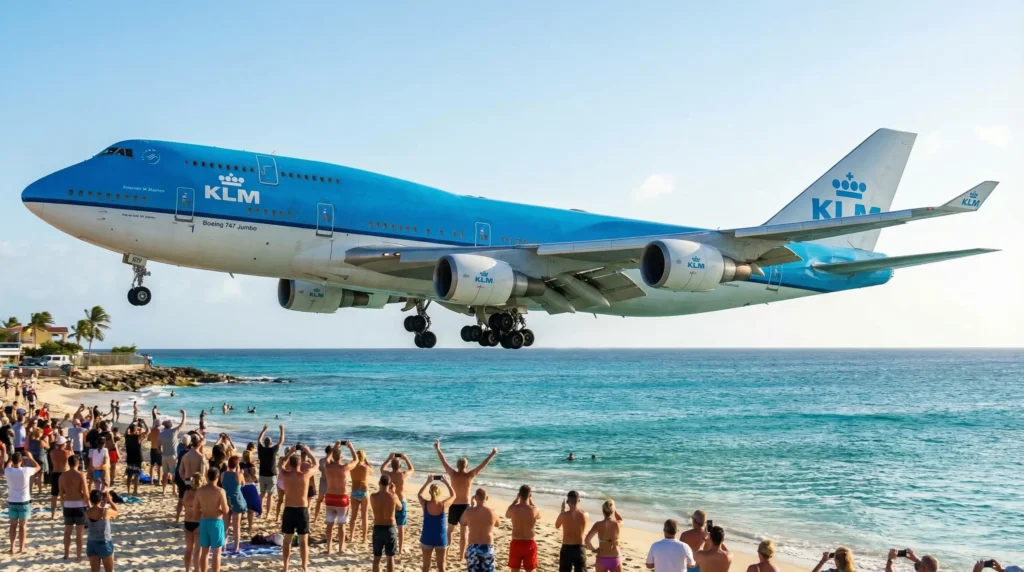
Table of Contents
1. Lukla Airport (Nepal)
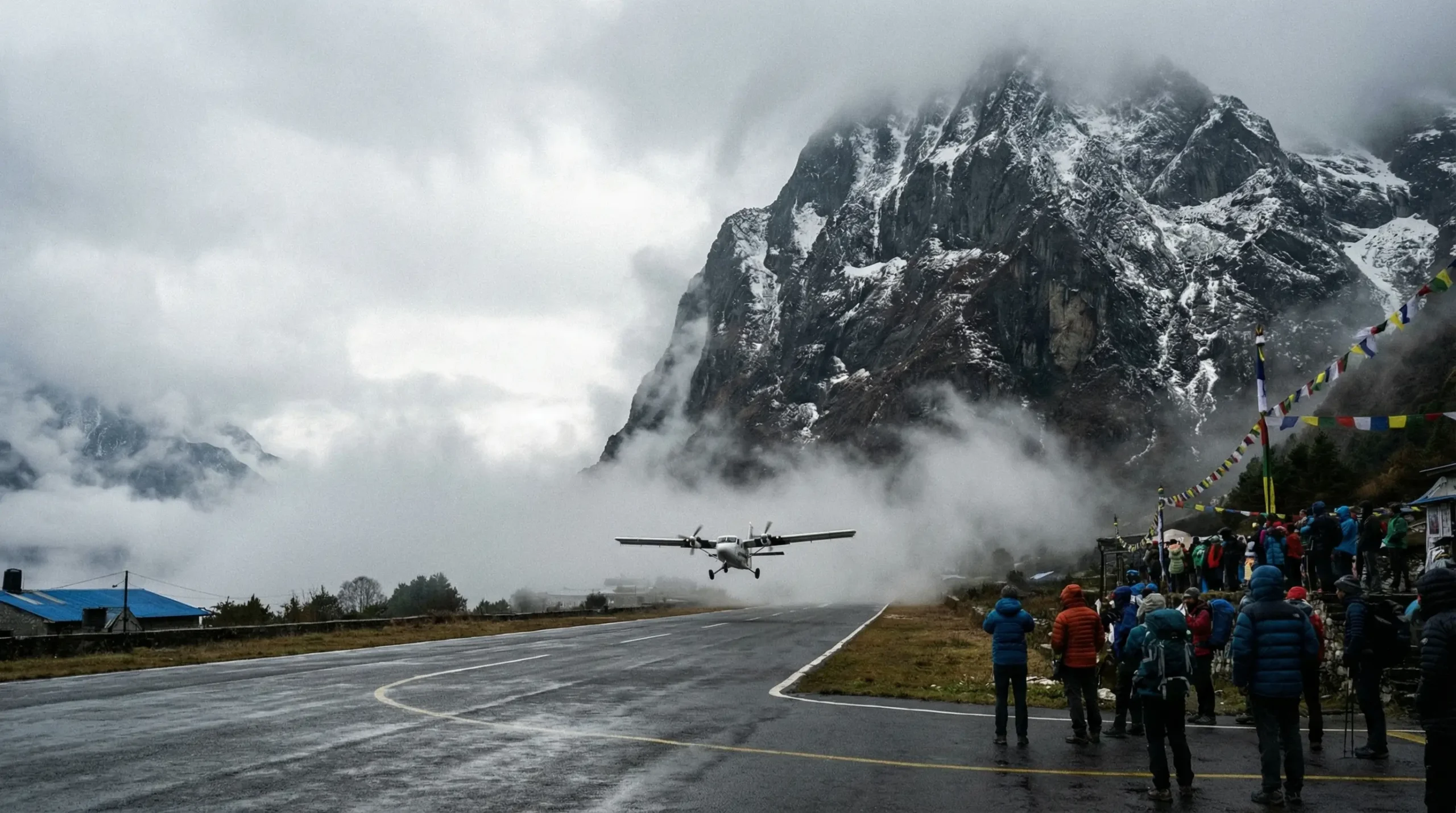
Widely regarded as the world’s #1 of the Most Dangerous Airports, Tenzing-Hillary Airport in Lukla is the gateway to Mount Everest. Its runway is terrifyingly short—just 527 meters—and sits on a steep 12% incline. Pilots have one chance to land; if they miss, there is no go-around because a massive stone mountain wall awaits at the end of the tarmac.
At the other end lies a 600-meter drop into the valley. The weather in the Himalayas is notoriously unpredictable, with sudden fog often closing the airport for days. Only specially certified pilots with extensive experience in Short Takeoff and Landing (STOL) operations are permitted to fly here, as mandated by the Civil Aviation Authority of Nepal.
2. Paro Airport (Bhutan)
Paro Airport is so difficult to approach that only about two dozen pilots in the entire world are certified to land there. Nestled in a deep valley and surrounded by 18,000-foot peaks, it is invisible until the very last moment. Pilots must bank the aircraft at a 45-degree angle through a narrow channel of mountains to line up with the runway.
The approach is completely visual and cannot be done at night or in poor visibility. Passengers often describe the experience as terrifying, feeling close enough to touch the trees on the mountainside. It is a masterpiece of high-stakes aviation among the Most Dangerous Airports.
3. Princess Juliana International (St. Maarten)
Famous for Maho Beach, where tourists can stand just meters beneath the wheels of incoming heavy jets, Princess Juliana is one of the most iconic Most Dangerous Airports. The runway is extremely close to the beach, forcing pilots to fly unusually low. While thrilling for spectators, it poses a significant risk of jet blast injuries.
The takeoff is equally challenging; pilots must turn sharply after lifting off to avoid the mountains ahead. The proximity of the public to powerful jet engines has caused injuries and even fatalities in the past, leading to increased warning signs but no decrease in popularity.
4. Courchevel Altiport (France)
Serving the ultra-wealthy in the French Alps, Courchevel has a runway that resembles a ski jump. It is only 537 meters long and has a gradient of 18.5%. Planes land going uphill to slow down and take off going downhill to gain speed. There is no go-around procedure; once you commit, you must land.
Surrounded by ski slopes and jagged rocks, the airport is strictly for small fixed-wing aircraft and helicopters. It creates a high-pressure environment for pilots, securing its spot as one of the Most Dangerous Airports in Europe.
5. Madeira Airport (Portugal)
Madeira is infamous for its crosswinds. Located between mountains and the Atlantic Ocean, the runway is subject to strong downdrafts that buffet planes right before touchdown. To extend the dangerously short original runway, engineers built a massive platform on 180 columns over the ocean.
Despite the engineering upgrade, the wind remains the primary enemy. Pilots require special training to land here. It is mesmerizing to watch planes “crab” sideways towards the runway, fighting the elements at one of the Most Dangerous Airports in the Atlantic.
6. Saba Airport (Caribbean)
The Juancho E. Yrausquin Airport on the island of Saba holds the record for the world’s shortest commercial runway—just 400 meters long. It is flanked by high cliffs on one side and a sheer drop into the ocean on the other. It looks more like the deck of an aircraft carrier than an airport.
Only small propeller planes like the Twin Otter can land here. Jet aircraft are strictly prohibited. The margin for error is virtually zero, making every landing a precise military-style operation. It is a tiny but terrifying entry in the list of Most Dangerous Airports.
7. Gibraltar International Airport
Gibraltar’s airport is unique because a major 4-lane highway, Winston Churchill Avenue, intersects the runway. Every time a plane lands or takes off, traffic lights turn red and cars must stop, just like at a railway crossing. This creates a bizarre mix of aviation and urban traffic.
Aside from the road, the runway extends into the sea on both ends and is subject to strong winds around the Rock of Gibraltar. While the road crossing is managed safely, the potential for a runway incursion makes it one of the most operationally complex and Most Dangerous Airports.
8. Kansai International (Japan)
Kansai International is an engineering marvel built on a completely artificial island in Osaka Bay. However, the island is sinking faster than engineers predicted. Facing the threat of rising sea levels and intense typhoons, the airport fights a constant battle against nature.
In 2018, Typhoon Jebi flooded the runways, shutting down the airport. The risk here is not just landing, but the long-term viability of the structure itself. It represents a different kind of danger among the Most Dangerous Airports: environmental collapse, a topic closely monitored by organizations like IPCC.
9. Antarctica (Blue Ice Runway)
There is no tarmac in Antarctica, only ice. The “Blue Ice Runway” near McMurdo Station is hard enough to land massive C-17 Globemaster transport planes on. However, the danger is obvious: braking on ice is difficult, and the weather can change from clear to whiteout blizzard in minutes.
If the temperature rises, the ice can melt, making the runway unusable. Pilots must monitor the weight of their aircraft carefully to avoid cracking the surface. It is the ultimate test of cold-weather aviation among the Most Dangerous Airports.
10. Wellington Airport (New Zealand)
Wellington is known as the “Windy City,” and its airport channels those winds directly across the runway. Known as “Windy Welly,” landings here are often turbulent affairs that leave passengers gripping their armrests. The runway starts and ends in the water, leaving little room for error.
The Cook Strait funnels strong gusts that bat planes around like toys. While not as geographically restricted as Paro, the sheer violence of the turbulence makes it a consistent entry on lists of the Most Dangerous Airports. See more about New Zealand aviation safety at CAA NZ.
Conclusion
The Most Dangerous Airports in the world are a testament to human ingenuity and the necessity of travel. They prove that we can build connections in the most inhospitable places, but nature always demands respect. Whether you are a thrill-seeker or just trying to get home, flying into these hubs is an experience you won’t forget.
For more high-security locations that you absolutely cannot enter, check out our guide to heavily guarded places. Safe travels!