
The human body is a machine, but it’s not a perfect one. Evolution is a slow process, and because of that, we are stuck with Useless Body Parts that our ancestors needed but we no longer use.
Just like the Deadly Plants evolved defenses they needed to survive, humans evolved features we have outgrown. From wiggling ears to painful teeth, here are 10 Useless Body Parts you might still have.
Let’s take a tour of your own evolutionary leftovers.
Table of Contents
Top 10 Useless Body Parts (Vestigial Organs)
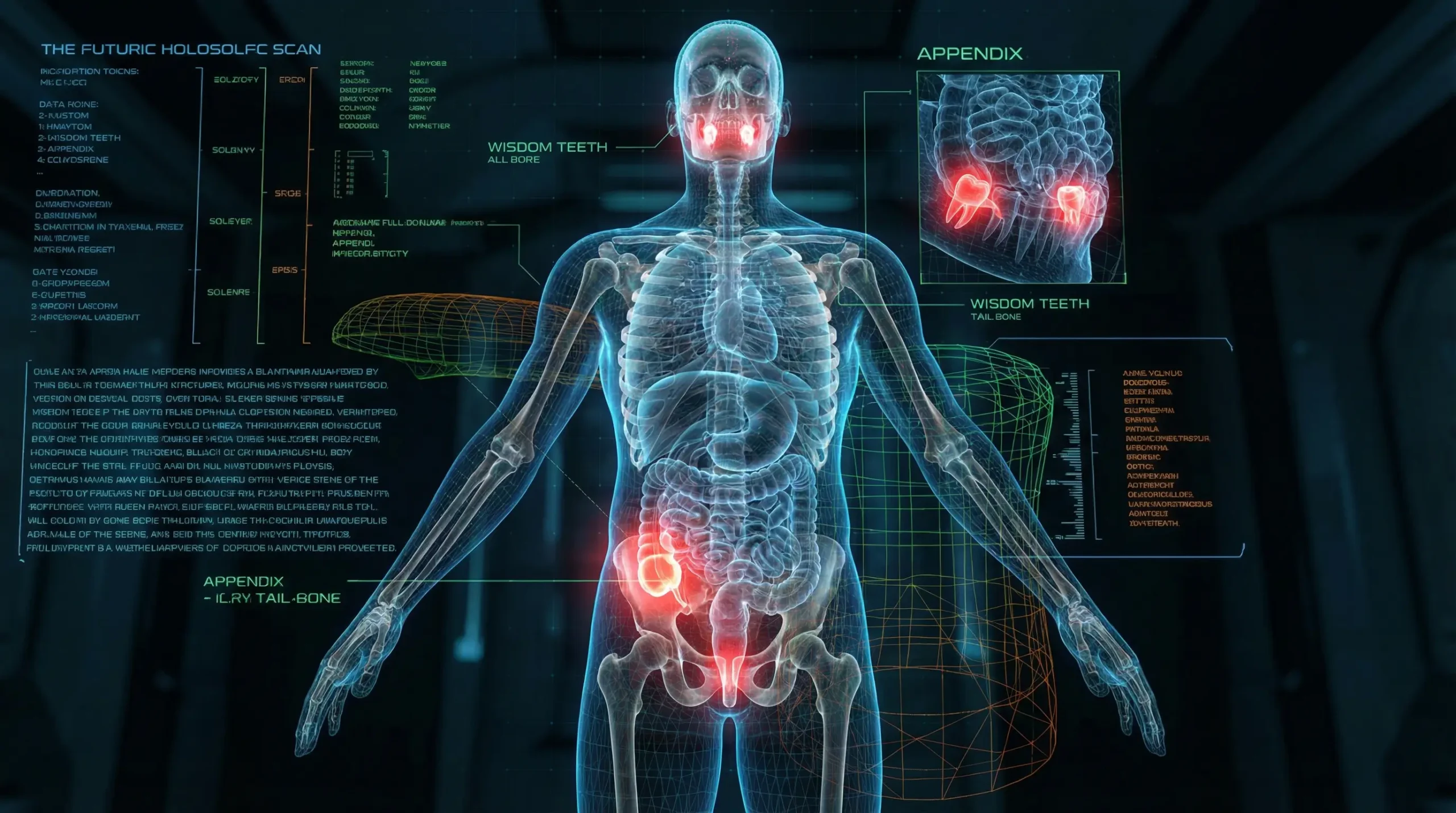
1. Wisdom Teeth
Early humans had larger jaws and ate tough roots and raw meat, so they needed extra grinding teeth. As our brains got bigger, our jaws got smaller.
Now, there simply isn’t room for them. They often get impacted and cause pain, making them the most annoying of all Useless Body Parts.
⚡ Fun Fact: About 35% of people are now born without wisdom teeth at all.
2. The Appendix
This small pouch attached to your large intestine was likely used by our ancestors to digest cellulose from plants (like koalas do).
Today, it mostly just gets infected and explodes. However, some scientists believe it might act as a “safe house” for good bacteria.
⚡ Fun Fact: You can live a perfectly normal life without it.
3. The Tailbone (Coccyx)
Feel the bottom of your spine. That hard bone is a remnant of a tail. All human embryos develop a tail in the womb, but it usually dissolves before birth.
Our primate ancestors used tails for balance in trees. Since we walk upright, we don’t need it, but the bone remains.
⚡ Fun Fact: Very rarely, a baby is born with a visible vestigial tail.
4. The Third Eyelid (Plica Semilunaris)
Look in the corner of your eye near your nose. That pink fold is a leftover “nictitating membrane.”
Birds and reptiles use this clear inner eyelid to protect their eyes while maintaining vision. Humans lost the ability to control it millions of years ago.
⚡ Fun Fact: It still helps drain tears, so it’s not totally useless.
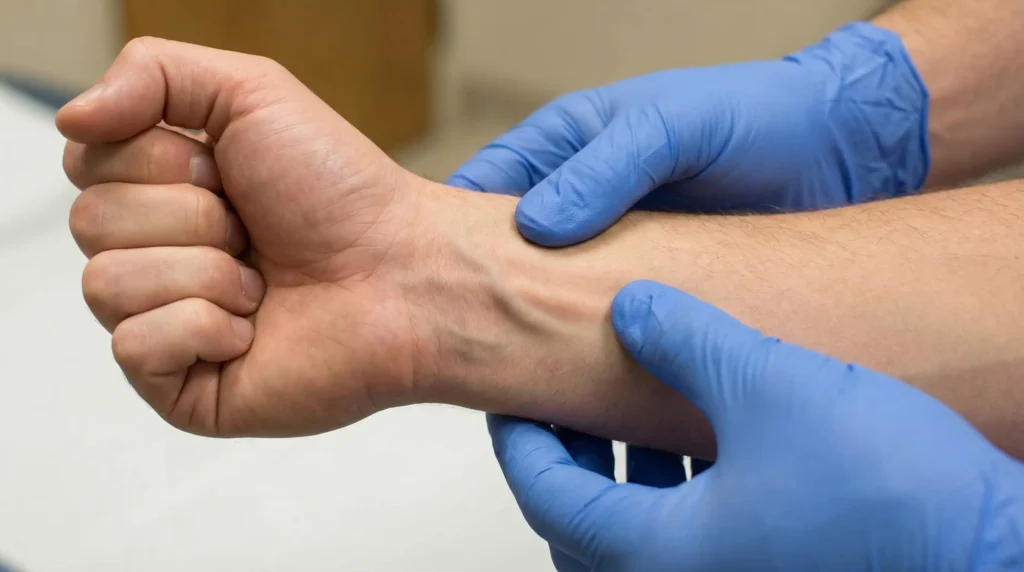
5. Palmaris Longus Muscle
Place your arm on a table, palm up. Touch your thumb to your pinky and tilt your hand up. Do you see a tendon popping out? That’s the Palmaris Longus.
About 14% of people don’t have it. It was used by ancestors to help climb trees. Today, it is one of the most classic Useless Body Parts.
⚡ Fun Fact: Surgeons often harvest this tendon to repair other injuries since you don’t need it.
6. Goosebumps (Arrector Pili)
When you are cold or scared, tiny muscles attached to your hair follicles contract. In animals with fur, this fluffs them up to keep warm or look bigger to enemies.
Since humans lost most of our body hair, this reflex is completely useless for insulation or intimidation.
⚡ Fun Fact: We call it “goosebumps” because plucked poultry skin looks similar.
7. Auricular Muscles
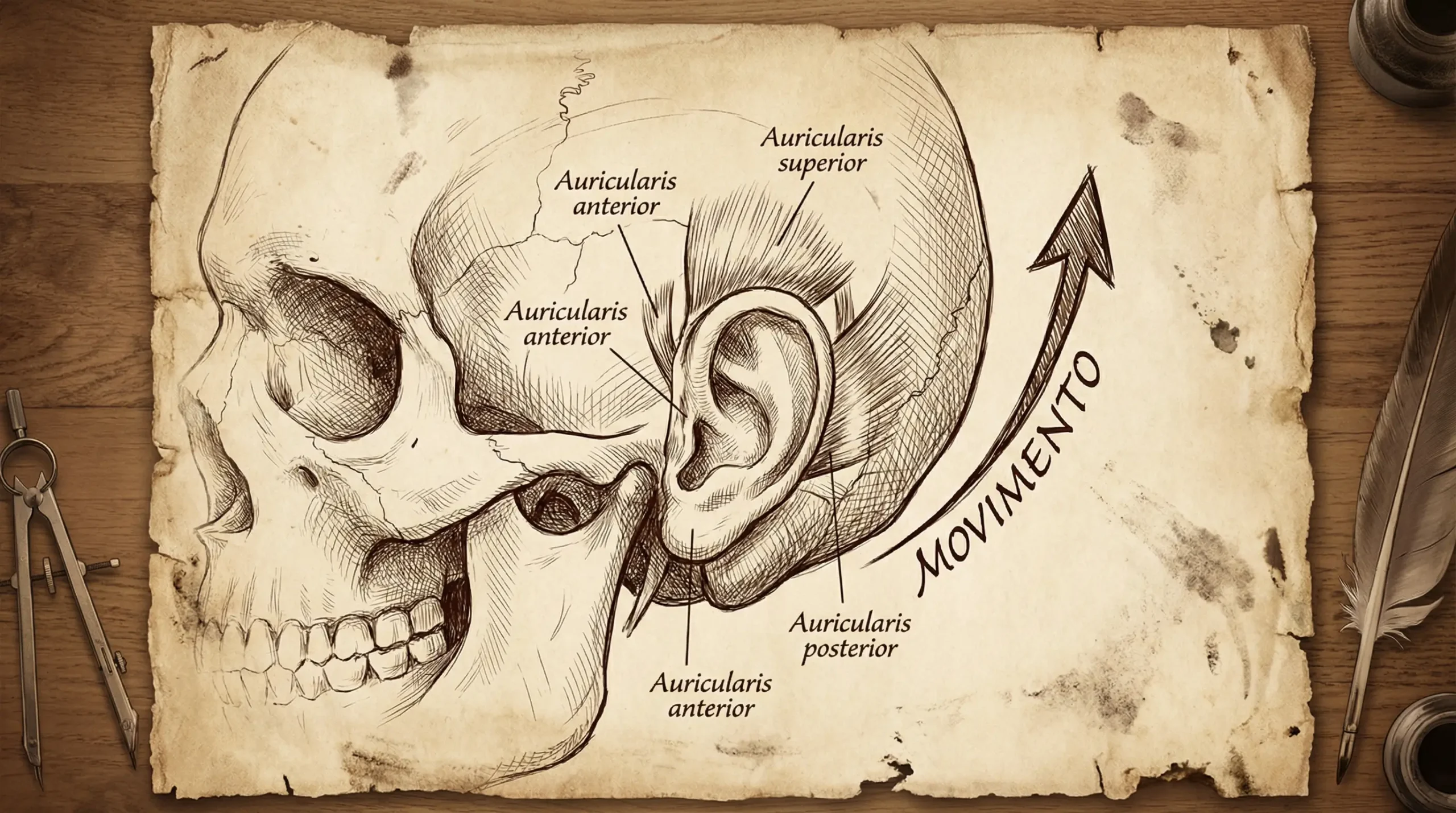
Can you wiggle your ears? Most people can’t. Cats and dogs use these muscles to swivel their ears toward sound without turning their heads.
Humans have flexible necks, so we stopped needing to rotate our ears. The muscles are still there, but they are weak and disconnected for most of us.
⚡ Fun Fact: Studies show these muscles still react to sudden loud noises, even if your ears don’t move.
8. Male Nipples
This is a common question. Men don’t breastfeed, so why do they have nipples? It’s because all embryos start out the same in the womb.
Nipples form before the “Y” chromosome kicks in to determine male gender. They aren’t an evolutionary leftover, but rather a developmental default.
⚡ Fun Fact: Under certain medical conditions, men can actually produce milk.
9. Darwin’s Tubercle
About 10% of people have a small bump or thickening on the upper rim of their ear. It is called Darwin’s Tubercle.
It is likely a remnant of the pointed tip of the ear found in many mammals (like monkeys), which helped focus sound.
⚡ Fun Fact: It was named after Charles Darwin, who described it in “The Descent of Man.”
10. Palmar Grasp Reflex
If you put your finger in a newborn baby’s hand, they will grip it incredibly tight. This isn’t just love; it’s a survival instinct.
Our primate ancestors’ babies needed to cling to their mother’s fur while she swung through trees. Modern babies still have this “monkey grip” for the first few months.
⚡ Fun Fact: The grip is strong enough to support the baby’s entire body weight.
Evolution is Messy
These Useless Body Parts prove that humans are a work in progress. Evolution doesn’t delete features instantly; it slowly fades them out over millennia.
How many of these leftovers do you have? Learn more about human anatomy at Kenhub.