
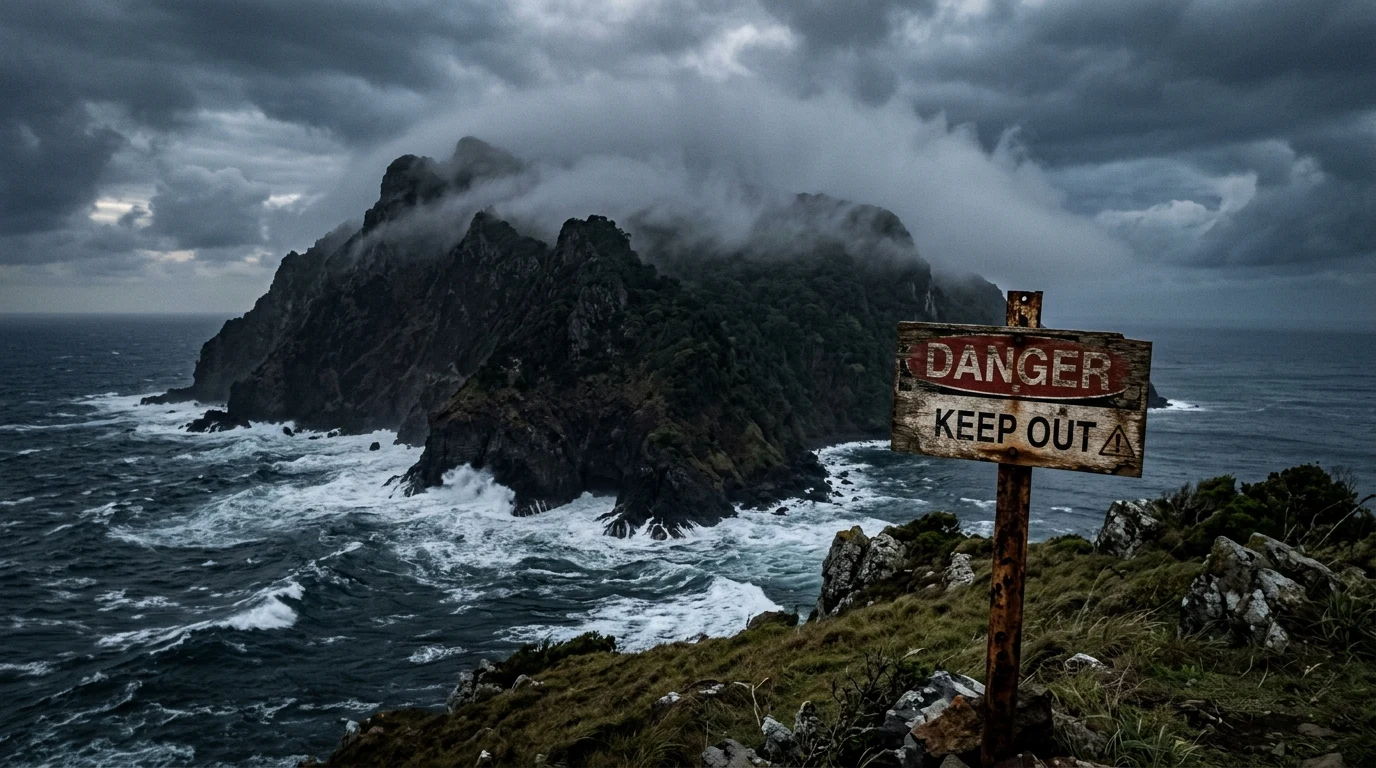
When we dream of remote island getaways, we usually picture pristine beaches, crystal-clear water, and absolute tranquility. However, our planet hides dark secrets within its oceans, harboring territories so lethal that stepping onto their shores practically guarantees a fatal outcome. From remote atolls poisoned by catastrophic nuclear fallout to jungles swarming with thousands of hyper-venomous vipers, the most dangerous islands on Earth are completely off-limits to the public—and for very good reason.
org/wiki/Desert_island” target=”_blank” rel=”noopener”>desert islands scattered across the globe. Yet, underneath their lush canopies and sandy beaches lie hidden biological weapons, extreme radiation, and fiercely defensive uncontacted civilizations.
Exploring these territories is not a matter of extreme tourism; it is a matter of survival. com/10-terrifying-forbidden-places-you-can-never-visit-2026″>forbidden places you can never visit, wait until you uncover the horrifying history behind the most dangerous islands mankind has ever known.
Why Are The Most Dangerous Islands Strictly Forbidden To Tourists?
The most dangerous islands are strictly forbidden to tourists because they harbor lethal threats including highly venomous wildlife, active biological weapons testing grounds, severe radioactive contamination, and aggressively isolated tribes. Governments completely restrict access to these specific territories to prevent guaranteed fatalities and protect fragile, dangerous ecosystems from interference.
Comparing the World’s Most Dangerous Islands
Before diving into the terrifying specifics of each location, let’s look at the primary threats that make these specific destinations the absolute most dangerous islands in recorded history.
| Rank | Island Name | Primary Threat | Location |
|---|---|---|---|
| 1 | Ilha da Queimada Grande | Hyper-Venomous Vipers | Brazil |
| 2 | North Sentinel Island | Hostile Uncontacted Tribe | India |
| 3 | Gruinard Island | Anthrax Contamination | Scotland |
| 4 | Bikini Atoll | Nuclear Radiation | Marshall Islands |
| 5 | Vozrozhdeniya Island | Weaponized Pathogens | Uzbekistan/Kazakhstan |
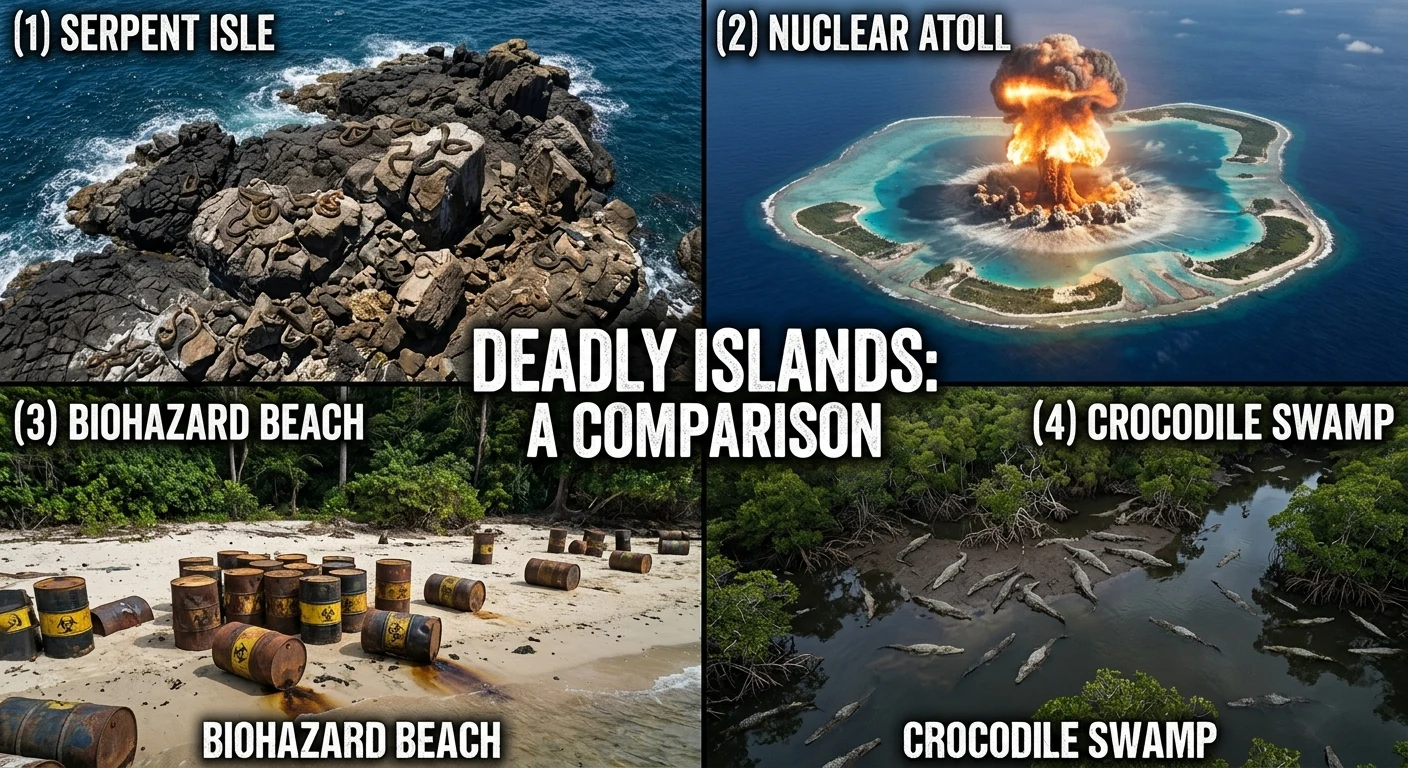
1. Ilha da Queimada Grande (Snake Island), Brazil
Known universally as “Snake Island,” Ilha da Queimada Grande easily tops any list of the most dangerous islands in the world. Located roughly 90 miles off the coast of São Paulo, Brazil, this seemingly idyllic chunk of rock and rainforest is infested with thousands of Golden Lancehead vipers.
Because these snakes became trapped on the island when sea levels rose thousands of years ago, they evolved uniquely potent venom capable of melting human flesh, designed specifically to kill migratory birds instantly before they can fly away.
The Brazilian Navy strictly forbids anyone from stepping foot on the island, with rare exceptions made only for highly credentialed scientific research teams accompanied by doctors. Estimates suggest there is anywhere from one to five snakes per square meter in some areas of the forest. The sheer density of these lethal predators makes merely walking through the brush a game of Russian roulette. The venom acts remarkably fast, causing kidney failure, massive internal bleeding, and severe muscular tissue necrosis.
2. North Sentinel Island, India
Lying in the Andaman Sea, North Sentinel Island is home to the Sentinelese, one of the world’s last entirely uncontacted peoples. The native population violently rejects all outside contact, famously firing a barrage of arrows at helicopters or boats that dare approach their shores. For outsiders, it is unarguably one of the most dangerous islands to attempt to visit, as the Sentinelese do not hesitate to kill intruders on sight to protect their isolation.
The danger goes both ways, however. Because the Sentinelese have been cut off from the rest of the world for an estimated 60,000 years, they have zero immunity to modern diseases. A simple common cold virus brought by an outsider could wipe out their entire population in a matter of weeks.
As such, the Indian government has established a strict multi-mile exclusion zone around the island, making it illegal to approach. com/10-most-isolated-tribes-in-the-world-that-avoid-civilization”>isolated tribes in the world.
3. Gruinard Island, Scotland
In 1942, during the height of World War II, the British government acquired Gruinard Island off the coast of Scotland to conduct highly classified biological weapons testing. Scientists bombarded the small island with experimental anthrax bombs, exposing a flock of sheep to the deadly spores to observe the horrifying effects. The lethal pathogen quickly saturated the soil, transforming Gruinard into one of the most dangerous islands in Europe for nearly half a century.
The specific strain of anthrax used was so incredibly resilient that the island was placed under immediate quarantine, which lasted for 48 years. While extensive decontamination efforts involving hundreds of tons of formaldehyde were undertaken in the 1980s, allowing the island to be declared “safe” in 1990, many experts remain profoundly skeptical. The lingering fear of deeply buried, dormant anthrax spores ensures that hardly anyone ever visits this desolate slice of Scottish geography.
4. Poveglia Island, Italy
Located in the Venetian Lagoon, Poveglia Island has a history so steeped in death and misery that locals refuse to even look at it. During the Bubonic Plague outbreaks, Poveglia was used as a quarantine station—essentially a death camp where thousands of infected citizens were sent to rot. Centuries later, in the 1920s, a mental asylum was constructed there, where horrific and unethical experiments were allegedly performed on the patients.
Today, it is considered not just one of the most dangerous islands due to collapsing infrastructure and alleged residual plague ash, but also the most haunted location on Earth. The soil is said to be roughly 50% human ash due to the massive pyres used to burn plague victims. The Italian government strictly prohibits tourism to Poveglia, and the island remains completely abandoned, guarded only by the crumbling, vine-choked ruins of the infamous asylum.
5. Bikini Atoll, Marshall Islands
Bikini Atoll looks like the ultimate tropical paradise, complete with white sand beaches and swaying palm trees. However, between 1946 and 1958, the United States dropped 23 nuclear weapons here, including the devastating 15-megaton Castle Bravo hydrogen bomb. The sheer volume of explosive force and radiation ripped the ecosystem apart, firmly cementing Bikini Atoll as one of the most dangerous islands on the globe due to massive radioactive contamination.
While background radiation levels have significantly dropped over the decades, the real danger lies within the food chain. The soil and groundwater are heavily saturated with radioactive isotopes like Cesium-137. Anyone attempting to permanently live on the island and consume locally grown coconuts, fruits, or well water would inevitably suffer from radiation poisoning and elevated cancer risks. As noted in National Geographic’s coverage of nuclear testing, the environmental scars left by these detonations are virtually permanent.
6. Vozrozhdeniya Island, Uzbekistan/Kazakhstan
Once a thriving island in the Aral Sea, Vozrozhdeniya was utilized by the Soviet Union as a top-secret open-air bioweapons testing facility starting in 1948. Scientists weaponized incredibly deadly pathogens here, including smallpox, bubonic plague, brucellosis, and anthrax. When the Soviet Union collapsed in 1991, the island was hastily abandoned, and hastily buried containers of weaponized spores were simply left behind in the dirt.
To make matters worse, as the Aral Sea dried up due to Soviet irrigation projects, Vozrozhdeniya actually connected to the mainland. Scavengers and local wildlife can now walk directly onto one of the world’s most dangerous islands, risking the exhumation of dormant, apocalyptic diseases. Though international teams have conducted cleanups, the sheer scale of the buried biological agents makes the area exceptionally dangerous for anyone exploring the ruins.
7. Ramree Island, Myanmar
Ramree Island is essentially a massive swamp that serves as the home to thousands of massive saltwater crocodiles. The island gained infamy during World War II during the Battle of Ramree Island. In 1945, British forces flanked a regiment of approximately 1,000 Japanese soldiers, driving them deep into the island’s dense, muddy mangrove swamps. What followed remains one of the most horrifying chapters in military history.
Under the cover of darkness, the trapped soldiers fell victim to the apex predators lurking in the water. According to historical accounts and survivor testimonies, hundreds of soldiers were dragged underwater and consumed by the enormous reptiles. This massacre instantly immortalized Ramree as one of the most dangerous islands in Asia. Today, the saltwater crocodile population is still incredibly dense, ensuring that navigating the swamps is virtually a death sentence.
8. Farallon Islands, USA
Just 27 miles off the coast of San Francisco lie the Farallon Islands, a cluster of jagged, treacherous rocks known locally as the “Islands of the Dead.” Aside from the incredibly turbulent ocean currents and jagged reefs that have caused countless shipwrecks, the waters surrounding the Farallones are home to one of the largest concentrations of massive Great White Sharks on the planet. The apex predators gather here annually to hunt the massive seal populations.
Adding to its reputation as one of the most dangerous islands in North America is a terrifying nuclear secret. Between 1946 and 1970, the U.S. government dumped approximately 48,000 steel drums of radioactive waste into the exact waters surrounding the islands. The exact location and structural integrity of many of these barrels remain a mystery, presenting an unpredictable toxic hazard to the marine environment and anyone who might attempt deep-sea dives in the area.
9. Miyake-jima, Japan
Found within the Philippine Sea, Miyake-jima is a volcanic island dominated by the highly active Mount Oyama. Unlike typical volcanoes that threaten populations primarily with lava, Mount Oyama continuously leaks massive amounts of poisonous sulfur dioxide gas. In the year 2000, a massive eruption forced the complete evacuation of the island, turning it instantly into one of the most dangerous islands in the Pacific Ring of Fire.
Five years later, citizens were allowed to return, but under a bizarre and terrifying stipulation: everyone on the island must carry a gas mask with them at all times. Alarms are situated across the island, and when sulfur dioxide levels spike to lethal concentrations in the air, sirens blare, warning residents to immediately don their masks or risk suffocation. The invisible, silent threat of toxic gas makes daily life here a harrowing gamble.
10. Bouvet Island, Norway
Bouvet Island holds the terrifying title of being the most remote, isolated landmass on Earth. Located deep in the South Atlantic Ocean, it is thousands of miles away from any major civilization. The island is entirely covered by a glacier, constantly battered by hurricane-force winds, and completely devoid of any natural resources that could sustain human life. If you were stranded here, rescue would be fundamentally impossible.
What solidifies Bouvet Island as one of the most dangerous islands is the utter lack of safe landing spots. Jagged cliffs and violent, freezing waves surround its perimeter. In 1964, an abandoned lifeboat was mysteriously found marooned on the island, with oars and supplies nearby, but absolutely no trace of passengers. To this day, the fate of whoever rowed that boat remains an unsolved mystery, cementing the island’s haunting, deadly legacy.
Conclusion
The allure of forbidden territories will always captivate human curiosity, but the locations on this list serve as grim reminders of nature’s power and humanity’s past mistakes. Whether compromised by catastrophic biological warfare, overwhelmed by apex predators, or guarded by isolated warriors, these destinations are unapologetically hostile to modern travelers. While you might safely research these phenomena from your living room, the most dangerous islands on Earth are places where setting foot ashore is the ultimate, fatal mistake.
If you were fascinated by these deadly territories, you must explore our extensive coverage of expensive abandoned megaprojects to see more examples of humanity’s failed attempts to conquer hostile environments.
Frequently Asked Questions
What is technically the deadliest island in the world?
Ilha da Queimada Grande (Snake Island) in Brazil is widely considered the deadliest due to the incredibly high density of Golden Lancehead vipers, ensuring almost certain fatal envenomation for anyone walking through the brush.
Can you legally visit any of the most dangerous islands?
Generally, no. Access to the most dangerous islands is heavily regulated or completely banned by their respective governments. Only specialized scientific researchers with military or federal clearance are ever granted temporary access.
Is Bikini Atoll still dangerously radioactive?
Yes. While you can stand on the beach without immediate harm, consuming any local food, crops, or water will result in dangerous radioactive ingestion, making permanent settlement on the island impossible.
Why is North Sentinel Island protected?
The island is protected to preserve the Sentinelese people, who lack immunity to modern diseases. The Indian government bans all travel within miles of the island to prevent mutual fatalities.