
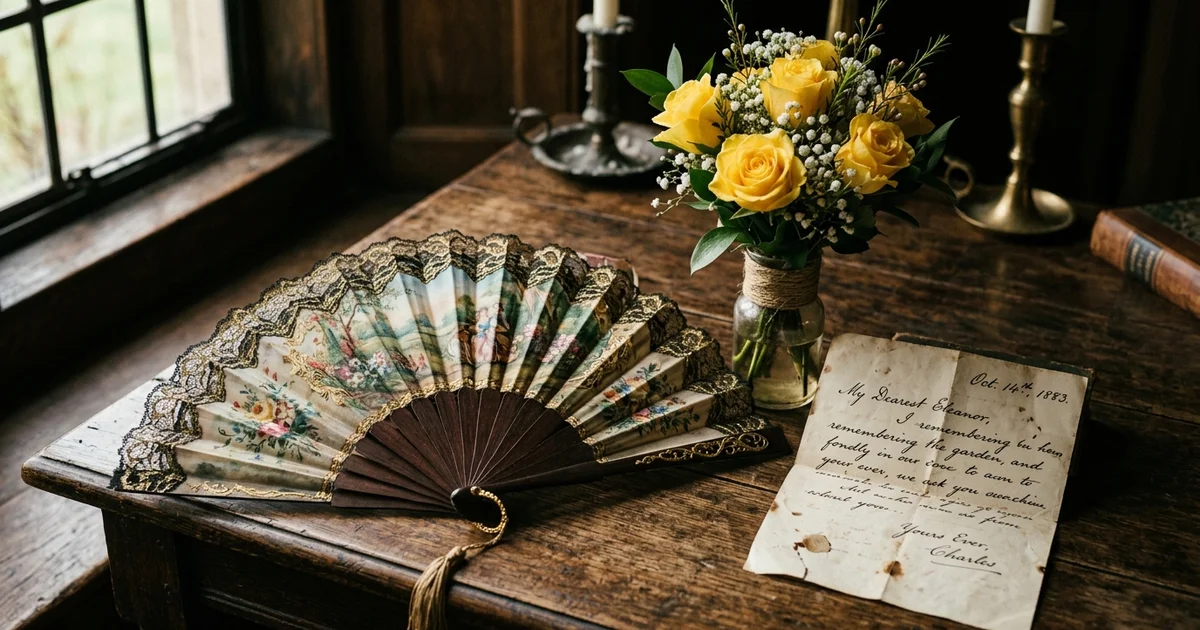
Look, I was genuinely shocked to learn just how clever humans can be when they need to keep a conversation completely hidden. Throughout history, people have invented some of the most extraordinary secret communication systems to bypass nosy neighbors, strict authorities, or societal rules.
We are talking about entirely new languages hidden in plain embroidery, or messages sent via the specific tilt of a hand fan.
I always find myself drawn to the bizarre ways our ancestors navigated their daily lives, much like those 10 Bizarre Historical Jobs Most People Don’t Know About. These hidden languages are no different, showcasing a brilliant mix of rebellion and creativity.
It is completely fascinating to realize that two people could hold an entire conversation right in front of you, and you would never even know.
Why Did People Invent Hidden Languages?
People created secret communication systems to share vital information without being detected by those in power. Marginalized groups, traveling workers, and even Victorian lovers developed unique codes, slang, and nonverbal signals to bypass severe social restrictions and maintain their personal privacy safely.
📋 Table of Contents
- Overview
- 1. Nüshu: The Women-Only Script
- 2. Silbo Gomero: The Whistled Language
- 3. Polari: The Underground British Slang
- 4. Floriography: The Victorian Flower Code
- 5. The Hobo Code: Chalk Symbols of Survival
- 6. Cockney Rhyming Slang: The East End Decoy
- 7. Victorian Fan Language: Flirting in Plain Sight
- 8. Boontling: The Isolated California Jargon
- 9. Lunfardo: The Tango Prison Slang
- 10. Kallawaya: The Secret Healing Tongue
- FAQ
The World of Hidden Conversations
We often take our freedom of speech for granted today. But if you rewind the clock just a few centuries, speaking your mind could ruin your reputation or land you in jail. That is exactly why these brilliant secret communication systems were born out of pure necessity.
From the towering ravines of the Canary Islands to the busy streets of London, hidden codes were everywhere. They allowed people to organize, gossip, flirt, and survive right under the noses of the uninitiated. Let’s look at ten of the most jaw-dropping examples in human history.
| # | Name | Key Fact |
|---|---|---|
| 1 | Nüshu | A script created entirely by and for women in China. |
| 2 | Silbo Gomero | A whistled language used to communicate across deep ravines. |
| 3 | Polari | Underground slang used by marginalized groups in 20th-century Britain. |
| 4 | Floriography | The intricate Victorian art of sending coded messages via flowers. |
| 5 | Hobo Code | Chalk symbols left by traveling workers to signal safe houses. |
| 6 | Cockney Rhyming Slang | A playful code created to confuse the London police. |
| 7 | Victorian Fan Language | Nonverbal flirting system using simple folding hand fans. |
| 8 | Boontling | A made-up vocabulary created by an isolated farming town. |
| 9 | Lunfardo | Prison slang that eventually became the lyrical heart of the tango. |
| 10 | Kallawaya | A secret language passed down strictly within families of herbalists. |
1. Nüshu: The Women-Only Script
Originating in the Hunan province of China, Nüshu was a specialized writing system created exclusively for women. Because girls were historically forbidden from receiving formal education, they completely bypassed the rules by inventing their own script. It was heavily stylized and written in vertical columns.
Women would write Nüshu on folding fans or secretly weave it right into their everyday embroidery. Men assumed the flowing, elongated characters were simply decorative artistic patterns. As one of the most brilliant secret communication systems ever made, it thrived for hundreds of years completely unnoticed.
It blows my mind that an entire demographic invented a completely distinct writing system just to outsmart societal restrictions. I think it stands as the ultimate form of linguistic rebellion. They turned their forced illiteracy into an exclusive superpower.
2. Silbo Gomero: The Whistled Language
If you hike through the deep valleys of La Gomera in the Canary Islands, you might hear what sounds like loud, melodic bird calls. In reality, you are listening to Silbo Gomero. The island’s geography features incredibly steep ravines that make normal talking completely impossible over long distances.
To solve this, the locals created a whistled substitute for Spanish that replaces vowels and consonants with specific pitches and tones. By cupping their hands, they can essentially throw their “voice” across massive canyons. If you are not trained in this acoustic code, you would completely miss the message.
I find it absolutely brilliant that they weaponized basic physics to build their own rural acoustic network. Using secret communication systems like this shows how deeply humans adapt to their natural environments. The sheer volume they can produce using just their fingers and lips is extraordinary.
3. Polari: The Underground British Slang
During a time when being gay was heavily policed in mid-20th century Britain, people desperately needed a safe way to identify each other. They adopted Polari, a rapidly spoken slang mixture of Italian, Romani, and theater jargon. It was famously used by sailors, actors, and marginalized communities.
Using Polari allowed individuals to speak freely in crowded pubs or on public transport without raising suspicion. A quick phrase dropped casually into a sentence would instantly tell the other person that they were in safe company. If an outsider was listening, it just sounded like nonsensical babble.
What fascinates me most about Polari is how it eventually leaked right into mainstream British comedy shows. A language born out of absolute survival and fear became a massive part of pop culture without the general public even realizing its origins.
You can read more about its historical impact over at the BBC’s deep dive into Polari.
4. Floriography: The Victorian Flower Code
Victorian society was notoriously strict about public displays of emotion and courtship. Because young lovers could rarely speak their true feelings openly, they adopted floriography. This was a complex dictionary of meanings assigned to specific flowers and plants.
A suitor would send a carefully arranged bouquet where every single stem was essentially a coded word. A red tulip was a declaration of love, but a yellow rose meant jealousy or a decrease in affection. You had to be incredibly careful, because sending the wrong bloom could completely ruin a relationship.
We think of bouquets as just a nice gesture today, but I love that they used to function as high-stakes cryptic texts. Imagine getting dumped via a bundle of hydrangeas instead of a text message. It is certainly one of the most beautiful secret communication systems ever imagined.
5. The Hobo Code: Chalk Symbols of Survival
During the Great Depression in America, thousands of transient workers traveled the country by jumping on freight trains. Life on the road was incredibly tough, and knowing who to trust was a matter of survival. To help each other out, these travelers created the Hobo Code.
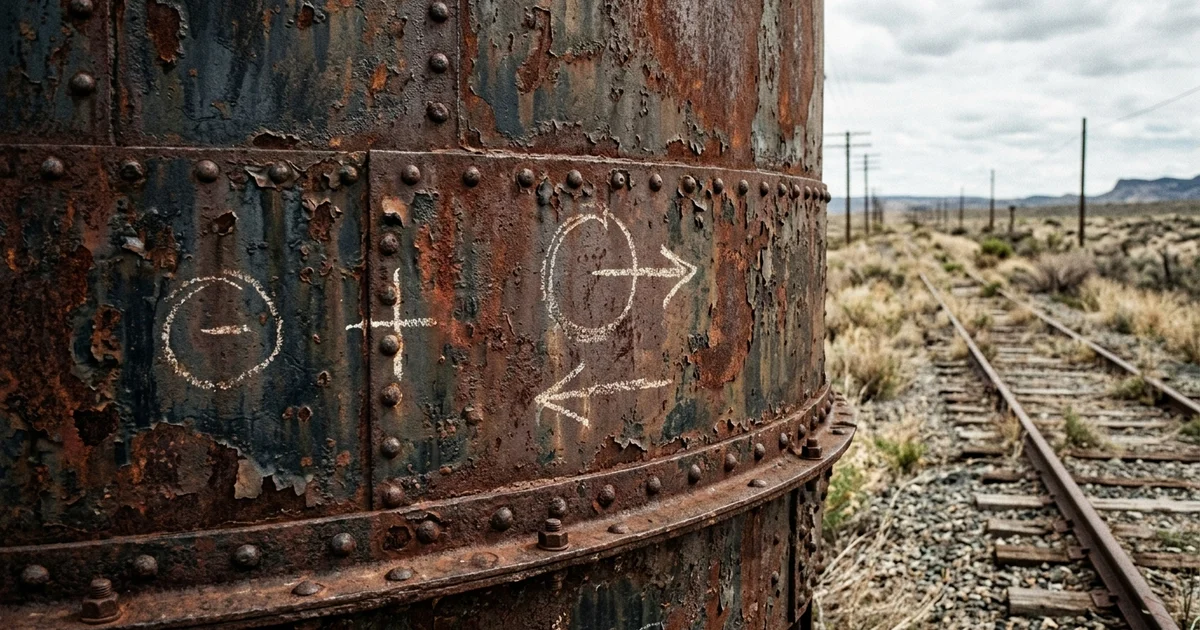
They would draw simple geometric chalk shapes on fences, water towers, and mailboxes. A drawing of a cat meant a kind woman lived inside, while a circle with two arrows signaled that the local police were aggressive. These fleeting symbols were essentially early, analog travel reviews.
I genuinely admire the sheer practicality of this underground network. It was an open-source survival guide drawn in plain chalk, showing an incredible sense of solidarity among strangers. Of all the secret communication systems, this one required the least resources but arguably saved the most lives.
6. Cockney Rhyming Slang: The East End Decoy
If you were a market trader in London’s East End during the mid-19th century, you probably wanted a way to speak without police officers catching on. Enter Cockney rhyming slang, a beautifully confusing linguistic trick. It replaced a common word with a rhyming phrase, and then confusingly dropped the rhyming word altogether.
For example, the phrase for “stairs” was “apples and pears.” But a true local would just drop the “pears,” meaning they would say, “I’m going up the apples.” If a plainclothes police officer heard that, they would have absolutely no idea what was being discussed.
This is perhaps my favorite entry because of how deeply playful and almost musical it is. It requires a remarkably fast-moving brain to decode on the fly. These kinds of secret communication systems prove that linguistic evolution does not have to be stiff or academic.
7. Victorian Fan Language: Flirting in Plain Sight
High-society balls in the 19th century were incredibly awkward affairs, entirely policed by strict chaperones. Women were not allowed to speak their minds freely or approach a suitor without causing a major scandal. So, they turned an everyday accessory into a powerful tool.
By using specific gestures with a folding hand fan, a woman could carry on an entire secret conversation. Resting the fan on her right cheek meant “yes,” while drawing it across her forehead meant “we are being watched.” Snapping it shut sharply was a very clear dismissal.
I think this is basically the 19th-century equivalent of leaving someone on “read.” It gave women a clever, subtle tool of agency in spaces where they were expected to just be quiet ornaments. It is completely brilliant how a simple prop became one of the most effective secret communication systems at a party.
8. Boontling: The Isolated California Jargon
Back in the late 1890s, the rural farming town of Boonville, California, was incredibly isolated. The residents got so bored that they began inventing their own local vocabulary just to pass the time. It slowly evolved into a complex jargon known as Boontling.
Locals used it mainly to gossip about visiting outsiders or just to amuse themselves in the pub. Calling someone a “burlap” meant they were acting tough, and asking for a “horn of zeese” meant you wanted a cup of coffee. To anyone driving through, the locals sounded completely unhinged.
This completely charms me because most secret communication systems are born out of danger or survival. Boontling was quite literally born out of pure rural boredom and a shared sense of humor. They literally invented an entire glossary just to gossip about strangers in peace.
9. Lunfardo: The Tango Prison Slang
In the late 19th and early 20th centuries, Buenos Aires experienced a massive wave of European immigration. Down in the lower-class neighborhoods and packed prisons, inmates needed a way to coordinate without the guards understanding them. They developed Lunfardo, a rapidly evolving street slang.
It heavily relied on “vesre,” a linguistic trick where you flip the syllables of a Spanish word to create something new. For example, “cafe” became “feca.” As inmates were released, the slang rapidly bled out into the working-class neighborhoods and eventually into the city’s music scene.
I love how music eventually carried this hidden code to the masses. The fact that an underground tool meant to trick prison guards ended up as the lyrical backbone of the tango is just incredible.
If you enjoy how unexpected groups leave their mark on history, you should check out these 10 Bizarre Out-of-Place Artifacts That Defy Human History. Using secret communication systems in romantic music is poetic irony at its absolute finest.
10. Kallawaya: The Secret Healing Tongue
High in the Andes mountains of Bolivia, a very specific group of traditional herbalists known as the Kallawaya hold a deeply guarded linguistic secret. They use a proprietary language that is only ever spoken by practicing healers. It is never used in casual, daily conversations.
Fathers strictly pass the language down to their sons or chosen apprentices. It is used exclusively during complex medicinal rituals or when discussing the hundreds of herbs native to the mountains. The vocabulary heavily borrows from a now-extinct ancient Incan language.
Medical jargon is notoriously complex even today, but reserving an entire ancient tongue strictly for healing rituals is profoundly beautiful. It treats botanical knowledge not just as data, but as something highly sacred. You can read more about this incredible cultural preservation at National Geographic’s feature on the Kallawaya.
Final Thoughts
Studying how people managed to talk right over the heads of authority figures is a brilliant reminder of human cleverness. Whether it was women breaking through patriarchal barriers in China, or London traders confusing local beat cops, these secret communication systems show that our desire to connect can never truly be silenced.
We might use encrypted messaging apps today, but the core instinct remains exactly the same. We just traded our folding fans and chalk markers for smartphones. If you love uncovering these strange historical quirks, you will definitely want to read our list on 10 Unsolved Medical Mysteries From History That Still Baffle Scientists.

Written by the List of Ten Team
We verify every fact using peer-reviewed sources.
Frequently Asked Questions
Are any of these secret communication systems still used today?
Yes! Silbo Gomero is actually taught in schools on the Canary Islands to preserve the tradition. Additionally, many words from Polari and Cockney rhyming slang have permanently entered modern British vocabulary, proving that these secret communication systems have lasting power.
How did historians decode the Hobo Code?
Historians relied heavily on personal journals, interviews with former transient workers, and photographs from the Great Depression. Because the symbols were so highly standardized across train routes, sociologists were able to piece together the visual dictionary relatively quickly.
Why didn’t the police just learn Cockney rhyming slang?
They certainly tried, but the brilliance of these secret communication systems is how fast they evolve. By the time a police officer learned that “apples and pears” meant stairs, the locals would simply invent a brand new rhyme to keep the authorities confused.