
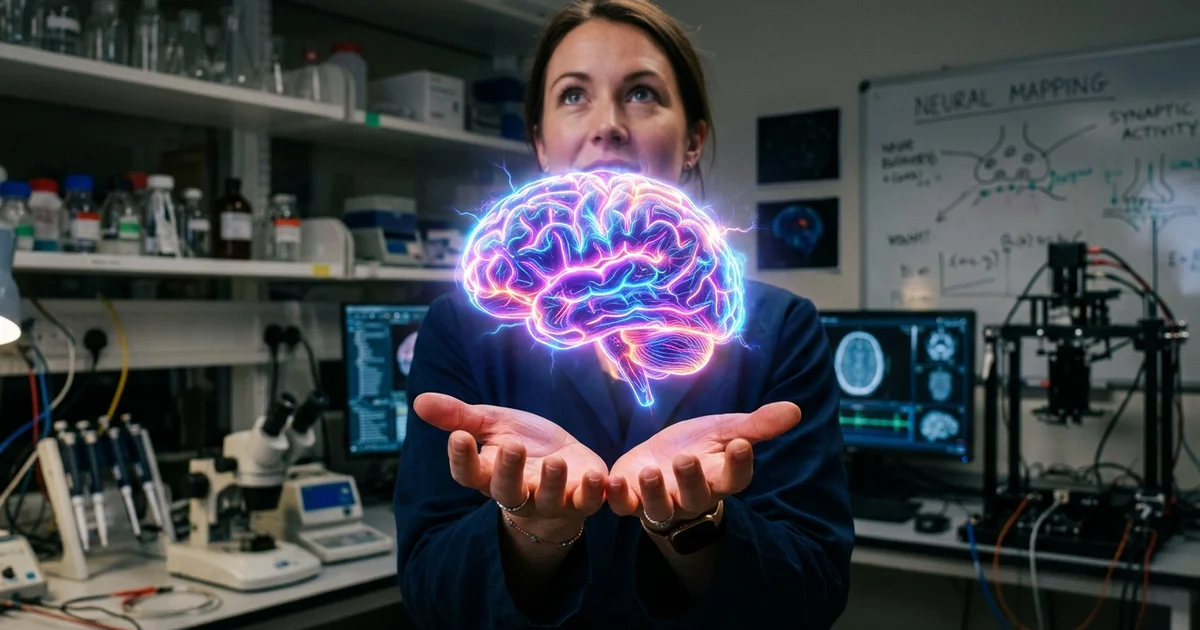
Look, I was genuinely shocked to learn that our brains edit reality in real-time. We walk around trusting our eyes, ears, and sense of touch completely, but science proves that these inputs are incredibly easy to manipulate using sensory illusions.
I recently read a fascinating study from Scientific American that explained how our brains basically guess what is happening around us.
Most of us think of visual tricks when we talk about this subject, but it goes so much deeper than just your eyes. In fact, after researching these cognitive glitches, I realized they are just as wild as some of the bizarre psychological syndromes I’ve studied before.
Get ready, because you are about to question everything you hear, feel, and see today.
What Exactly Is A Sensory Illusion?
A sensory illusion occurs when your brain misinterprets information coming from your eyes, ears, or skin. These perceptual glitches happen because your mind takes shortcuts to process the world quickly, creating sensory illusions that make you experience things that do not actually exist.
📋 Table of Contents
The Science of Tricking Your Senses
The human body is an incredible machine, but its wiring isn’t flawless. When researchers study sensory illusions, they are essentially looking for the cheat codes to the human brain.
By pitting one sense against another, scientists can figure out which sense your brain trusts the most. The results are usually surprising, revealing that our perception of reality is mostly just an educated guess.
| # | Name | Key Fact |
|---|---|---|
| 1 | The McGurk Effect | Your eyes change what your ears hear. |
| 2 | Rubber Hand Illusion | Your brain adopts a fake limb. |
| 3 | The Shepard Tone | An audio trick that creates an infinite loop. |
| 4 | Chronostasis | Makes time appear to briefly stand still. |
| 5 | Thermal Grill Illusion | Harmless temperatures create burning pain. |
| 6 | Pinocchio Illusion | Tricks you into feeling a growing nose. |
| 7 | McCollough Effect | A visual trick that alters color perception for months. |
| 8 | Size-Weight Illusion | Big objects feel much lighter than small ones. |
| 9 | Phantom Vibration | Feeling a phone buzz that isn’t there. |
| 10 | Tritone Paradox | People disagree on whether notes go up or down. |

1. The McGurk Effect
The McGurk Effect proves that your eyes can literally hijack what your ears are hearing. If you watch a video of a person mouthing the sound “ga” but the audio track is actually playing “ba”, your brain immediately gets confused.
To resolve this massive conflict, your mind simply invents a completely new sound like “da” to make sense of the conflicting data. It shows us just how dependent humans are on lip-reading, even if we do not consciously realize it.
My personal take on this is that it completely shatters my confidence in human testimony. I honestly thought hearing was purely objective, but knowing my brain edits audio on the fly makes these sensory illusions feel like a sci-fi concept.
2. The Rubber Hand Illusion
The Rubber Hand Illusion is a legendary body-ownership trick that neurologists love to perform. A researcher hides your real hand behind a screen and places a fake rubber hand on the table right in front of you.
They then stroke both the hidden real hand and the visible fake hand with a paintbrush at the exact same time. Within minutes, your brain actually rewires its sense of body ownership to include the fake piece of rubber.
What I find extraordinary about this is how quickly the brain abandons its own flesh and blood. My personal take is that our physical sense of self is incredibly fragile if all it takes is a paintbrush to hack our neural pathways.
3. The Shepard Tone
The Shepard Tone is widely known as the sonic equivalent of a barber’s pole. It consists of multiple sine waves playing simultaneously at different octaves, fading in and out at specific volumes.
This creates an auditory trick where the sound appears to be constantly rising in pitch, yet it never actually gets any higher. Movie composers frequently use these specific sensory illusions to build relentless, nerve-wracking tension in film scores.
I listened to a ten-minute loop of a Shepard tone while writing this, and my personal take is that it causes genuine physical anxiety. It feels like waiting for a musical drop that is completely withheld from you forever.
4. Chronostasis
Have you ever darted your eyes toward a ticking analog clock and sworn the second hand was frozen for just a bit too long? This common phenomenon is called chronostasis, or the “stopped-clock illusion.”
When you rapidly move your eyes, your brain temporarily cuts off visual processing so you don’t experience motion blur. To cover up this blackout period, your brain retroactively fills the gap with the image your eyes land on.
My analytical take on this is that we are all experiencing micro-time-travel every single day without knowing it. Your brain literally edits the timeline of your life to stitch a smooth reality together.
5. The Thermal Grill Illusion
The Thermal Grill Illusion is one of those tactile sensory illusions that feels like a glitch in the human nervous system. It involves pressing your hand against alternating bars of warm and cool temperatures simultaneously.
Even though neither temperature is hot enough to cause any physical damage, your brain gets incredibly confused by the mixed signals. It interprets the simultaneous warm and cool inputs as an agonizing, burning heat.
My personal take on this trick is that our pain receptors are surprisingly gullible. I find it completely fascinating that harmless stimuli can make your brain hit the emergency panic button.
6. The Pinocchio Illusion
This bizarre experiment requires a blindfold, a small vibrating motor, and a little bit of trust in science. Researchers place a vibrating device on a person’s bicep while that person touches their own nose.
The vibration creates an artificial feeling that the arm muscle is extending and straightening out. Because the subject’s finger is still touching their nose, the brain decides the only logical explanation is that the nose itself is growing rapidly.
I haven’t built the rig to test this on myself yet, but my personal take is that proprioception is incredibly under-appreciated. The fact that sensory illusions can override our basic sense of physical anatomy is both funny and deeply weird.
7. The McCollough Effect
Most optical tricks fade away the second you look away, but the McCollough Effect is different. Staring at specific grids of alternating red-and-black and green-and-black lines for a few minutes will break your color perception.
After doing this, if you look at a completely neutral black-and-white grid, your brain will falsely superimpose pink and green hues onto the lines. Depending on how long you stare at the original image, this effect can last for up to three months.
I actively refuse to test this one myself because having broken vision for three months sounds awful. My personal take is that this borders on being a localized brain hack, permanently altering visual pathways in a way we barely understand.
8. The Size-Weight Illusion
Also known as the Charpentier illusion, this phenomenon happens when you pick up two objects of exactly identical mass but radically different sizes. Your brain naturally assumes the larger object will be much heavier.
When you lift them, your muscles apply more upward force to the larger object in anticipation of its weight. Because it flies up easier than expected, your brain immediately concludes that the large object is incredibly light.
It completely breaks my mind when I experience these physical sensory illusions in real life. My personal take is that our expectations dictate our reality far more than our actual physical senses do.
9. Phantom Vibration Syndrome
If you have ever reached into your pocket to check a buzzing phone, only to realize your pocket is empty, you have experienced this modern syndrome. It happens because our brains are overly primed to detect specific social alerts.
Your nervous system interprets the slight friction of your clothes rubbing against your leg as a digital notification. Modern technology has effectively trained our neurological systems to expect constant, tiny jolts of tactile feedback.
I experience this at least twice a week, and my personal take is that smartphones have fundamentally changed human evolution. It is one of the few sensory illusions directly caused by consumer electronics rather than biology.
10. The Tritone Paradox
The Tritone Paradox is an incredible auditory trick created by playing two computer-generated musical tones consecutively. Half of the people who hear it will swear the pitch is moving upward.
The other half of the room will confidently argue that the pitch is clearly moving downward. The tones are actually perfectly balanced in a way that provides no objective “up” or “down” cue, forcing your brain to just pick a side based on your regional dialect.
What fascinates me most is how this divides a room of listeners into two defensive groups. My personal take is that these auditory sensory illusions prove that no two humans experience the exact same version of the world.
Final Thoughts
It is genuinely humbling to realize that the body we inhabit is constantly lying to us just to make life a little easier to process. If you loved these sensory illusions, you should definitely check out our piece on 10 bizarre optical illusions science can finally explain.
Your brain is a brilliant supercomputer, but as we have just seen, it still has quite a few unpatched bugs.

Written by the List of Ten Team
We verify every fact using peer-reviewed sources.
Frequently Asked Questions
Why do sensory illusions work so well on humans?
They work because the human brain is highly efficient and relies heavily on predictive shortcuts to process the immense amount of data surrounding us. When scientists intentionally cross those sensory inputs, the brain makes the wrong prediction.
Are optical tricks considered sensory illusions?
Yes, optical tricks are just one specific subset of this phenomenon that targets your visual cortex. Other types target your hearing, your sense of touch, and even your spatial awareness.
Can these phenomena cause permanent brain damage?
No, they are completely harmless cognitive glitches that only alter your perception for a brief moment. While effects like the McCollough Effect can linger for weeks, they do not cause any actual neurological damage.