
I’ve always been fascinated by what we choose to build, but I’m even more captivated by what we choose to abandon. We’re talking about colossal structures, entire cities, and airports built with staggering ambition and even more staggering budgets.
These are the world’s most incredible abandoned megaprojects, monuments to dreams that were just a little too big.
These aren’t just empty buildings; they are stories etched in concrete and steel. Each one represents a massive gamble that failed, leaving behind a ghost of what could have been. Diving into the history of these failed engineering projects feels like performing an autopsy on ambition itself.
What Are Abandoned Megaprojects?
Abandoned megaprojects are large-scale, extremely expensive construction or engineering ventures that have been halted, deserted, or decommissioned before, during, or after their completion.
These projects, often costing billions of dollars, are left to decay due to financial crises, political shifts, planning failures, or a simple lack of demand, becoming some of the largest man-made ruins on Earth.
Why abandoned megaprojects Matters
Before we dive in, let’s establish why abandoned megaprojects is so fascinating.
Table of Contents
- Overview
- 1. 1. The Ryugyong Hotel, North Korea
- 2. 2. Sathorn Unique Tower, Thailand
- 3. 3. Ciudad Real Central Airport, Spain
- 4. 4. Forest City, Malaysia
- 5. 5. Wonderland Amusement Park, China
- 6. 6. The Superconducting Super Collider, USA
- 7. 7. Naypyidaw, Myanmar
- 8. 8. The Pentominium, Dubai
- 9. 9. New South China Mall, China
- 10. 10. Prora, Germany
- Frequently Asked Questions
Overview
Today, we’re going on a global tour of some of the most jaw-dropping abandoned megaprojects. From ghost airports in Spain to dystopian hotels in North Korea, these structures are as fascinating as they are eerie. Get ready to explore the breathtaking scale of human ambition and the spectacular fallout when it all goes wrong.
These are unfinished structures on a scale that’s hard to comprehend.
| # | Name | Key Fact |
|---|---|---|
| 1 | 1. The Ryugyong Hotel, North Korea | Known as the ‘Hotel of Doom,’ this 105-story pyramid-shaped skyscraper has been under construction since 1987 and has never officially hosted a single guest. |
| 2 | 2. Sathorn Unique Tower, Thailand | This 47-story luxury condominium in Bangkok was 80% complete when the 1997 Asian Financial Crisis hit, halting construction overnight. |
| 3 | 3. Ciudad Real Central Airport, Spain | Built for over €1.1 billion, this massive private international airport operated for only three years before closing due to a lack of flights and passengers. |
| 4 | 4. Forest City, Malaysia | A $100 billion futuristic ‘eco-city’ built on reclaimed islands, designed for 700,000 residents, that is now a near-ghost town with less than 1% of its target population. |
| 5 | 5. Wonderland Amusement Park, China | Intended to be Asia’s largest amusement park, rivaling Disneyland, construction on Wonderland was halted in 1998 due to disputes over land prices. |
| 6 | 6. The Superconducting Super Collider, USA | This particle accelerator in Texas was designed to be the most powerful in the world, but the project was canceled in 1993 by Congress after costs ballooned to over $12 billion. |
| 7 | 7. Naypyidaw, Myanmar | Myanmar’s capital city was secretly built in a remote location and unveiled in 2005. Despite having 20-lane highways and massive government buildings, it remains eerily empty. |
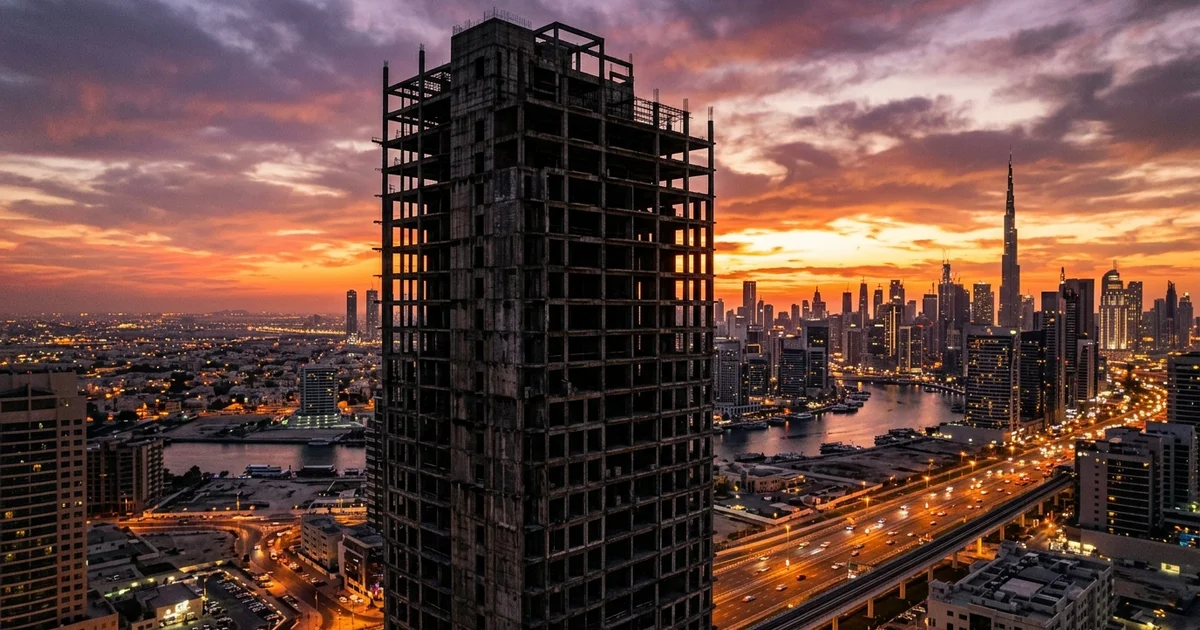
| 8 | 8. The Pentominium, Dubai | Slated to be the world’s tallest all-residential building at 122 stories, construction on this Dubai skyscraper halted in 2011 during the global financial crisis. |
| 9 | 9. New South China Mall, China | Opened in 2005, it was the largest shopping mall in the world in terms of gross leasable area, but it remained over 99% vacant for more than 10 years. |
| 10 | 10. Prora, Germany | A colossal Nazi-built beach resort on the island of Rügen, designed to hold 20,000 people, that was never used for its intended purpose due to the outbreak of World War II. |
1. 1. The Ryugyong Hotel, North Korea
Looming over Bangkok’s skyline is the Sathorn Unique Tower, an eerie, hollow giant known to locals as the ‘Ghost Tower.’ It was designed to be a complex of high-end condos with breathtaking views of the Chao Phraya River. But when the economy collapsed, the money vanished, and the tower was left to the elements.
This is one of those abandoned megaprojects that serves as a physical scar from a specific historical moment.
Today, it’s a popular, albeit dangerous, destination for urban explorers. What’s so striking about the Sathorn Unique is how visibly incomplete it is. You can see exposed rebar and unfinished floors from the street.
It’s a constant, towering reminder that economic forces are as powerful as any hurricane, capable of stopping even the most ambitious costly construction in its tracks.
3. 3. Ciudad Real Central Airport, Spain
Forest City is a different kind of abandoned megaproject—it’s technically open, but hauntingly empty. This massive development, backed by Chinese investors, was marketed as a paradise for a new global elite. It features sprawling apartment complexes, green roofs, and an international school. The problem?
The luxury apartments were too expensive for locals and policy changes made them difficult for foreigners to buy.
Walking through Forest City feels like stepping into a simulation where the NPCs haven’t loaded in yet. The sheer scale of the emptiness is what gets you. It makes you question the very nature of urban planning.
This project wasn’t built to solve a housing crisis or serve a community; it was created as a financial product, and when the market for that product dried up, it became one of the world’s glossiest unfinished structures.
5. 5. Wonderland Amusement Park, China
Deep beneath the Texas prairie lies a massive, secret tunnel. It’s part of the Superconducting Super Collider (SSC), a physics project so ambitious it was nicknamed the ‘Desertron.’ It was meant to have a ring circumference of 54 miles and would have dwarfed CERN’s Large Hadron Collider.
After digging 14 miles of tunnels and spending $2 billion, the project was axed.
This is a truly tragic example of abandoned megaprojects because it represents a loss of scientific knowledge. While other projects on this list are commercial failures, the SSC was a failure of political and financial will.
It makes you wonder what discoveries about the universe we might have made by now if they had just finished it. It’s an intellectual ghost as much as a physical one.
7. 7. Naypyidaw, Myanmar
Dubai is known for its record-breaking skyscrapers, but the Pentominium is a record-breaker of a different kind. It represents the high-water mark of Dubai’s pre-2008 ambition. Construction reached about 28 floors before the developer ran into financial trouble, and work stopped completely.
For over a decade, the concrete stump has been a fixture of the Dubai Marina skyline.
This project is a perfect symbol of how global economic tides can affect even the most extravagant markets. It’s a concrete ghost among a forest of glass and steel giants.
I find it fascinating how these unfinished structures stand as warnings from the recent past, reminding us that even in places that seem to defy financial gravity, the bubble can always burst. It’s a humbling sight.
9. 9. New South China Mall, China
Stretching for nearly 3 miles along a sandy beach, Prora is an architectural behemoth with a dark past. It was built between 1936 and 1939 as part of the Nazi ‘Strength Through Joy’ program.
The identical, six-story housing blocks were a massive undertaking, but when war broke out, construction stopped and the complex was used for military purposes instead.
After the war, it was used as a military base by the East German army before being largely abandoned. Prora’s sheer, oppressive uniformity is chilling. Unlike some ancient marvels, this is one structure we’re glad was never completed for its original purpose.
It’s a haunting reminder of totalitarian ambition, one of the darkest and most historically significant abandoned megaprojects in the world, now being partially redeveloped into luxury apartments and a youth hostel.
You might also enjoy our articles on 10 Incredible Mysterious Ancient Artifacts That Baffle Scientists (2026) and 10 Deadliest Natural Disasters That Changed History Forever.
Final Thoughts
From scientific projects with limitless potential to entire cities waiting for residents, these abandoned megaprojects are more than just ruins. They are cautionary tales written on a massive scale. They show us the limits of financial speculation, political will, and even our own foresight.
Exploring the stories of these failed engineering projects is a humbling journey, reminding us that for every successful marvel of engineering, there’s a ghost of one that never came to be.

Written by the List of Ten Team
We verify every fact using peer-reviewed sources.
Frequently Asked Questions
What is the most expensive abandoned megaproject?
While exact figures are difficult to confirm, projects like the Superconducting Super Collider in the US had budgets exceeding $12 billion before cancellation. Forest City in Malaysia is a $100 billion project that is currently severely underpopulated, making it a contender for the most expensive underperforming megaproject.
Can you legally visit these abandoned megaprojects?
It varies greatly. Some, like the Sathorn Unique Tower, are officially off-limits and dangerous to enter. Others, like the grounds of Prora in Germany or the empty streets of Naypyidaw, are accessible to the public. Always research local laws and safety before attempting to visit any abandoned site.
Why are so many of these projects in China?
China has experienced an unprecedented construction boom over the past few decades. This rapid, large-scale development sometimes outpaces actual demand or runs into planning issues, leading to a higher number of high-profile ‘ghost cities’ and underutilized megaprojects compared to other parts of the world.
For more on this topic, visit National Geographic and Smithsonian Magazine.