
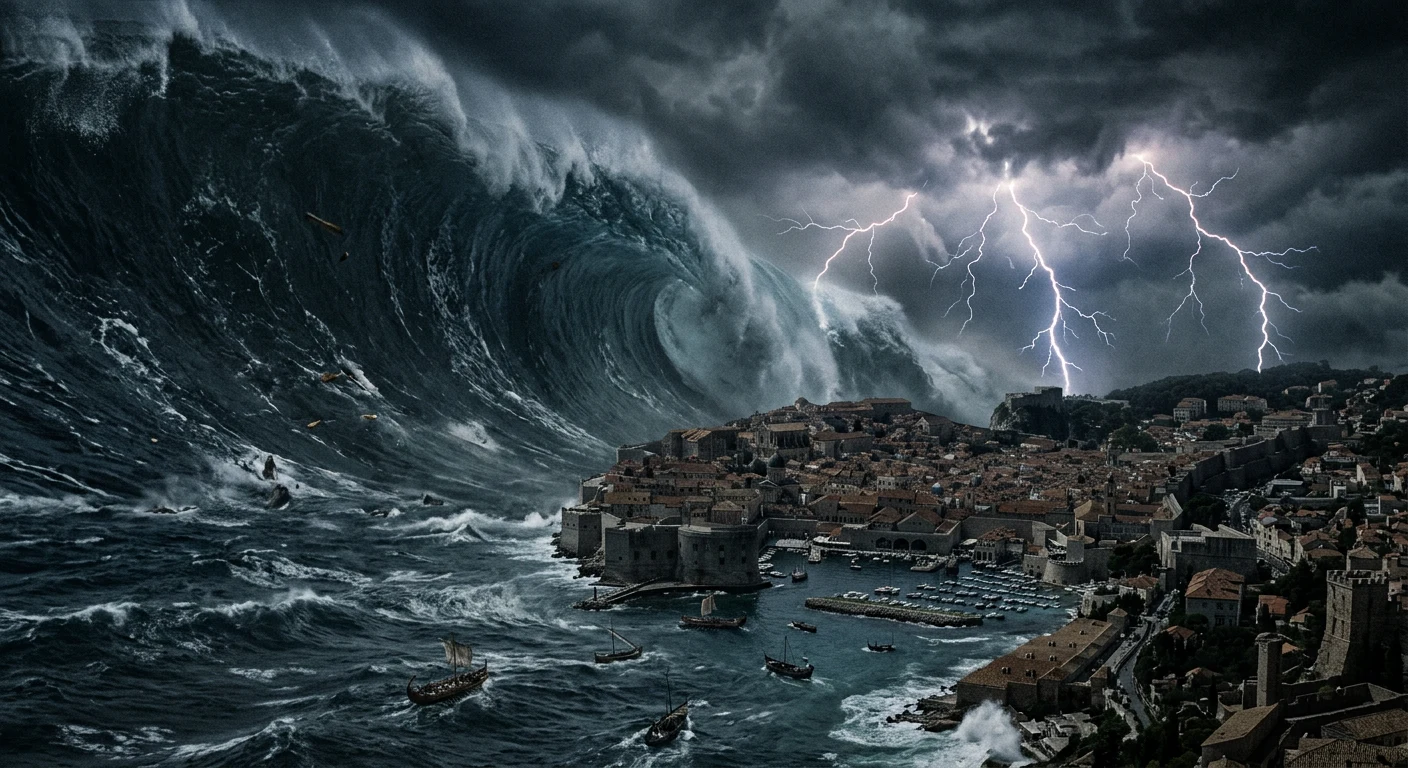
Throughout human history, our planet has occasionally unleashed terrifying displays of unbridled power. From ground-shattering earthquakes to colossal floods that wipe entire regions off the map, the deadliest natural disasters serve as grim reminders of nature’s absolute supremacy. While modern engineering and early warning systems have dramatically improved our survival rates, looking back at historical cataclysms provides essential context for why we must respect the Earth’s raw forces.
These catastrophic events did not merely destroy infrastructure; they fundamentally reshaped demographics, dismantled empires, and altered the trajectory of human civilization forever. com/environment/article/natural-disasters” target=”_blank” rel=”noopener”>National Geographic, extreme weather and geological shifts have historically acted as the ultimate unpredictable disruptors of global progress.
When studying the timeline of the deadliest natural disasters, a sobering pattern emerges regarding humanity’s vulnerability. Many of the most catastrophic events struck areas with dense populations situated near major waterways or volatile tectonic faults. Whether you are fascinated by meteorology, geology, or historical anthropology, understanding these events is crucial.
Much like the 10 Terrifying Space Phenomena That Could Destroy Earth, terrestrial disasters remind us of our fragile existence. In this comprehensive breakdown, we will examine ten of the most devastating acts of nature ever recorded, delving into the science behind their occurrences and the immense human toll they extracted from the societies they impacted.
What Are The Deadliest Natural Disasters In Recorded History?
The deadliest natural disasters in recorded history include the 1931 China Floods, the 1887 Yellow River Flood, and the 1556 Shaanxi Earthquake. These catastrophic events, along with the 1970 Bhola Cyclone and 2004 Indian Ocean Tsunami, claimed millions of lives and permanently altered human history, geography, and disaster response strategies worldwide.
Comparing the Most Catastrophic Events
To truly grasp the scale of the deadliest natural disasters, we must look at the staggering numbers associated with them. Below is a comparative overview of the major cataclysms that forever scarred our history books.
| Disaster | Location | Year | Estimated Fatalities |
|---|---|---|---|
| China Floods | China | 1931 | 1,000,000 – 4,000,000 |
| Yellow River Flood | China | 1887 | 900,000 – 2,000,000 |
| Shaanxi Earthquake | China | 1556 | ~830,000 |
| Bhola Cyclone | Bangladesh | 1970 | 300,000 – 500,000 |
| Haiti Earthquake | Haiti | 2010 | ~316,000 |
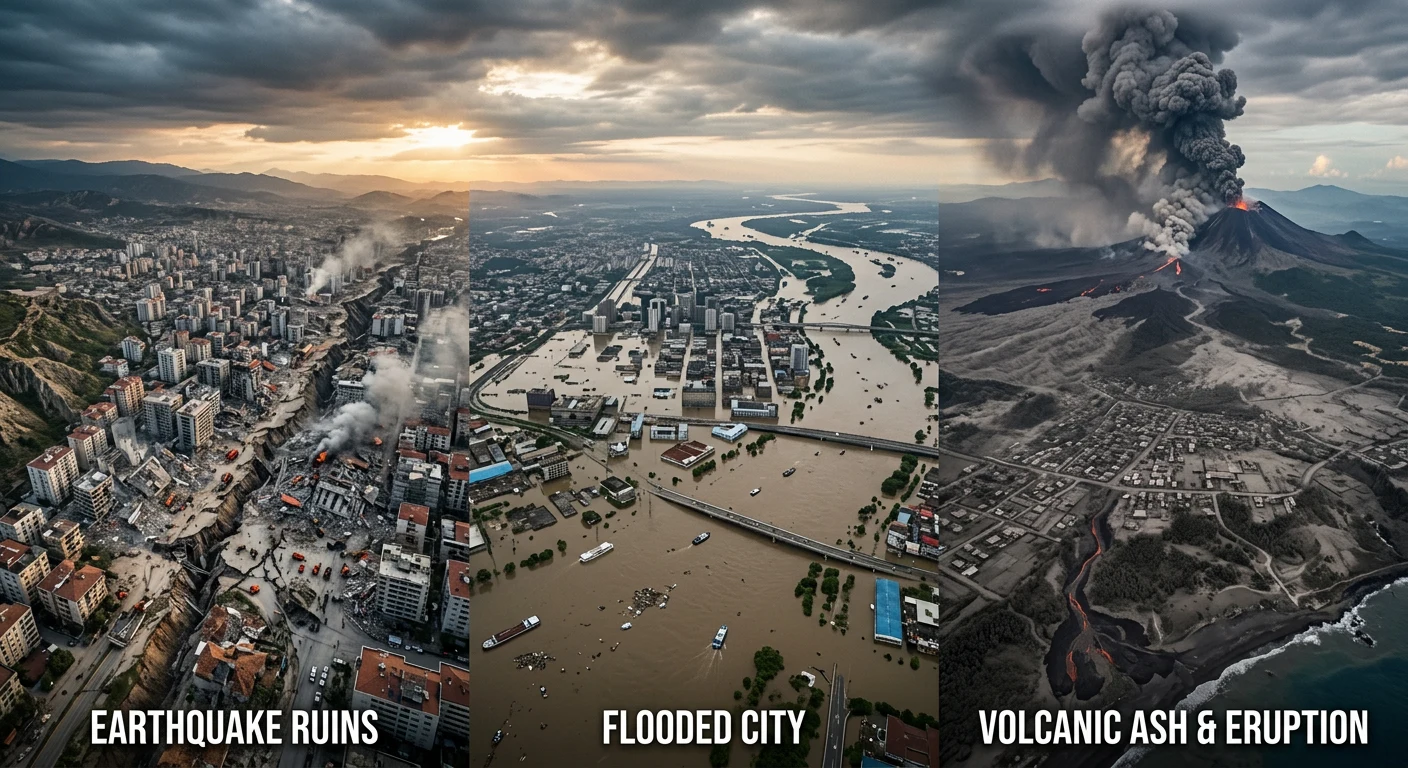
1. The 1931 China Floods
Often cited as the absolute peak of the deadliest natural disasters in documented human history, the 1931 China Floods were a cascading series of inundations that submerged an area roughly the size of the United Kingdom. After a devastating two-year drought, heavy snowfalls in the winter of 1930 were followed by torrential spring rains and a highly active cyclone season. The Yangtze, Yellow, and Huai rivers simultaneously burst their banks, sweeping away villages, crops, and infrastructure with zero warning.
The immediate drowning caused by the floods was horrific, but the secondary effects were even more catastrophic. Stagnant floodwaters became breeding grounds for deadly diseases like cholera, typhus, and malaria. Starvation quickly set in as agricultural lands were rendered completely useless. Millions perished not just from the rushing waters, but from the brutal aftermath of displacement and famine, cementing this as a pivotal tragedy in modern history.
2. The 1887 Yellow River Flood
The Yellow River in China has long been known as the “River of Sorrow” due to its historical propensity for devastating floods. The 1887 incident easily ranks among the deadliest natural disasters ever recorded.
Farmers in the region had built extensive dikes to contain the heavily silted river, which flows at an elevation higher than the surrounding plains. When days of relentless rain battered the region in September 1887, the massive dikes near the city of Zhengzhou finally gave way, unleashing a wall of water.
The resulting deluge spread rapidly across the low-lying plains of northern China, covering an estimated 50,000 square miles. The sheer volume and speed of the floodwaters meant that evacuation was impossible for the vast majority of the rural population. Entire agricultural communities were erased overnight, and the lingering waters led to rampant disease and a massive famine that pushed the death toll into the millions over the following months.
3. The 1556 Shaanxi Earthquake
Striking the heart of Ming Dynasty China on a cold morning in January 1556, the Shaanxi Earthquake remains the most lethal seismic event in recorded history. Although modern seismologists estimate the magnitude to have been around 8.0—lower than many modern quakes—it is the location and the structural vulnerabilities of the era that placed it high on the list of the deadliest natural disasters. The epicenter was located in the Wei River Valley, an area densely populated by peasant farming communities.
The devastatingly high death toll, estimated at 830,000 people, was largely due to the common architectural practice of carving homes known as yaodongs directly into the soft, windblown loess cliffs. When the violent tremors struck, these cliffs collapsed instantly, burying hundreds of thousands of sleeping residents alive beneath tons of earth. The catastrophe wiped out roughly 60% of the population in the hardest-hit counties.
4. The 1970 Bhola Cyclone
When discussing the deadliest natural disasters of the 20th century, the 1970 Bhola Cyclone stands out as the most fatal tropical cyclone ever documented. Striking East Pakistan (now Bangladesh) and India’s West Bengal on November 12, 1970, the storm brought winds equivalent to a Category 3 hurricane. However, the wind was not the primary killer; it was the colossal storm surge, amplified by the unique funnel shape of the Bay of Bengal, that proved utterly catastrophic.
A massive 33-foot wall of water completely inundated the densely populated, low-lying islands of the Ganges Delta. The warning systems were critically inadequate, and many residents were caught entirely off guard as the sea swallowed their homes. The horrific aftermath and the slow, heavily criticized relief efforts directly contributed to immense political unrest, ultimately accelerating the Bangladesh Liberation War the following year.
5. The 2010 Haiti Earthquake
The January 2010 earthquake in Haiti serves as a tragic, modern example of how poor infrastructure can exponentially multiply the effects of seismic activity, placing it among the deadliest natural disasters of the 21st century. The magnitude 7.0 quake struck just 16 miles west of the capital city, Port-au-Prince. The shallow depth of the rupture meant that the violent shaking was felt intensely across the densely populated urban center.
Because the region lacked stringent building codes and much of the housing was constructed with poorly reinforced concrete blocks, the city effectively crumbled in less than a minute. Government buildings, hospitals, and schools pancaked, trapping thousands under heavy rubble. The lack of heavy machinery for rescue operations, compounded by severe damage to the local port and airport, severely bottlenecked international relief efforts, leading to a soaring death toll.
6. The 1815 Eruption of Mount Tambora
In terms of sheer explosive power and global climate disruption, the 1815 eruption of Mount Tambora in modern-day Indonesia is unmatched in recent history, making it one of the deadliest natural disasters caused by volcanic activity. The eruption registered a 7 on the Volcanic Explosivity Index (VEI), obliterating the mountain’s peak and instantly killing over 10,000 people through pyroclastic flows, toxic gases, and localized tsunamis.
However, Tambora’s true lethal legacy was unleashed globally. The volcano ejected massive amounts of sulfur dioxide into the stratosphere, which formed a global aerosol cloud that blocked out sunlight. This led to the infamous “Year Without a Summer” in 1816. Crop failures, widespread famines, and disease outbreaks swept across the Northern Hemisphere, killing tens of thousands across Europe, North America, and Asia in the aftermath.
7. The 1976 Tangshan Earthquake
Striking an industrial city with zero prior warning, the Tangshan Earthquake of 1976 is firmly etched in the annals of the deadliest natural disasters. The magnitude 7.5 quake hit in the middle of the night, at 3:42 AM, when virtually all of Tangshan’s one million residents were fast asleep. Because the region was not historically considered a high-risk earthquake zone, buildings were constructed with unreinforced masonry that completely failed under lateral stress.
In a mere 23 seconds, approximately 85% of the city’s buildings collapsed. Critical infrastructure, including the power grid, water supplies, and transportation lines, were instantly severed. The official death toll stands at roughly 242,000, though many independent estimates suggest the number may have been significantly higher due to political suppression of information at the time. The raw destruction forced China to drastically overhaul its seismic building regulations.
8. The 1138 Aleppo Earthquake
Historical geology reveals that the Middle East has seen its share of monumental seismic events, with the 1138 Aleppo Earthquake remaining one of the deadliest natural disasters of the medieval world. Aleppo, located in modern-day Syria, sits along the highly active Dead Sea Transform fault system. When the major rupture occurred in early October 1138, the ancient city and surrounding Crusader fortresses were violently shaken to their core.
Historical accounts from chronicles of the era detail apocalyptic scenes, with the city’s massive citadel collapsing entirely and crushing hundreds beneath massive stone blocks. Surrounding towns and villages were completely leveled, resulting in an estimated 230,000 deaths. The destruction was so thorough that the region took centuries to recover its pre-earthquake population and structural grandeur.
9. The 2004 Indian Ocean Tsunami
Sparked by a colossal magnitude 9.1 megathrust earthquake off the coast of Sumatra, Indonesia, the 2004 Indian Ocean Tsunami is widely regarded as one of the deadliest natural disasters in modern history. The seafloor violently thrust upward, displacing trillions of tons of water and generating waves that radiated outward at jet airliner speeds. Because the Indian Ocean lacked an extensive tsunami warning system, coastal populations had virtually no time to evacuate.
Waves reaching up to 100 feet tall crashed into the coastlines of 14 different countries, with Indonesia, Sri Lanka, India, and Thailand bearing the brunt of the devastation. Entire coastal resort towns and fishing villages were swallowed by the ocean, resulting in a staggering 227,898 fatalities. The global response was unprecedented, leading to a massive influx of humanitarian aid and the eventual establishment of a much-needed Indian Ocean Tsunami Warning System, monitored heavily by organizations like the World Health Organization.
10. The 1923 Great Kanto Earthquake
Hitting the Japanese main island of Honshu in September 1923, the Great Kanto Earthquake decimated the bustling metropolitan hubs of Tokyo and Yokohama. As one of the deadliest natural disasters in Japan’s history, the magnitude 7.9 quake brought a triad of terrors: violent tremors, massive tsunami waves, and catastrophic firestorms. The timing of the quake, occurring just as families were lighting stoves to cook lunch, proved fatally tragic.
Overturned cooking stoves quickly ignited the primarily wooden architecture of the cities. High winds whipped these localized blazes into immense firestorms that literally consumed the oxygen in the air, creating terrifying fire whirls. The most horrific incident occurred at a former clothing depot where roughly 38,000 people who sought refuge were instantly incinerated by a massive fire tornado. The disaster fundamentally reshaped Japanese urban planning and emergency preparedness.
In conclusion, studying the deadliest natural disasters is not just an exercise in morbid curiosity; it is vital for our future survival. These immense historical tragedies highlight the raw, uncontrollable power of our planet and the stark reality of human vulnerability.
As we continue to build megacities and expand coastal developments, we must apply the hard-learned lessons of the past to protect against the inevitable cataclysms of the future. For more insights into how nature works in bizarre ways, check out our guide on the 10 Incredible Bizarre Natural Phenomena That Defy Logic.
Frequently Asked Questions
What is the deadliest natural disaster in history?
The 1931 China Floods are widely considered the absolute deadliest, with estimated death tolls ranging from 1 million to over 4 million people due to drowning, disease, and starvation.
Are modern natural disasters getting deadlier?
While the financial cost of disasters is rising due to increased infrastructure, the actual death tolls have generally decreased over the past century thanks to advanced early warning systems and better emergency response protocols.
Which country experiences the most natural disasters?
Countries situated along the Pacific Ring of Fire, such as Japan, the Philippines, and Indonesia, frequently experience high rates of earthquakes, tsunamis, and volcanic eruptions.
How can we predict the deadliest natural disasters?
While meteorologists can track storms and floods with high accuracy days in advance, predicting exact timings for earthquakes and sudden volcanic eruptions remains scientifically impossible.