
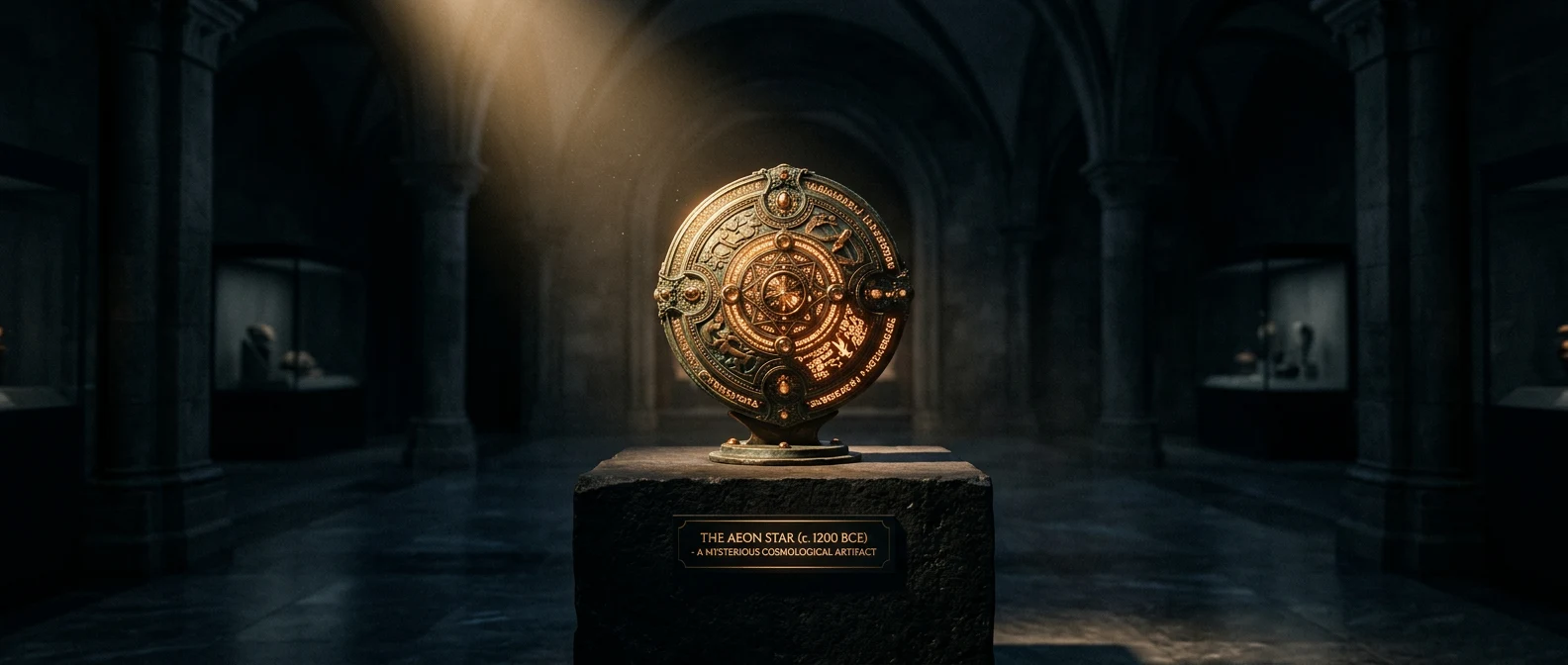
Humanity has always been captivated by the secrets of the past, but few things spark our imagination quite like mysterious ancient artifacts. Throughout history, archaeologists have unearthed countless relics that challenge our understanding of ancient civilizations, suggesting that our ancestors possessed advanced knowledge far beyond what traditional historical timelines allow.
From complex astronomical computers built thousands of years before the digital age to undecipherable manuscripts that continue to stump the world’s brightest cryptographers, these astonishing discoveries force us to rethink the technological capabilities of the ancient world. If you find yourself fascinated by the deep secrets of history, much like the strange behaviors of isolated tribes that avoid civilization, you will be captivated by the anomalies left behind in stone, metal, and parchment.
When we examine these mysterious ancient artifacts, we uncover a hidden layer of history that simply does not fit into standard academic textbooks. Experts from leading institutions, including researchers heavily featured in the , have spent decades trying to decode their functions and origins, yet many remain shrouded in total ambiguity.
Are they the remnants of lost civilizations, misplaced out-of-place artifacts, or simply evidence that human ingenuity evolves in cyclical patterns rather than a straight line? In this comprehensive breakdown, we dive deep into the world’s most perplexing relics that continue to leave the scientific community scratching their collective heads.
What Are The Most Mysterious Ancient Artifacts?
The most mysterious ancient artifacts include the Antikythera Mechanism, the Voynich Manuscript, the Baghdad Battery, and the Piri Reis Map. These historical enigmas feature advanced mechanical engineering, undecipherable languages, early chemical energy generation, and impossibly accurate geographical data that defy modern chronological understanding of human technological advancement.
Comparison of the World’s Strangest Relics
| Artifact Name | Origin Location | Estimated Age | Core Mystery |
|---|---|---|---|
| Antikythera Mechanism | Greece | 150 – 100 BC | Advanced analog computer |
| Voynich Manuscript | Central Europe | Early 15th Century | Undecipherable text/botany |
| Baghdad Battery | Iraq | 250 BC – 224 AD | Potential ancient electricity |
| Piri Reis Map | Ottoman Empire | 1513 AD | Maps ice-free Antarctica |
| Nebra Sky Disk | Germany | 1600 BC | Earliest depiction of cosmos |
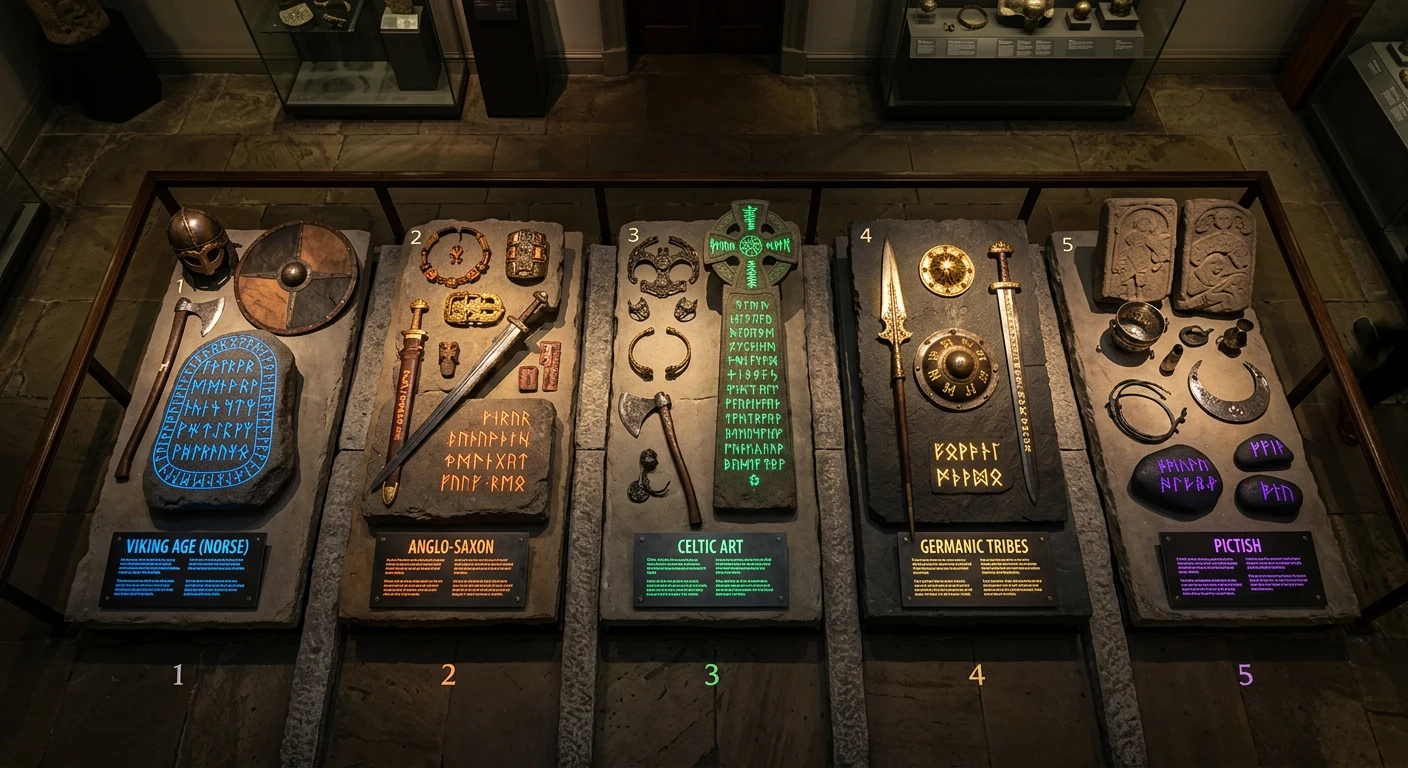
1. The Antikythera Mechanism
Widely considered to be the world’s first analog computer, the Antikythera Mechanism is arguably the king of all mysterious ancient artifacts. Discovered in 1901 by sponge divers off the coast of the Greek island of Antikythera, this heavily encrusted bronze device initially looked like a mere lump of corroded rock.
However, extensive X-ray imaging later revealed a breathtakingly complex interior featuring over 30 interlocking bronze gears. Dating back to somewhere between 150 and 100 BC, the mechanism was used to track astronomical positions and eclipses decades in advance with shocking precision.
What makes the Antikythera Mechanism so mind-boggling is that nothing of this mechanical complexity would appear in the historical record again until the development of astronomical clocks in 14th-century Europe. The sheer metallurgical skill and advanced mathematical calculations required to design such a device suggest that the ancient Greeks possessed technological capabilities that were subsequently lost to history. Even today, modern clockmakers struggle to perfectly replicate the intricate differential gearing utilized by its anonymous creator.
2. The Voynich Manuscript
If there is one item that keeps linguists and cryptographers awake at night, it is the Voynich Manuscript. Carbon-dated to the early 15th century, this 240-page illustrated codex is written in an entirely unknown language or code that has defied all attempts at translation.
Purchased by Polish book dealer Wilfrid Voynich in 1912, the manuscript is filled with bizarre illustrations of unidentifiable plants, strange astrological charts, and naked women bathing in peculiar, interconnected green pools. It is without a doubt one of the most mysterious ancient artifacts found in the literary world.
Over the past century, everyone from British World War II codebreakers to modern AI algorithms have attempted to crack the cipher, resulting in zero verifiable breakthroughs. Some scholars argue it was a medieval hoax crafted to swindle a wealthy buyer, while others firmly believe it represents a lost language, a highly advanced cipher, or an early phonetic transcription of an obscure dialect.
The sheer consistency of the linguistic syntax suggests it is a genuine language, making its impenetrable nature all the more frustrating for historians.
3. The Baghdad Battery
Discovered in 1938 in the village of Khujut Rabu just outside Baghdad, Iraq, the so-called Baghdad Battery consists of a terracotta pot containing a copper cylinder, which in turn houses a single iron rod. Dating back to the Parthian or Sassanid periods (around 250 BC to 224 AD), these components strongly resemble a primitive galvanic cell.
0 volts. This has led to intense speculation about its true purpose among collectors of mysterious ancient artifacts.
While the idea of ancient Mesopotamians using electricity is incredibly enticing, mainstream archaeologists remain highly skeptical. Many propose that the vessels were used to store sacred scrolls, pointing out the lack of connecting wires or electrical appliances found from the era. However, alternative theories suggest the mild electrical current could have been used for early electroplating of gold onto silver jewelry, or perhaps for creating magical “tingling” sensations during religious rituals to simulate divine power.
4. The Piri Reis Map
Drawn on a gazelle skin parchment in 1513 by Ottoman admiral and cartographer Piri Reis, this fragment of a world map presents an astonishing historical puzzle. It shows the western coast of Africa, the eastern coast of South America, and most controversially, what appears to be the northern coast of Antarctica.
What makes this one of the most heavily debated mysterious ancient artifacts is that Antarctica was not officially discovered until 1820, and the coastline depicted on the map matches the subglacial topography of the continent before it was covered in ice.
Reis explicitly noted on the document that he compiled his drawing from around 20 older source maps, some dating back to the time of Alexander the Great. This begs the ultimate question: Who was navigating and mapping the globe with such precise longitudinal accuracy thousands of years before the chronometer was invented?
While skeptics argue that the southern landmass is just a poorly drawn extension of South America, the uncanny accuracy of the geographic coordinates continues to fuel theories of a highly advanced prehistoric seafaring civilization.
5. The Roman Dodecahedrons
Scattered across the northern territories of the former Roman Empire, over 100 small, hollow, twelve-sided bronze objects have been unearthed by archaeologists. Known as Roman Dodecahedrons, these curious geometric figures date back to the 2nd and 3rd centuries AD.
Each of the twelve flat pentagonal faces features a circular hole of varying diameter, and the outer corners are decorated with small spherical knobs. Despite the Romans being meticulous record-keepers, absolutely no written accounts or depictions of these objects exist, solidifying their status as completely mysterious ancient artifacts.
Theories regarding their purpose are wildly diverse. Some historians believe they were used as surveying instruments or rangefinders for Roman artillery, while others suggest they were astronomical measuring devices for determining the optimal dates for sowing winter grain. More mundane theories propose they were knitting tools for creating varying sizes of winter gloves, or simply religious artifacts used in localized Celtic rituals. Without written documentation, their true function may remain a secret forever.
6. The Phaistos Disc
Discovered in 1908 in the ruins of the Minoan palace of Phaistos on the Greek island of Crete, the Phaistos Disc is a small fired clay plate that features a spiral of stamped symbols. Dating to the middle or late Minoan Bronze Age (around 1700 BC), it contains 241 tokens comprising 45 distinct signs.
These symbols were pressed into the soft clay using pre-formed seals before baking, making it arguably the earliest known example of movable type printing in human history. The sheer uniqueness of this item ranks it highly among the world’s mysterious ancient artifacts.
The symbols include figures of marching men, fish, birds, insects, and weapons, none of which perfectly align with known ancient writing systems like Linear A or Linear B. Because the script appears nowhere else in the Mediterranean world, cryptographers lack enough comparative text to crack the code.
Current theories suggest it could be a religious hymn, a magical protective amulet, or a complex ancient board game, but until a “Rosetta Stone” for the Phaistos script is found, it will remain entirely unreadable.
7. The Nebra Sky Disk
Unearthed by illegal treasure hunters in Germany in 1999, the Nebra Sky Disk is a stunning bronze plate featuring gold inlays that depict the sun, a crescent moon, and stars, including a cluster interpreted as the Pleiades. Dated to around 1600 BC, it is widely considered the oldest known concrete depiction of the cosmos worldwide.
This artifact violently disrupted previous archaeological timelines, as historians did not believe that the Bronze Age peoples of Central Europe possessed such advanced astronomical understanding, adding to the growing list of mysterious ancient artifacts.
The disk wasn’t just decorative art; it served as a complex astronomical calculator used to synchronize the solar and lunar calendars. By tracking the position of the Pleiades cluster in relation to the moon, early European farmers knew exactly when to plant and harvest their crops. The gold used on the disk has been traced to Cornwall, England, proving that vast, highly sophisticated trade and knowledge networks existed across Europe thousands of years earlier than traditionally assumed.
8. The Costa Rican Stone Spheres
Hidden deep within the Diquis Delta of Costa Rica are over 300 nearly perfect petrospheres, ranging in size from a few centimeters to over two meters in diameter and weighing up to 15 tons. Known locally as “Las Bolas,” these massive stone orbs were carved by the pre-Columbian Diquis culture between 600 and 1000 AD.
They were largely unknown to the modern world until the 1930s when agricultural workers clearing land for banana plantations stumbled upon them. Their staggering geometric perfection easily qualifies them as some of the most fascinating mysterious ancient artifacts of the Americas.
The true purpose of these immense granite spheres remains lost to time, largely because the indigenous cultures that created them vanished following the Spanish conquest. Archaeologists theorize they were placed in specific alignments to represent celestial bodies, while others believe they served as status symbols for powerful tribal chieftains. Unfortunately, many were dynamited by early treasure hunters who believed they contained hidden gold, destroying their original geographical context and making the mystery even harder to solve.
9. The Iron Pillar of Delhi
Standing over 23 feet tall and weighing more than six tons, the Iron Pillar of Delhi is an ancient metallurgical marvel located in the Qutb complex in India. Erected by Chandragupta II around 400 AD, the pillar is famous for one incredibly baffling reason: despite being exposed to the harsh, humid monsoons of the Indian capital for over 1,600 years, it has scarcely rusted.
This level of corrosion resistance in iron was thought to be a relatively modern achievement, making the pillar a staple among mysterious ancient artifacts examined by material scientists.
The secret to its incredible durability lies in the unique extraction and processing techniques used by ancient Indian blacksmiths. The iron has an unusually high phosphorus content, which interacts with the ambient moisture to create a thin, protective passive film of “misawite” on the surface. While science has explained the “how,” the historical mystery remains: how did ancient metallurgists intentionally develop a complex anti-corrosion forging technique so long ago, only for the knowledge to be entirely forgotten by subsequent generations?
10. The Olmec Colossal Heads
Before the Maya and the Aztecs, Mesoamerica was dominated by the enigmatic Olmec civilization, which flourished from 1200 to 400 BC. The most iconic remnants of this lost culture are the 17 colossal stone heads discovered across various sites in modern-day Mexico.
Carved from massive basalt boulders, these heads weigh between 6 and 50 tons each. Their prominent, realistic facial features differ greatly from typical Mesoamerican art, cementing their legacy as intensely mysterious ancient artifacts that continue to intrigue anthropologists worldwide.
The greatest puzzle surrounding the Olmec heads is the logistics of their creation and transportation. The basalt quarries were located in the Tuxtla Mountains, up to 90 miles away from where the heads were ultimately placed.
Since the Olmecs did not possess wheeled vehicles, beasts of burden, or iron tools, hauling these colossal 50-ton blocks through dense, swampy jungles and across raging rivers remains a nearly incomprehensible feat of engineering. Many historians believe they are portraits of powerful ancient rulers, forever immortalized in volcanic rock.
Conclusion
The study of history is rarely as straightforward as we would like to believe. While mainstream archaeology provides a solid framework for understanding human development, studying these mysterious ancient artifacts reveals glaring blind spots in our collective memory.
From ancient analog computers calculating the stars to massive stone spheres hidden in the jungle, these relics force us to remain humble about what we truly know. Just as we are shocked by the sheer force of the deadliest natural disasters that changed history, these incredible artifacts disrupt the timeline of technological evolution, hinting at lost chapters of human ingenuity waiting to be deciphered.
Frequently Asked Questions
What makes mysterious ancient artifacts so difficult to understand?
Many mysterious ancient artifacts challenge modern science because they are found without proper historical context or written records. Without supplementary texts to explain their origins or functions, modern researchers must rely on reverse engineering and speculation.
Are there any ancient artifacts that prove time travel or aliens?
No. While pop culture often associates unexplained phenomena with extraterrestrials or time travel, the reality is that ancient civilizations were simply incredibly resourceful and possessed advanced knowledge of mathematics, astronomy, and engineering that was later lost during periods of societal collapse.
Will the Voynich Manuscript ever be translated?
It remains a topic of fierce debate. While artificial intelligence and massive computing power are currently being applied to the text, the lack of any corresponding “Rosetta Stone” means its contents might permanently remain one of the world’s greatest linguistic mysteries.