
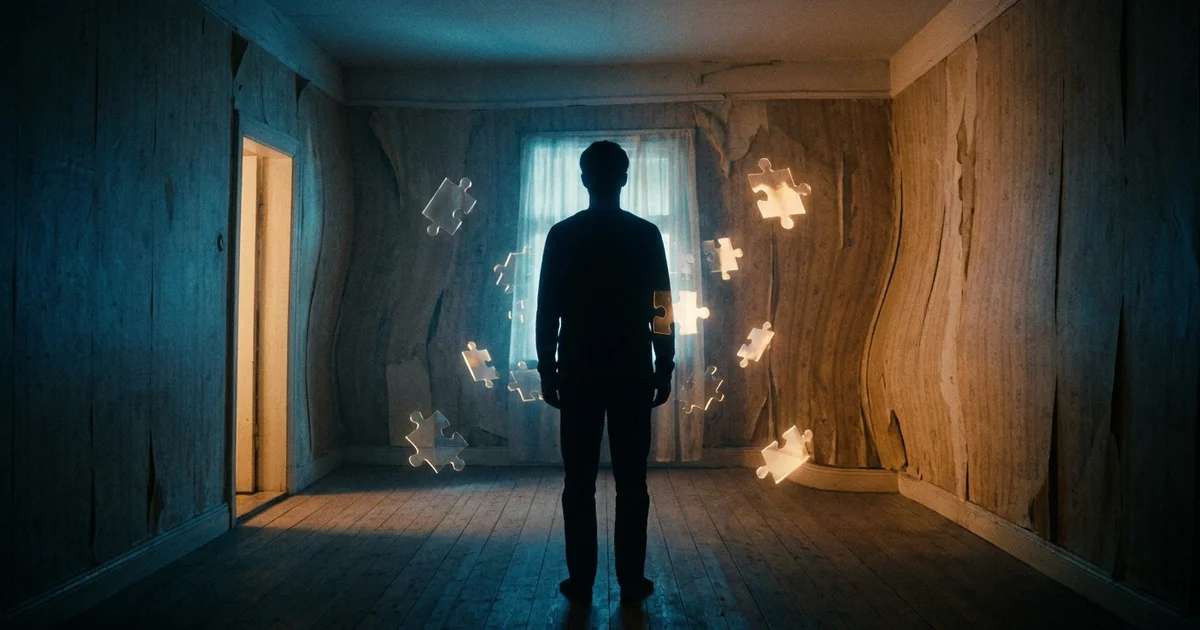
Look, I was genuinely shocked to learn just how easily our brains can trick us into believing things that simply are not true. We rely on our minds to accurately interpret the world, but there are several bizarre psychological syndromes that can completely rewrite a person’s reality.
According to fascinating research from the American Psychological Association, even a tiny misfiring in the brain’s processing centers can create an entirely new, deeply convincing version of the world.
I find human perception absolutely incredible, especially when it glitches. We already know our eyes can deceive us, as seen with these bizarre optical illusions science can finally explain. But what happens when the illusion is entirely internal, affecting how you view your family, your own body, or the size of the room around you?
Can a syndrome change your entire reality?
Yes, certain rare brain conditions can completely override logic and perception. These bizarre psychological syndromes affect facial recognition, spatial awareness, and memory. Because the brain controls all sensory input, any disruption can make a deeply false reality feel undeniably true to the person experiencing it.
📋 Table of Contents
The Mind’s Strangest Glitches
The human brain is an extraordinary supercomputer, but sometimes the software experiences a highly specific error. When I first started researching bizarre psychological syndromes, I expected to find mild quirks. Instead, I found documented cases of people who look in the mirror and see strangers, or who believe historical cities are actively speaking to them.
Here is a quick breakdown of what we will cover.
| # | Name | Key Fact |
|---|---|---|
| 1 | Capgras Delusion | Belief a loved one is an impostor |
| 2 | Fregoli Delusion | Belief everyone is the same person |
| 3 | Alice in Wonderland Syndrome | Objects appear to change sizes |
| 4 | Foreign Accent Syndrome | Speaking with an unlearned accent |
| 5 | Anton-Babinski Syndrome | Denial of one’s own blindness |
| 6 | Alien Hand Syndrome | One hand moves on its own |
| 7 | Jerusalem Syndrome | Religious delusions tied to a location |
| 8 | Boanthropy | Believing oneself to be a cow |
| 9 | Erotomania | Delusion of a celebrity romance |
| 10 | Reduplicative Amnesia | Belief a location has been cloned |

1. Capgras Delusion
If Capgras is about believing one person is an impostor, Fregoli Delusion is almost the exact opposite. People with this condition believe that different strangers around them are actually a single person repeatedly changing their disguise.
They might see the postman, a barista, and a passing driver, and firmly believe it is the same individual following them.
Like many bizarre psychological syndromes, this is linked to a malfunction in how the brain links faces with personal identities. It is essentially facial recognition working in hyperdrive, forcefully matching a familiar identity to entirely unknown faces. The brain insists there is a connection where none actually exists.
I always wonder what it must feel like to live in a reality resembling a strange, paranoid stage play. It is like being trapped in your own personal Truman Show, where everyone around you is just one dedicated actor changing costumes. The sheer exhaustion of navigating that reality must be overwhelming.
3. Alice in Wonderland Syndrome
This is easily one of the most jaw-dropping bizarre psychological syndromes I have ever read about. After a minor stroke or head injury, a person wakes up speaking their native language but with a distinct, often completely accurate, foreign accent.
An American might suddenly sound French, or a British person might adopt a strong Jamaican cadence.
The patient hasn’t actually magically learned a new dialect overnight. Instead, the specific brain injury alters the timing, intonation, and tongue placement of their speech. Listeners hear these altered speech patterns and naturally categorize them as a familiar foreign accent.
What deeply fascinates me here is how identity is tied to the way we sound. Patients often report feeling like they have lost a piece of their original self because their community suddenly treats them like a tourist. It reveals how fragile our personal identity really is, hanging on mere syllables.
5. Anton-Babinski Syndrome
Alien Hand Syndrome is a rare condition where a person’s hand appears to take on a mind of its own. It moves independently, grabs objects, and performs complex tasks without the person’s conscious control. Out of all the bizarre psychological syndromes we are covering, this one feels the most like a science fiction movie.
It typically happens after surgeries that sever the connection between the brain’s two hemispheres, or after specific localized strokes. The motor cortex can still send signals to the hand, but the conscious mind is completely bypassed. People often end up having to use their “good” hand to restrain their rebellious limb.
Imagine having to constantly wrestle your own arm just to button your shirt or eat a meal. To me, it is a striking reminder that our conscious mind is not always the one holding the steering wheel. Parts of our physical body have their own localized agendas when the main command center goes offline.
7. Jerusalem Syndrome
Boanthropy is one of the oldest recorded bizarre psychological syndromes in human history. It is a delusional disorder where a person genuinely believes they are a cow or an ox. They will often drop to all fours, attempt to eat grass in a pasture, and refuse to communicate using human language.
Modern psychiatrists are still debating the exact cause, though some link it to severe advanced stages of untreated syphilis or profound depressive episodes. Hypnotism has also been known to temporarily trigger similar states. It completely rewrites a person’s self-image on a foundational level, stripping away their humanity entirely.
What blows me away is that this isn’t a modern internet joke, but a condition stretching back to ancient times. The most famous historical case was King Nebuchadnezzar of Babylon, who reportedly lived in the wild eating grass for seven years.
It forces you to wonder what specific circuit in the brain decides our species identity.
9. Erotomania
Reduplicative amnesia is the absolute conviction that a specific physical location has been duplicated and exists in two places at once. A patient sitting in a hospital room in New York might argue they are actually in an identical hospital room in California.
They fully recognize their surroundings, but their internal GPS system places the room in the wrong geography.
This generally happens following damage to the right cerebral hemisphere, which handles spatial memory. The patient’s memory of the place is intact, but the spatial context is broken. They might even assume the hospital was packed up and moved across the country just to accommodate them.
It essentially proves that our brain’s internal tracking system can be easily hacked with a minor physical injury. I love how the mind tries to rationalize the error by inventing a cloning scenario rather than admitting it is lost. It is a brilliant, albeit bizarre, coping mechanism to handle confusing spatial data.
Final Thoughts
The human mind is a resilient, creative, and sometimes entirely unpredictable machine. Exploring these bizarre psychological syndromes reminds me how fragile our daily reality truly is. If you enjoyed this dive into the strange realities of the human body, you should absolutely check out these bizarre medical conditions that sound like science fiction.
Stay curious, because the world inside our heads is just as wild as the universe outside.
Written by the List of Ten Team
We verify every fact using peer-reviewed sources.
Frequently Asked Questions
Are these bizarre psychological syndromes treatable?
Yes, many of these bizarre psychological syndromes are treatable. Depending on the cause, treatments range from talk therapy and medication to simply allowing the brain time to heal from a minor injury.
Can a healthy person experience these syndromes?
Generally, no. Most of these bizarre psychological syndromes are triggered by specific neurological events like strokes, migraines, or head trauma. However, conditions like Jerusalem Syndrome can affect perfectly healthy tourists.
Why does the brain create these delusions?
When the brain’s processing centers lose communication, the logical side of the brain steps in to make sense of the missing data. It fabricates a delusion to explain why the sensory information does not match the emotional response.