
Look, I was genuinely shocked when I first started looking into atmospheric science and realized that regular thunderstorms are just the tip of the iceberg. We all know about those standard flashes of white light that light up summer evenings.
But sitting right above our heads is a completely hidden, fascinating world of exotic lightning types that literally defy logic.
Some of these incredible bursts of energy shoot straight up into outer space, while others form glowing floating spheres that look like pure magic. I highly recommend checking out NASA’s official atmospheric research if you want to dive deeper into how wild our sky really is.
Learning about these phenomena reminded me of reading about everyday optical illusions that trick your brain, except these spectacular sky shows are completely real and overwhelmingly powerful.
What is the rarest form of lightning?
The rarest form of lightning is widely considered to be Ball Lightning. Unlike other exotic lightning types, it appears as a floating, glowing sphere that moves erratically near the ground. Scientists still cannot completely explain how these glowing orbs sustain their energy for several seconds.
📋 Table of Contents
- Overview
- 1. Red Sprites (The Cosmic Jellyfish)
- 2. Blue Jets (The Upward Shooters)
- 3. Ball Lightning (The Floating Orbs)
- 4. ELVES (The Glowing Rings)
- 5. Volcanic Lightning (The Dirty Thunderstorm)
- 6. St. Elmo’s Fire (The Ghostly Plasma)
- 7. Dark Lightning (The Invisible Flash)
- 8. Spider Lightning (The Sky Crawler)
- 9. Catatumbo Lightning (The Everlasting Storm)
- 10. Positive Giants (The Bolt from the Blue)
- FAQ
The Hidden World of Extreme Weather
You probably think you know what lightning looks like, but nature loves to break its own rules. This curated list of exotic lightning types covers everything from bizarre optical illusions to invisible blasts of high-energy radiation. I promise you will never look at a dark rain cloud the same way again.
| # | Name | Key Fact |
|---|---|---|
| 1 | Red Sprites | Appear high in the mesosphere |
| 2 | Blue Jets | Shoot upward from storm tops |
| 3 | Ball Lightning | Floats erratically as a sphere |
| 4 | ELVES | Expand as huge rings of light |
| 5 | Volcanic Lightning | Triggered by ash friction |
| 6 | St. Elmo’s Fire | Creates a blue plasma glow |
| 7 | Dark Lightning | Emits invisible gamma rays |
| 8 | Spider Lightning | Crawls horizontally across clouds |
| 9 | Catatumbo Lightning | Strikes endlessly in Venezuela |
| 10 | Positive Giants | Strikes miles away from the storm |
1. Red Sprites (The Cosmic Jellyfish)
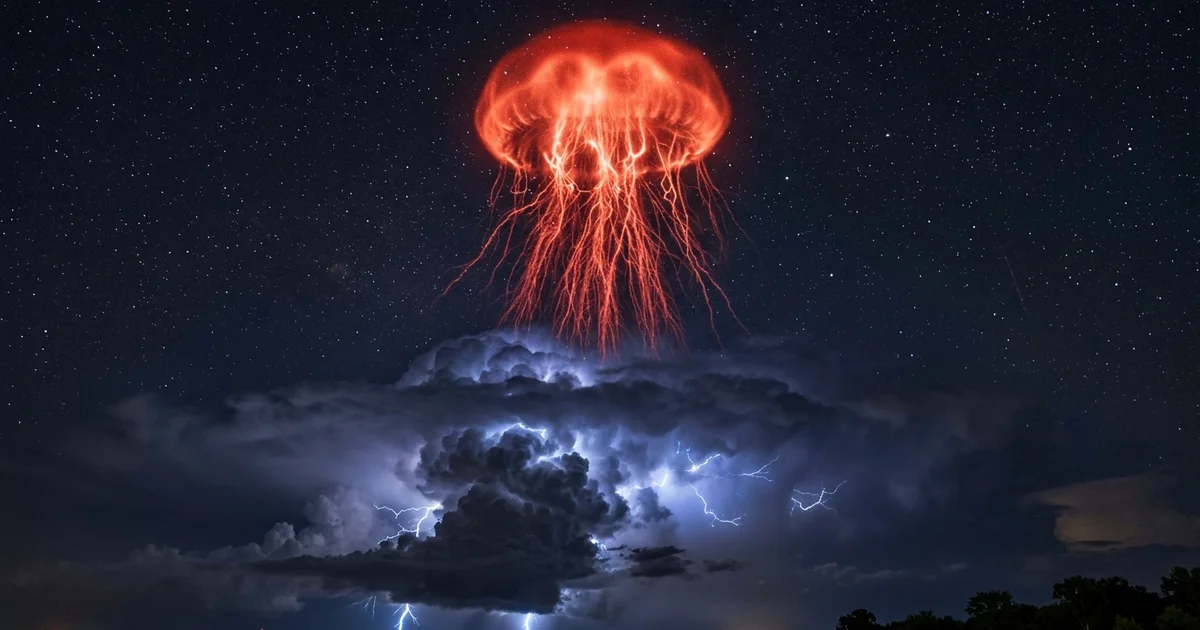
If you look way up above a powerful thunderstorm, you might just catch a glimpse of a giant, red electrical jellyfish. Red sprites are massive electrical discharges that occur high up in the mesosphere, sometimes reaching 50 miles above the Earth’s surface. They are incredibly brief, flashing for only a fraction of a millisecond.
I always thought thunderstorms only pushed energy downward toward the ground. But discovering that one of the most famous exotic lightning types actually shoots upward into the edge of space completely changes how I view storms. It makes our atmosphere feel so much more connected to the cosmos.
Pilots reported seeing these red flashes for decades, but scientists largely ignored them until cameras finally captured them in 1989. Today, amateur astronomers actively hunt for them with high-speed cameras.
2. Blue Jets (The Upward Shooters)
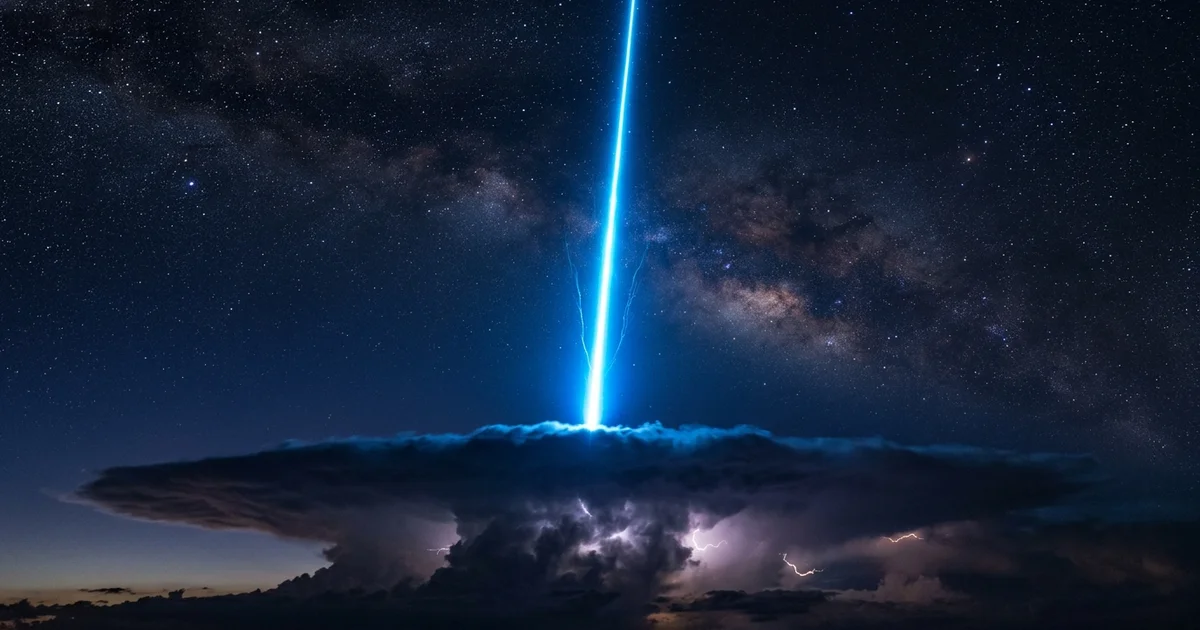
Unlike red sprites, which hover high above the storm, blue jets shoot directly out of the top of the cloud layer. They look exactly like brilliant blue laser beams firing up into the stratosphere. These jets travel at phenomenal speeds, clocking in at over 22,000 miles per hour.
What I find absolutely jaw-dropping is how vivid the color is compared to regular lightning. The intense blue color comes from the specific way nitrogen reacts in the upper atmosphere. While other exotic lightning types tend to spread out, blue jets stay tightly focused like a spotlight.
My personal take on blue jets is that they look exactly like a sci-fi energy weapon firing off into space. It is wild to think these massive blue beams are firing off above our heads while we are just trying to stay dry on the ground.
3. Ball Lightning (The Floating Orbs)
This is easily the most mysterious phenomenon on this list. Ball lightning appears as a glowing orb of light that slowly floats through the air, sometimes even entering houses through open windows or chimneys. It usually lasts for several seconds before silently fading away or violently exploding.
Historical accounts of this phenomenon go back centuries, making it sound like something straight out of ancient folklore. It honestly reminds me of the strange mysteries discussed in our article about bizarre out-of-place artifacts, because it feels like it just doesn’t belong in reality. Even today, scientists struggle to replicate it perfectly in a lab.
The sheer unpredictability of an electrical sphere floating through a living room feels like magic to me. Out of all the unexplained exotic lightning types recorded in history, this is the one I desperately want to see with my own eyes.
4. ELVES (The Glowing Rings)
Yes, scientists actually named a weather event ELVES. It stands for Emissions of Light and Very Low Frequency Perturbations due to Electromagnetic Pulse Sources. They appear as massive, rapidly expanding halos of red light that flash at the very edge of space.
These gigantic glowing rings are triggered by the electromagnetic pulses of intense lightning strikes hitting the ground below. Unlike most exotic lightning types, ELVES expand outward horizontally rather than shooting vertically. They can stretch across a staggering 250 miles in mere milliseconds.
It is genuinely fascinating to me that these giant rings cover half a state, yet nobody on the ground ever notices them. We only know they exist because orbiting satellites and high-altitude cameras managed to capture their faint red glow.
5. Volcanic Lightning (The Dirty Thunderstorm)
When a massive volcano erupts, it doesn’t just spew lava and ash. The intense friction created by millions of rock particles and ash colliding in the air generates massive amounts of static electricity. This results in what meteorologists call a “dirty thunderstorm.”
The visuals are absolutely breathtaking, with jagged bolts of lightning illuminating thick, dark clouds of volcanic ash. It creates an apocalyptic scene that looks like the end of the world. Among all exotic lightning types, volcanic lightning feels the most raw and aggressive.
Watching a volcano erupt is already a bucket-list experience, but adding a chaotic web of electricity to the ash plume is mind-boggling. It is the perfect visual representation of Earth’s untamed geological power clashing with the atmosphere.
6. St. Elmo’s Fire (The Ghostly Plasma)
St. Elmo’s Fire isn’t technically a traditional lightning bolt, but it is a highly related electrical weather phenomenon. It manifests as a continuous, eerie blue or violet glow that surrounds tall, pointed objects during heavy thunderstorms. You will often see it on ship masts, airplane wings, or church steeples.
This glowing plasma is created when the electrical field of a storm ionizes the air molecules around a sharp object. The air literally tears apart, turning into a glowing conductive gas. It often makes a distinct hissing or buzzing sound as it dances around.
I can only imagine being an ancient sailor caught in a violent storm, looking up to see glowing blue fire clinging to the ship’s mast. It is totally understandable why old-world sailors viewed this glowing plasma as a divine omen from the heavens.
7. Dark Lightning (The Invisible Flash)
If you think lightning has to produce a bright flash of light, think again. Dark lightning, officially known as Terrestrial Gamma-ray Flashes (TGFs), produces almost no visible light whatsoever. Instead, it blasts out incredibly powerful bursts of gamma radiation.
These bursts are so intense that they rival the radiation produced by exploding stars in deep space. Most exotic lightning types are highly visible, but dark lightning operates completely in stealth mode. Airplane passengers flying near storms are sometimes hit by these invisible gamma flashes.
The fact that thunderstorms are secretly generating intense bursts of invisible radiation right over our heads is a wildly fascinating concept. It makes me wonder what other invisible forces are happening in the sky that we just haven’t developed the tools to see yet.
8. Spider Lightning (The Sky Crawler)
Instead of striking the ground, spider lightning rapidly crawls horizontally across the underside of expansive cloud layers. It branches out in incredibly complex, web-like patterns that can stretch for miles across the sky. The electrical branches pulse and flicker, making it look like a living organism.
This usually happens during the decaying stage of a severe thunderstorm when the cloud layers become highly stratified. It is completely mesmerizing to watch because the flashes travel much slower than regular lightning. Scientists study this to understand why some exotic lightning types behave like slow-moving rivers of light.
There is something strangely hypnotic about watching a glowing spider web of electricity slowly creep across a dark storm cloud. It is easily my favorite type of lightning to watch on a warm summer night.
9. Catatumbo Lightning (The Everlasting Storm)
Down in Venezuela, over the mouth of the Catatumbo River, there is a storm that essentially never ends. This specific region experiences intense lightning storms for about 160 to 300 nights a year. The lightning flashes up to 28 times per minute, creating a continuous strobe light effect.
According to National Geographic explorers, the unique geography of the Andes mountains traps warm moisture, creating the perfect infinite storm engine. Certain exotic lightning types are confined to specific geographical locations, and this is the prime example. It is the single largest generator of tropospheric ozone on the planet.
If I ever travel to South America, witnessing a storm that literally never sleeps is absolutely at the top of my bucket list. The sheer reliability of this atmospheric light show is nothing short of legendary.
10. Positive Giants (The Bolt from the Blue)
Most lightning carries a negative electrical charge and strikes directly under the storm cloud. But positive lightning, often called a “bolt from the blue,” originates at the very top of the storm anvil. It travels horizontally for miles before suddenly plunging down to the ground in areas where the sky is completely clear.
These strikes are incredibly dangerous because they strike without any warning, far away from the rain. Furthermore, these exotic lightning types pack ten times the electrical current of a standard strike. They carry up to 300,000 amperes of electrical power and can easily start massive forest fires.
The thought that a massive lightning bolt can travel miles away from a storm and strike out of nowhere honestly keeps me looking over my shoulder. It is the ultimate reminder that nature’s power extends far beyond the dark clouds we see.
Final Thoughts
The sheer variety of extreme weather out there proves that we still have so much to learn about our own planet. Actively learning about these exotic lightning types makes every incoming thunderstorm feel less like an inconvenience and more like a front-row ticket to a cosmic show.
If you found this weather breakdown fascinating, you will definitely want to check out our list on 10 bizarre psychological syndromes most people don’t know about for another mind-bending read.

Written by the List of Ten Team
We verify every fact using peer-reviewed sources.
Frequently Asked Questions
Are exotic lightning types dangerous to humans?
Most upper-atmospheric bursts like sprites and elves are completely harmless because they occur too high up. However, positive giant strikes and ball lightning can be extremely dangerous to anyone on the ground.
Can you see red sprites with the naked eye?
It is possible but very difficult. You need completely dark skies, a clear line of sight to a distant storm, and perfectly adjusted night vision to catch the faint red flashes.
Why are some exotic lightning types completely invisible?
Phenomena like dark lightning emit gamma radiation instead of visible light photons. Because our eyes cannot process high-energy gamma rays, the flash is completely invisible to humans.