
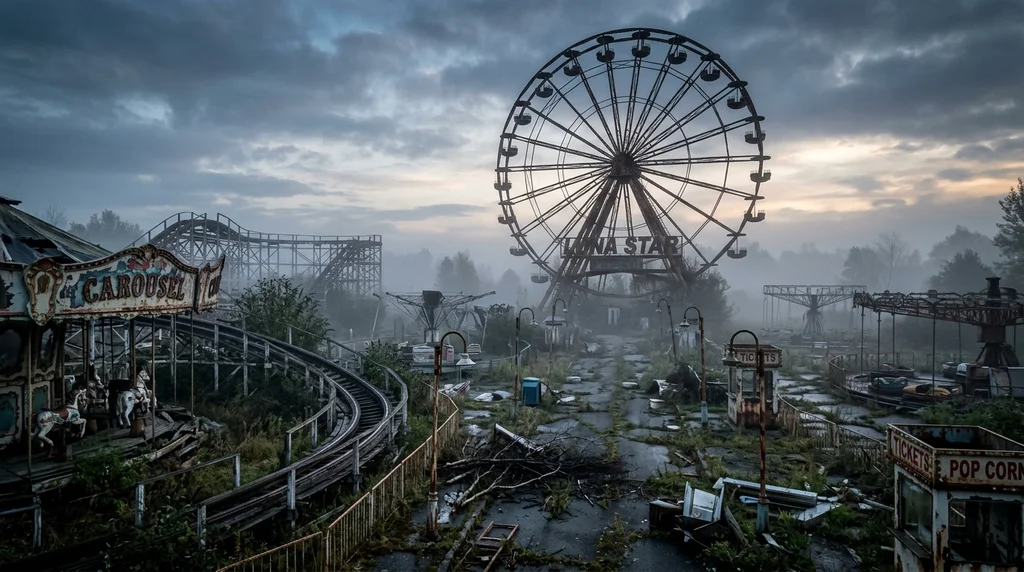
Have you ever wondered what happens when humanity suddenly leaves an area behind, allowing nature and time to reclaim what was once a thriving civilization? The world is filled with terrifying abandoned places, structures left to decay in the wake of natural disasters, catastrophic human errors, or devastating economic collapses.
These forgotten locations stand as eerie time capsules, frozen in the exact moments their inhabitants fled for their lives. Exploring these dark ruins offers an unmatched psychological thrill for urban explorers and dark tourism enthusiasts alike.
Walking through these terrifying abandoned places gives us a chilling glimpse into the past, sparking our deepest morbid curiosities. From radioactive exclusion zones to haunted plague islands, these locations force us to confront the fragility of our own modern world.
Why Are These Terrifying Abandoned Places So Fascinating?
The allure of terrifying abandoned places stems from psychological curiosity, historical mystery, and the haunting beauty of nature reclaiming human architecture. These decaying structures serve as dark time capsules, offering visitors a profound and often unsettling reminder of human impermanence and historical tragedy.
Comparing the Most Terrifying Abandoned Places on Earth
| Location Name | Country | Year Abandoned | Primary Cause |
|---|---|---|---|
| Pripyat | Ukraine | 1986 | Nuclear Disaster |
| Hashima Island | Japan | 1974 | Depleted Coal Reserves |
| Poveglia Island | Italy | 1968 | Hospital Closure / Dark History |
| Centralia | USA | 1962 (Ongoing) | Underground Mine Fire |
| Kolmanskop | Namibia | 1956 | Diamond Depletion |
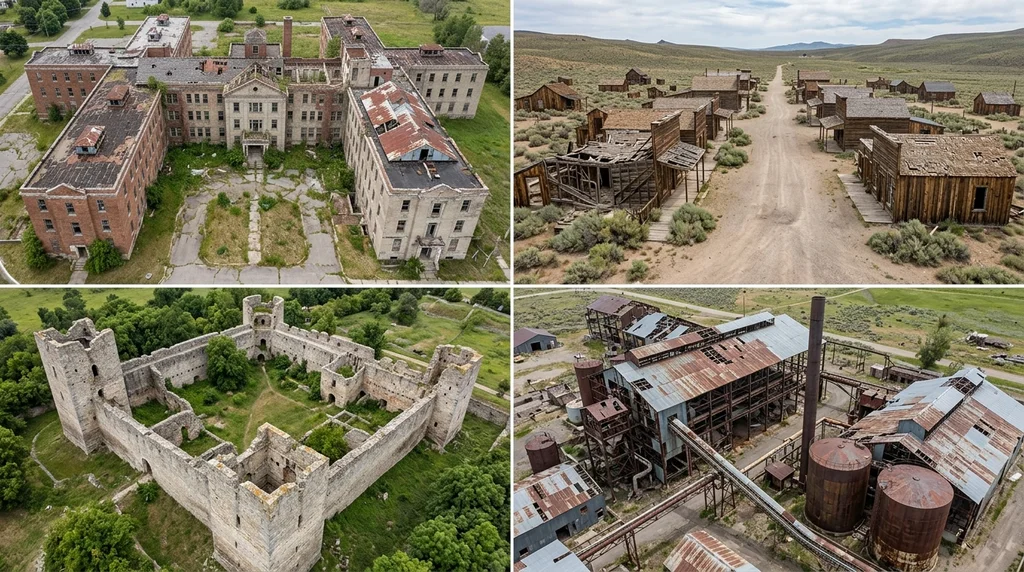
1. Pripyat, Ukraine: The Radioactive Ghost Town
There are few terrifying abandoned places on Earth as infamous and heavily documented as Pripyat. Founded in 1970 to house workers for the nearby Chernobyl Nuclear Power Plant, the city was home to nearly 50,000 residents before catastrophe struck. On April 26, 1986, Reactor Number 4 exploded, releasing massive amounts of lethal radiation into the atmosphere. The entire population was given just hours to evacuate, leaving behind personal belongings, half-eaten meals, and an eerie landscape frozen in Soviet-era history.
Today, Pripyat stands as a solemn monument to the dangers of nuclear ambition. Over the decades, nature has fiercely reclaimed the concrete jungle. Trees burst through the floors of forgotten schools, and wild wolves roam the empty hospital corridors. The iconic yellow Ferris wheel, which was scheduled to open just days after the disaster, has become the universal symbol of this radioactive wasteland, making it a chilling destination for extreme dark tourists.
2. Hashima Island, Japan: The Forgotten Concrete Battleship
Also known as “Battleship Island” due to its distinct shape, Hashima Island is undoubtedly one of the most visually terrifying abandoned places in Asia. Located off the coast of Nagasaki, this tiny facility was once the most densely populated place on Earth.
During its peak in the mid-20th century, over 5,000 coal miners and their families were crammed into brutalist concrete apartment blocks that completely covered the 16-acre rock. When petroleum replaced coal in Japan during the 1970s, the mines were shut down, and the island was entirely deserted within months.
Now, the crumbling concrete skyscrapers stand battered by vicious typhoons and salty ocean winds. Exploring the island feels deeply apocalyptic; old television sets, children’s toys, and rusted industrial machinery lie precisely where they were dropped over fifty years ago. Its striking, dystopian appearance even inspired the villain’s secret lair in the 2012 James Bond film Skyfall.
3. Poveglia Island, Italy: The Isle of Ghosts
When it comes to deeply disturbing history, few terrifying abandoned places can compete with Poveglia Island. Situated in the Venetian Lagoon, this small stretch of land was historically utilized as a quarantine station for victims of the Bubonic Plague. Thousands of infected individuals were exiled here to die, and their remains were unceremoniously burned in massive pyres. Local legends suggest that the soil itself is half-composed of human ash.
As if its plague history wasn’t dark enough, the island later housed a psychiatric hospital in the 1920s. Rumors persist of a cruel doctor who performed horrific, unethical lobotomies on patients in the bell tower before ultimately throwing himself to his death. Today, Poveglia is strictly off-limits to tourists. The crumbling asylum and the overgrown, unmarked graves create an atmosphere of immense dread, cementing its reputation as the most haunted island on the planet.
4. Centralia, Pennsylvania: The Town on Fire
Centralia is widely considered one of America’s most terrifying abandoned places, primarily because the disaster that destroyed it is still happening right beneath the surface. In 1962, a seemingly harmless trash fire ignited an exposed vein of coal in the labyrinth of mining tunnels running beneath the town. The fire rapidly spread underground, becoming an unstoppable inferno that cracked highways open, released lethal carbon monoxide gas into homes, and created massive, sudden sinkholes.
Most of the population relocated in the 1980s, and the government eventually condemned the borough. Today, Centralia is a surreal landscape where toxic smoke continuously billows from deep fissures in the earth. The infamous “Graffiti Highway”—a warped, abandoned stretch of Route 61—served as a haunting visual before it was eventually covered over in dirt. The eerie environment famously served as the real-world inspiration for the horror video game and film series, Silent Hill.
5. Kolmanskop, Namibia: Swallowed by the Sands
Located in the unforgiving Namib Desert, Kolmanskop is one of the most visually stunning yet entirely terrifying abandoned places on the African continent. In the early 1900s, it was a prosperous German diamond mining town, complete with a hospital, ballroom, power station, and even a bowling alley. For a brief moment, it was incredibly wealthy, producing a massive portion of the world’s diamonds.
However, following World War II, the diamond field slowly exhausted, and larger diamond deposits were discovered further south. By 1956, Kolmanskop was entirely abandoned to the harsh desert winds. Today, the desert has violently reclaimed the town. Massive sand dunes have burst through the ornate wooden doors and windows, completely filling living rooms and hallways with several feet of fine sand. The stark contrast between European architecture and aggressive natural forces makes it a surreal and haunting destination.
6. Beelitz-Heilstätten, Germany: The Dictator’s Hospital
If you have an aversion to medical history, Beelitz-Heilstätten easily ranks among the most terrifying abandoned places in Europe. Originally constructed in 1898 as a massive sanatorium complex to treat tuberculosis, it later transitioned into a military hospital during both World Wars. Its most infamous patient was a young Adolf Hitler, who was treated here for a thigh wound sustained during the Battle of the Somme in 1916.
Following World War II, the complex fell under Soviet control and was used as a military hospital until the fall of the Berlin Wall. Left to rot in the late 1990s, the gigantic, sprawling campus of over 60 buildings is now highly dilapidated. Peeling paint, rusted surgical tables, and decaying psychiatric wards create a deeply sinister atmosphere. The sheer size of the complex, combined with its dark history, has made it a legendary site for ghost hunters worldwide.
7. Oradour-sur-Glane, France: The Martyred Village
Unlike other terrifying abandoned places that decayed slowly over time, Oradour-sur-Glane was wiped out in a single, horrific afternoon. On June 10, 1944, a Nazi Waffen-SS company entered the peaceful French village and systematically massacred 642 inhabitants, including women and children, before burning the town to the ground. It was an act of brutal, indiscriminate retaliation following local resistance activities.
Following the conclusion of World War II, French President Charles de Gaulle ordered that the ruined village must never be rebuilt. Instead, it was to remain completely untouched as a permanent memorial to the cruelty of the Nazi occupation. Today, visitors walk through streets where rusted vintage cars remain parked outside burnt-out bakeries, and twisted sewing machines sit in roofless stone houses. The profound silence of the martyred village demands an incredibly heavy emotional toll.
8. Humberstone, Chile: The Poisonous Saltpeter Works
Deep in the extremely arid Atacama Desert lies Humberstone, cementing its status as one of South America’s most terrifying abandoned places. Established in the late 19th century, this town was dedicated to mining sodium nitrate, also known as saltpeter, which was a critical ingredient for agricultural fertilizers and explosives. The workers here lived in incredibly harsh, practically enslaved conditions under the blistering sun.
When synthetic alternatives to saltpeter were developed during World War I, the town’s economy collapsed, leading to its total abandonment by 1960. Due to the total lack of moisture in the Atacama Desert, Humberstone is impeccably preserved. The old theater, the eerie public swimming pool constructed from cast iron, and the rusting industrial machinery look as though the workers simply vanished into thin air. The intense heat and isolation make the site feel incredibly ominous.
9. The Maunsell Sea Forts, UK: Rusted Mechanical Giants
Rising from the choppy waters of the Thames Estuary like mechanical alien tripods, the Maunsell Sea Forts are perhaps the most uniquely terrifying abandoned places on this list. Constructed during the Second World War to defend the United Kingdom against German air raids, these heavily armed anti-aircraft towers were manned by isolated crews who spent weeks surrounded by treacherous ocean waters.
Decommissioned in the 1950s, the interconnected metal towers have since been left to rust in the brutal saltwater environment. In the 1960s, a few of them were briefly occupied by pirate radio stations, but they have since been entirely abandoned. Seeing these massive, heavily corroded sci-fi-esque structures looming silently over the grey ocean waves evokes a deep sense of isolation and thalassophobia (fear of the ocean).
10. Eastern State Penitentiary, USA: The Origin of Solitary Confinement
Rounding out our list of the most terrifying abandoned places is the incredibly massive Eastern State Penitentiary in Philadelphia. Opened in 1829, it revolutionized the penal system by introducing true solitary confinement. Prisoners were forced to live in absolute silence, isolated in stone cells with only a skylight—the “Eye of God”—to view. The psychological torture of this extreme isolation drove countless inmates entirely mad.
Closed in 1971, the massive Gothic fortress quickly fell into ruin. Today, its crumbling cell blocks, flaking paint, and oppressive atmosphere make it a magnet for paranormal investigations. The sheer scale of the suffering that occurred within these walls leaves a heavy, palpable energy. Much like the 10 Most Expensive Abandoned Megaprojects That Wasted Billions (2026), the penitentiary stands as a monumental failure of grand human engineering and psychology.
In conclusion, the world’s terrifying abandoned places serve as incredibly powerful mirrors reflecting human ambition, tragedy, and the unstoppable force of nature. Whether they were destroyed by warfare, environmental disasters, or economic shifts, these locations tell stories that modern, functioning cities simply cannot.
As noted by historians at the , preserving the memory of these forgotten zones ensures we do not repeat the mistakes that caused their downfall. So, which of these eerie destinations would you be brave enough to explore?
Frequently Asked Questions
Is it safe to visit terrifying abandoned places?
Generally, visiting terrifying abandoned places carries high risks. Dangers include collapsing roofs, black mold, asbestos, unstable floors, and in some extreme cases like Pripyat, residual radiation. You should always seek legal permission and hire professional guides when exploring.
Why do people explore terrifying abandoned places?
Many people engage in urban exploration (UrbEx) because they are captivated by the history and aesthetics of terrifying abandoned places. The psychological thrill, the photography opportunities, and the desire to document forgotten history are the main driving forces.
What is the most famous abandoned city in the world?
Pripyat, Ukraine, remains the most famous among all terrifying abandoned places globally. Its association with the catastrophic 1986 Chernobyl nuclear disaster and its perfectly preserved Soviet-era ruins have made it an icon of dark tourism.