
When exploring our vast planet, few things capture human imagination quite like the mystery surrounding forbidden places. In an era where global travel is more accessible than ever, and satellite maps allow us to zoom in on virtually any street corner, the existence of entirely restricted, impenetrable zones sparks immense curiosity. Whether due to deadly natural hazards, ancient curses, or highly classified government operations, these locations remain entirely sealed off from the general public.
The allure of these forbidden places lies in the profound secrets they protect. com/10-most-isolated-tribes-in-the-world-that-avoid-civilization/”>most isolated tribes in the world, while others conceal ecological marvels or biohazards that could prove fatal.
com” target=”_blank” rel=”noopener”>National Geographic frequently study the delicate balance between preservation and isolation. Join us as we uncover the staggering truths behind the ten most strictly guarded areas on Earth.
Why Are Some Places Strictly Off-Limits to the Public?
Certain locations remain permanently closed to the public due to extreme physical danger, active biological threats, sensitive military operations, or the need to preserve untouched historical environments. These restricted zones enforce strict legal boundaries, ensuring both human safety and the protection of irreplaceable ecological or cultural treasures globally.
The Ultimate Comparison of Restricted Locations
| Location Name | Country | Reason for Restriction | Danger Level |
|---|---|---|---|
| Snake Island | Brazil | Deadly Venomous Vipers | Extreme |
| North Sentinel Island | India | Uncontacted Hostile Tribe | Extreme |
| Svalbard Seed Vault | Norway | Global Agricultural Security | Low |
| Poveglia Island | Italy | Biohazard / Haunted History | High |
| Area 51 | USA | Classified Military Testing | Extreme |
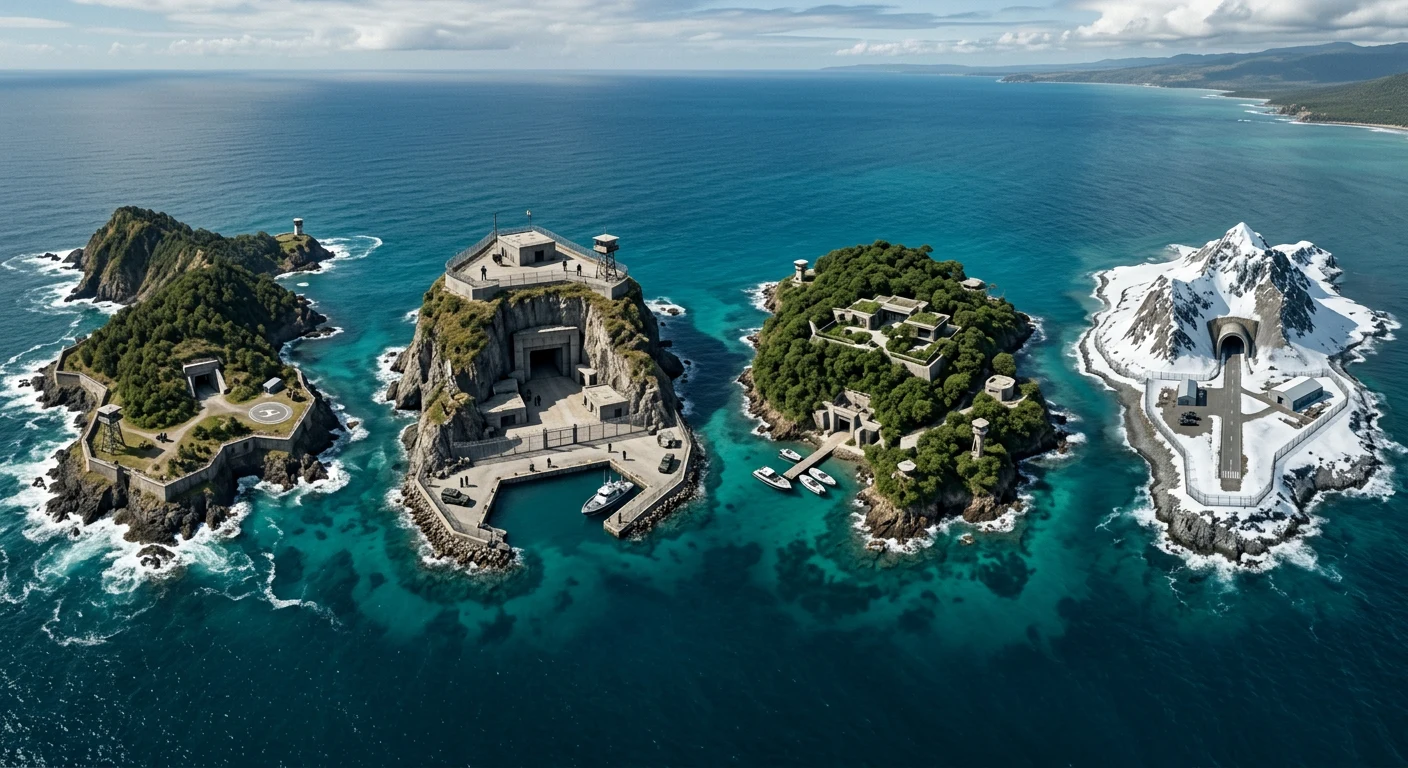
1. Snake Island (Ilha da Queimada Grande), Brazil
Lying just off the coast of São Paulo, Brazil, Ilha da Queimada Grande is undoubtedly one of the most perilous forbidden places on Earth. The Brazilian navy strictly prohibits anyone from landing on the island, and for a terrifying reason: it is the sole home of the Golden Lancehead viper. With an estimated population of one to five venomous snakes per square meter, taking a single step into the underbrush could prove entirely fatal within an hour.
The venom of the Golden Lancehead has evolved in complete isolation, becoming incredibly potent to allow the snakes to instantly kill migratory birds—their only source of food. Due to this bio-hazardous environment, only a handful of carefully vetted scientists receive clearance to visit every few years to maintain the lighthouse and study the ecosystem, ensuring that this deadly sanctuary remains completely undisturbed.
2. North Sentinel Island, India
Situated in the Andaman archipelago, North Sentinel Island stands out as one of the world’s most fiercely guarded forbidden places. It is inhabited by the Sentinelese, an indigenous tribe that has rejected all contact with the outside world for tens of thousands of years. The Indian government has placed a strict three-mile exclusion zone around the island, making it illegal to approach under any circumstances.
The restriction serves a dual purpose: protecting inquisitive outsiders from the extremely hostile Sentinelese, who famously defend their borders with bows and spears, and shielding the tribe from modern diseases to which they have zero immunity. A simple cold virus brought by an intruder could inadvertently wipe out their entire civilization in a matter of weeks.
3. Svalbard Global Seed Vault, Norway
Deep inside a frozen mountain on an island near the North Pole lies the Svalbard Global Seed Vault. While many forbidden places are shrouded in darkness, this facility represents a beacon of hope for humanity’s future. Nicknamed the “Doomsday Vault,” it was engineered to safeguard the world’s agricultural diversity against global catastrophes, from nuclear war to devastating climate change.
Access is heavily restricted to just a few designated vault managers. Even the nations that deposit their seeds cannot physically enter the storage chambers. The extreme isolation, fortified blast doors, and permafrost surroundings ensure the seeds will remain preserved and viable for centuries, acting as the ultimate backup drive for planetary agriculture.
4. Poveglia Island, Italy
Nestled in the Venetian Lagoon, the small, abandoned strip of land known as Poveglia holds a horrifying legacy that makes it one of Italy’s darkest forbidden places. For centuries, it served as a quarantine station for victims of the Bubonic Plague, and later housed an infamously brutal psychiatric asylum in the 1920s. Today, it is strictly off-limits to tourists and locals alike.
The island’s dark history is etched into its very soil; researchers estimate that the remains of over 100,000 plague victims are buried in mass graves across Poveglia. Between the crumbling, unstable ruins of the asylum and the terrifying lore surrounding the island, the Italian government fiercely guards the shoreline to prevent thrill-seekers and paranormal investigators from trespassing.
5. Lascaux Caves, France
Discovered by teenagers in 1940, the Lascaux Caves contain some of the most stunning and well-preserved prehistoric art in human history. Though once open to the public, it became evident that these cultural forbidden places needed drastic protection. The sheer volume of visitors breathing inside the cavern altered the delicate microclimate, causing devastating fungal growths to threaten the 17,000-year-old paintings.
In 1963, the caves were permanently sealed off. Today, as documented extensively by the Smithsonian, only a few specialized scientists are allowed brief access for conservation purposes. To satisfy public interest, the French government constructed Lascaux II, a meticulous, millimeter-accurate replica located nearby, allowing tourists to experience the magnificent artwork without destroying the original masterpiece.
6. Area 51, Nevada, United States
Perhaps the most famous of all forbidden places, Area 51 has been synonymous with UFO conspiracies, alien cover-ups, and extreme government secrecy for decades. Situated in the middle of the remote Nevada desert, this highly classified United States Air Force facility is shielded by heavily armed guards, ground sensors, and strict no-fly zones that extend far into the stratosphere.
While the CIA finally acknowledged the base’s existence in 2013, claiming its true purpose involves testing experimental aircraft and advanced weapons systems, the extreme secrecy persists. The perimeter is guarded by anonymous security contractors affectionately dubbed “Camo Dudes,” who have authorization to use deadly force on any trespasser attempting to breach the boundary line.
7. Vatican Secret Archives, Vatican City
Deep beneath the bustling streets of Vatican City lies a labyrinth of historical significance and immense secrecy. The Vatican Secret Archives are among the most heavily guarded historical forbidden places in existence. Containing roughly 53 miles of subterranean shelving, these archives house papal correspondence, historical treaties, and explosive religious texts dating back over twelve centuries.
Despite recently being rebranded as the “Vatican Apostolic Archive” to reduce the conspiratorial undertones, access remains virtually non-existent for the general public. Only highly qualified scholars can request entry, and even then, they cannot browse the shelves; they must explicitly request specific documents in advance, ensuring that certain controversial histories remain completely locked away from unauthorized eyes.
8. Tomb of Qin Shi Huang, China
The discovery of the Terracotta Army in 1974 shocked the globe, yet the central mausoleum belonging to China’s first Emperor, Qin Shi Huang, remains one of the greatest unexcavated forbidden places in archaeology. Located in Shaanxi province, the central tomb has sat completely undisturbed for over two thousand years due to strict mandates by the Chinese government prohibiting excavation.
There are profound reasons for this restriction. Archaeologists currently lack the technology to properly unearth the tomb without severely damaging its contents upon exposure to air. Furthermore, ancient historical texts describe lethal booby traps and vast rivers of liquid mercury flowing through the tomb—a claim recently substantiated by modern soil scans showing exceptionally high, highly toxic mercury levels directly above the crypt.
9. Surtsey Island, Iceland
Born from a violent underwater volcanic eruption between 1963 and 1967, Surtsey is one of the youngest landmasses on Earth. To protect this newly formed environment, the Icelandic government instantly declared it a nature reserve, turning it into one of the most strictly regulated ecological forbidden places on the planet.
Surtsey functions as an unprecedented, pristine laboratory for scientists observing how plant and animal life naturally colonize a completely barren landscape without human interference. Only a tiny, rotating group of researchers is permitted to step onto the island, and they must undergo intense decontamination protocols to ensure no foreign seeds, bacteria, or chemicals are accidentally introduced to the fragile, evolving ecosystem.
10. Room 39, North Korea
Located deep within the Workers’ Party building in Pyongyang, Room 39 is arguably the most secretive office in the most secretive country on Earth. Unlike ancient tombs or natural reserves, political forbidden places like this exist to shield state-sponsored illicit activities from international oversight. Room 39 is widely believed by global intelligence agencies to be a slush fund operation for the Kim dynasty.
Defectors claim that this highly restricted bureau oversees billions of dollars in illegal enterprises, including cyber-hacking, counterfeiting supernotes, arms dealing, and drug manufacturing. By maintaining absolute control over access to this facility, the regime successfully funds its nuclear ambitions and lavish lifestyle while completely circumventing strict international economic sanctions.
In conclusion, whether hidden in vast oceans, buried beneath mountains, or shielded by heavily armed patrols, these forbidden places remind us that our planet still harbors profound mysteries. While human curiosity constantly pushes us to explore, the extreme dangers and delicate balances protected by these barriers make it incredibly clear why some doors must stay permanently shut.
com/10-most-heavily-guarded-places-on-earth-that-are-impossible-to-enter-2026/”>10 most heavily guarded places on Earth.
Frequently Asked Questions
Why are some forbidden places guarded by the military?
Many restricted zones, such as Area 51, are protected by the military because they house highly classified national security operations, advanced aerospace testing facilities, or sensitive government intelligence that cannot be exposed to foreign adversaries.
Can you fly an aircraft over forbidden places?
No, almost all officially recognized restricted zones are accompanied by designated no-fly zones enforced by international aviation laws. Flying unauthorized aircraft or drones over these areas can result in massive fines or severe military intervention.
Is it possible to visit Snake Island legally?
The only way to legally visit Snake Island in Brazil is to obtain explicit, rare clearance from the Brazilian Navy, which is strictly reserved for a very small number of accredited biological researchers accompanied by trained medical personnel.