
I always thought I knew what extreme weather looked like. But I was genuinely shocked to learn about some of the truly bizarre weather phenomena happening right over our heads. Nature is full of jaw-dropping surprises that sound completely fictional.
In fact, meteorologists at regularly document atmospheric events that defy logic. These wild occurrences easily rival the strangest things you’d find in10 Incredible Places That Defy The Laws Of Nature. Get ready to rethink everything you know about the sky.
What causes the most bizarre weather phenomena on Earth?
The most bizarre weather phenomena are usually caused by a rare combination of extreme temperature shifts, unique atmospheric pressure drops, and unusual geographic features. When these highly specific environmental factors align perfectly, they trigger extraordinary atmospheric events that rarely happen anywhere else.
📋 Table of Contents
Earth’s Most Powerful Forces Overview
Before we look at the list, I want to give you a quick preview. These aren’t just your standard thunderstorms or windy days. We are talking about weather that looks like it belongs on an alien planet.
From skies that literally rain crimson water to never-ending lightning storms, Earth puts on a spectacular show. Here is a quick breakdown of the extraordinary events we are about to explore.
| # | Name | Key Fact |
|---|---|---|
| 1 | Volcanic Lightning | Lightning created by ash friction |
| 2 | Fire Whirls | Tornadoes made of pure fire |
| 3 | Blood Rain | Red-tinted rainstorms |
| 4 | Red Sprites | Giant atmospheric jellyfish |
| 5 | Brinicles | Underwater freezing vortexes |
| 6 | Penitentes | Ice spikes up to 15 feet tall |
| 7 | Haboobs | Massive walls of desert dust |
| 8 | Morning Glory Clouds | Rolling clouds 600 miles long |
| 9 | Catatumbo Lightning | Storms lasting 300 days a year |
| 10 | Sun Dogs | Triple sun optical illusions |
1. Volcanic Lightning (Dirty Thunderstorms)
I was watching a nature documentary when I first saw volcanic lightning, and my jaw hit the floor. It happens when an erupting volcano generates its own intense electrical storm right inside the ash plume.
The science behind it is absolutely amazing. As millions of tiny rock and ash particles violently crash into each other during the eruption, they create massive static electricity that triggers bright flashes of lightning.
2. Fire Whirls (Firenadoes)
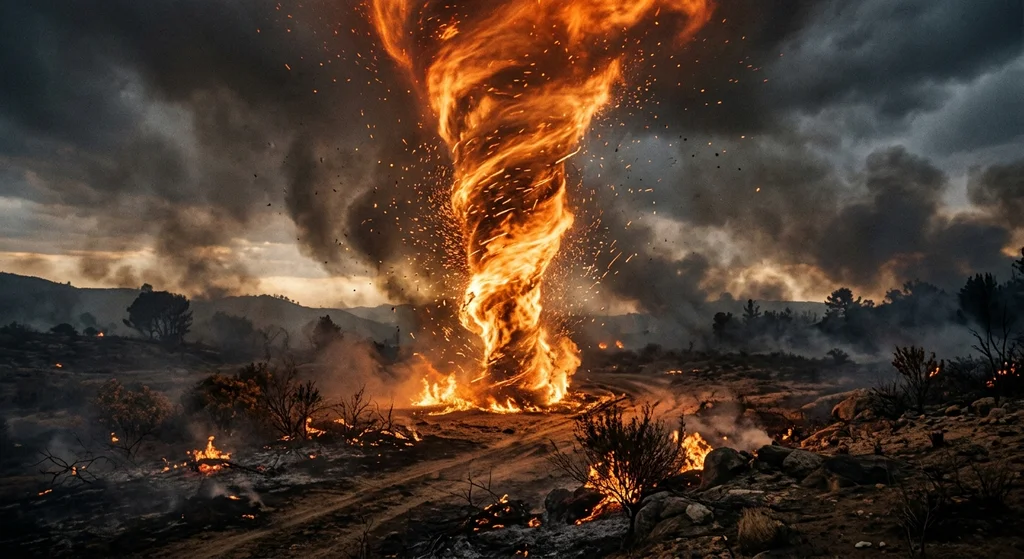
You probably think tornadoes are wild enough on their own. Now, imagine a spinning vortex made entirely out of roaring flames and thick smoke.
Fire whirls form when intense, rising heat from a wildfire encounters strong, chaotic winds. The wind twists the fire into a spinning column that can reach temperatures hot enough to melt metal.
3. Blood Rain
If you walked outside during a storm and saw red water falling from the sky, you’d probably panic. This bizarre event has actually happened multiple times throughout history, most famously in Kerala, India.
It turns out the rain isn’t blood at all. The crimson color comes from airborne microalgae spores or red dust swept up from deserts and carried thousands of miles by atmospheric currents.
4. Red Sprites
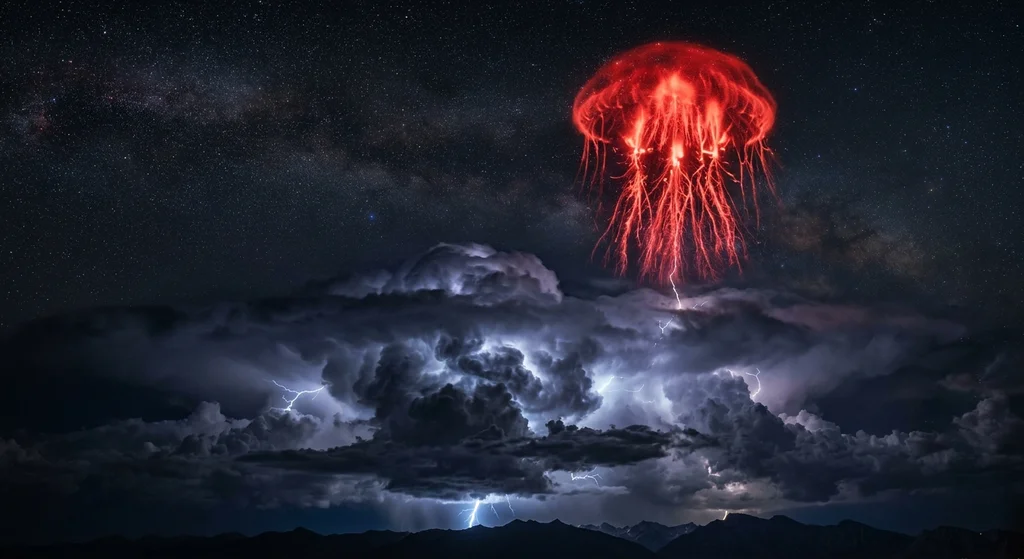
Red sprites look like massive, glowing red jellyfish hovering high in the night sky. I was incredibly fascinated to learn that these are large-scale electrical discharges occurring high above active thunderstorm clouds.
Because they flash for only a few milliseconds, they are incredibly difficult to photograph. According to , these optical phenomena happen up to 50 miles above the Earth’s surface.
5. Brinicles (Underwater Ice Vortexes)
Weather doesn’t just happen in the sky; it happens under the ocean too. Brinicles are essentially underwater icicles that slowly plunge toward the sea floor in freezing polar regions.
When highly saline, freezing water sinks, it creates a hollow tube of ice. Once the brinicle touches the sea floor, it rapidly freezes anything in its path, including starfish and sea urchins.
6. Penitentes
If you hike high up into the dry Andes mountains, you might stumble upon entire fields of giant ice spikes. These jagged, blade-like snow formations are called penitentes, and they look completely otherworldly.
They form when the sun’s rays turn snow directly into water vapor without melting it first. This unique process carves out deep trenches in the snow, leaving behind spikes that can grow up to 15 feet tall.
7. Haboobs
Seeing a haboob rolling toward a city is an absolutely breathtaking experience. These are gigantic walls of dust and sand that get pushed ahead of heavy thunderstorm winds in dry regions.
They can stretch for thousands of feet into the air and span miles across the horizon. When a haboob hits, the sky turns dark, and visibility immediately drops to zero.
8. Morning Glory Clouds
I was amazed to learn about the Morning Glory cloud, a perfectly tubular cloud that rolls across the sky. It looks like a massive, endless pipeline floating right above the earth.
These incredibly rare formations happen predictably in only one place: the Gulf of Carpentaria in Australia. Glider pilots actually travel there just to “surf” the massive air waves these clouds create.
9. Catatumbo Lightning
Imagine a thunderstorm that virtually never ends. In Venezuela, right where the Catatumbo River meets Lake Maracaibo, extreme lightning storms happen almost 300 days a year.
The geography traps warm moisture and cold mountain winds together, creating a permanent storm machine. The sky lights up with thousands of flashes per hour, creating a legendary natural light show.
10. Sun Dogs
Have you ever looked at the sky and thought you saw three suns shining at once? This extraordinary optical illusion is known as a sun dog, or parhelion.
It happens when sunlight refracts through hexagonal ice crystals drifting high up in cold cirrus clouds. The light bends perfectly to create two glowing, halo-like orbs on either side of the actual sun.
Final Thoughts
Earth’s atmosphere is clearly capable of producing events that defy our daily understanding of nature. Exploring these bizarre weather phenomena reminded me of the wild ideas I wrote about in 10 Bizarre Space Concepts That Will Break Your Reality.
I absolutely love sharing these natural wonders because they prove how dynamic and surprising our planet really is. The sky is full of magic, provided you know exactly where to look.

Written by the List of Ten Team
We verify every fact using peer-reviewed sources.
Frequently Asked Questions
Can a person survive being caught in a haboob?
Yes, while haboobs dramatically reduce visibility and make breathing difficult, they are generally not fatal. It is highly recommended to seek shelter immediately and avoid driving until the thick dust completely clears the area.
Are red sprites dangerous to commercial airplanes?
No, red sprites occur far above the cruising altitude of commercial jets. They flash in the mesosphere, nearly 50 miles high, while airplanes typically fly at around 6 to 7 miles above the surface.
Why is volcanic lightning so rare to see?
Volcanic lightning only happens during specific, highly explosive eruptions that produce massive amounts of ash. You need the perfect balance of friction and static electricity inside the thick ash plume for it to ignite.
For more on this topic, visit National Geographic and Smithsonian Magazine.