
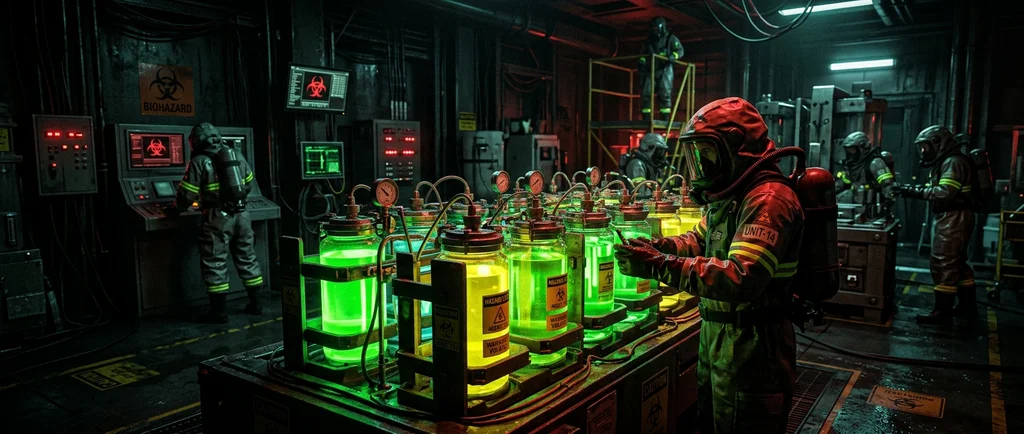
Our planet is filled with awe-inspiring wonders, but lurking within laboratories, military bunkers, and even nature itself are some of the most dangerous substances known to humanity. From volatile compounds that can ignite upon contact with air to microscopic toxins that can paralyze a human body in minutes, the universe has a terrifying way of reminding us of our fragility.
While many of us fear predatory animals or violent storms, it is often the unseen chemical compounds that pose the greatest threat to life and infrastructure.
Exploring the world of extreme chemistry and biology reveals a dark side of science. In this article, we dive deep into the 10 most dangerous substances on Earth. Whether they are synthetic creations locked in high-security facilities or organic venoms thriving in tropical rainforests, these materials require extreme caution.
As reported by , researchers must use highly specialized equipment to study these lethal elements. Let’s uncover the horrific capabilities of these elements, but remember—these are not compounds you ever want to encounter, reminiscent of the eerie phenomena detailed in our guide to terrifying scientific experiments.
What Are The Most Dangerous Substances On Earth?
The most dangerous substances on Earth include Botulinum Toxin (the deadliest biological poison), Fluoroantimonic Acid (the strongest corrosive superacid), Chlorine Trifluoride (an extremely hypergolic and explosive chemical), and Antimatter (the most volatile and expensive substance). Even microscopic amounts of these compounds can cause catastrophic destruction, severe injury, or immediate fatality.
Comparative Overview of Lethal Elements
When categorizing the most dangerous substances, scientists evaluate them based on toxicity, reactivity, corrosiveness, and volatility. Some substances are biological marvels evolved to defend small creatures, while others are purely synthetic mistakes born in wartime laboratories. Understanding how these substances interact with human biology and the environment is crucial for chemical safety protocols.
| Substance Name | Primary Danger | Lethal Dose / Effect |
|---|---|---|
| Botulinum Toxin | Biological Neurotoxin | 1-2 nanograms per kg |
| Chlorine Trifluoride | Hypergolic Explosive | Ignites instantly with anything |
| Fluoroantimonic Acid | Corrosive Superacid | Dissolves glass & tissue |
| Antimatter | Total Annihilation | 1 gram = nuclear explosion |
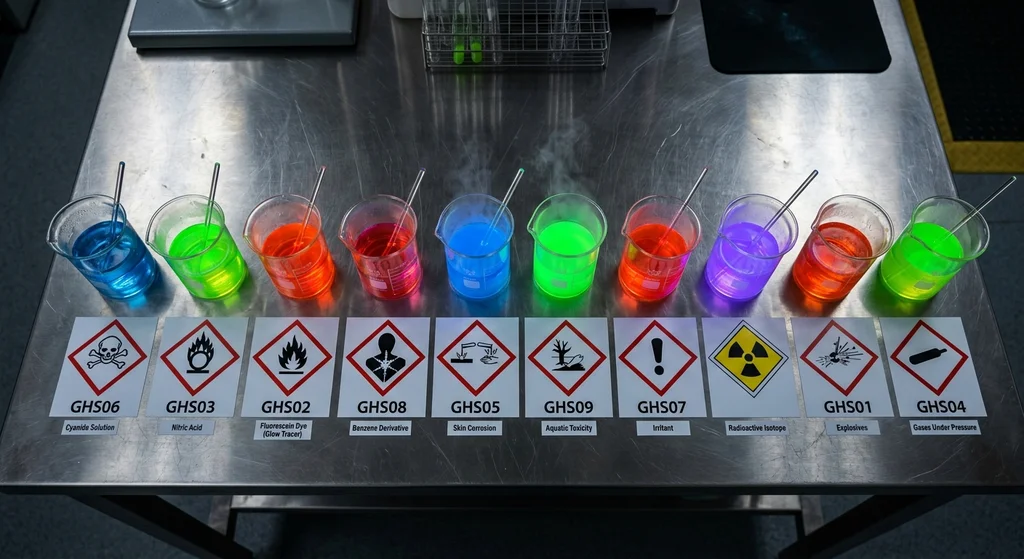
Below is our ranked list of the 10 most dangerous substances that push the absolute limits of science and biology. Prepare to be astounded by the terrifying realities of the molecular world.
1. Antimatter (The Most Volatile Substance)
Topping our list of the most dangerous substances is Antimatter, an entity that sounds like it belongs strictly in science fiction. Unlike normal matter, antimatter contains particles with reversed electrical charges. When antimatter comes into contact with regular matter, both are instantaneously annihilated in an explosive flash of pure energy. This 100% efficient mass-to-energy conversion makes it the most volatile material in the known universe.
Scientists at major facilities like CERN have managed to trap minute amounts of antimatter using massive magnetic fields, preventing it from touching the container walls. If just one gram of antimatter were to interact with Earth’s atmosphere, it would produce an explosion equivalent to the atomic bomb dropped on Hiroshima. Because of this terrifying potential, it remains the absolute apex of the most dangerous substances on Earth.
2. Botulinum Toxin (The Deadliest Biological Agent)
When evaluating the most dangerous substances from a biological standpoint, nothing rivals Botulinum Toxin. Produced by the bacterium Clostridium botulinum, this potent neurotoxin attacks the nervous system with terrifying efficiency. It works by blocking the release of acetylcholine, a chemical vital for muscle movement, leading to severe paralysis and asphyxiation.
What makes Botulinum Toxin truly horrifying is its sheer potency. Just a few nanograms—an amount invisible to the naked eye—are enough to be fatal to an adult human. In fact, a single teaspoon of pure Botulinum Toxin evenly distributed would be enough to wipe out the entire human population. Paradoxically, highly diluted versions of this deadly toxin are used in cosmetic procedures, widely known as Botox.
3. Chlorine Trifluoride (The Chemical That Burns Everything)
Chlorine Trifluoride (ClF3) easily secures its spot among the most dangerous substances due to its violent reactivity. Originally investigated by scientists during World War II, this compound is a hypergolic agent, meaning it ignites upon contact with almost anything—without the need for a spark. It is far better at oxidizing materials than oxygen itself.
Because ClF3 burns so ferociously, it can set fire to materials normally thought to be fireproof, including glass, sand, asbestos, and even human ash. If exposed to water, it reacts explosively, generating lethal hydrofluoric acid gas. The sheer inability to safely store or extinguish fires caused by Chlorine Trifluoride has led scientists to largely abandon it as rocket fuel.
4. Polonium-210 (The Invisible Assassin)
Radiation holds a terrifying place in human history, and Polonium-210 is perhaps the most notorious radioactive element, firmly placing it on the list of the most dangerous substances. This isotope emits high-energy alpha particles. While these particles cannot penetrate human skin, ingesting or inhaling Polonium-210 is a definitive death sentence.
Once inside the body, the alpha particles viciously tear apart cellular DNA, causing massive internal organ failure and radiation sickness within days. Unlike traditional poisons, there is no known antidote for severe Polonium exposure. Its horrific capabilities gained global infamy when it was used to assassinate former Russian spy Alexander Litvinenko in 2006, highlighting how these deadly elements are weaponized.
5. Dimethyl Cadmium (The Most Toxic Chemical Blood Agent)
Dimethyl Cadmium is widely regarded by chemists as one of the most dangerous substances ever synthesized. It is a highly volatile, colorless liquid that causes immediate and horrific systemic failure if inhaled or absorbed. As an organometallic compound, it easily enters the bloodstream, dragging toxic heavy metal cadmium directly into your internal organs.
The terror of Dimethyl Cadmium does not end with its profound toxicity. It is also friction-sensitive and can spontaneously combust, releasing lethal cadmium oxide smoke into the air. If you manage to survive the immediate inhalation, the compound severely damages the liver and kidneys, often causing fatal cancer down the line. Even veteran chemists refuse to work with it.
6. Fluoroantimonic Acid (The Ultimate Superacid)
When thinking of the most dangerous substances, corrosive acids immediately come to mind. Fluoroantimonic Acid is the strongest known superacid in existence, measuring a staggering 100,000 billion times stronger than pure sulfuric acid. It is formed by mixing hydrogen fluoride with antimony pentafluoride.
If you were to drop this acid on virtually any material, it would dissolve rapidly. It instantly melts flesh to the bone and destroys glass, rendering standard laboratory beakers useless. The only way scientists can safely store Fluoroantimonic Acid is inside containers made of Teflon, as the carbon-fluorine bonds in Teflon are exceptionally strong and resistant to the acid’s extreme protonating power.
7. VX Nerve Agent (The Military’s Worst Creation)
The pursuit of chemical warfare led to the creation of VX, undeniably one of the most dangerous substances synthetically produced for warfare. Developed in the 1950s, VX is an oily, amber-colored liquid that disrupts the nervous system by inhibiting an essential enzyme, causing violent muscle spasms, respiratory failure, and rapid death.
A fraction of a drop absorbed through the skin is enough to kill a healthy adult. Due to its oily consistency, VX is highly persistent in the environment and does not evaporate easily, meaning contaminated areas remain lethal for long periods. It is considered so dangerous that international treaties have banned its production, and countries have spent billions safely disposing of stockpiles.
8. Asbestos (The Silent Killer Mineral)
While many of the most dangerous substances are engineered in labs, some exist naturally in the earth. Asbestos is a set of naturally occurring silicate minerals that were once celebrated for their incredible fire resistance and structural strength. Sadly, this “miracle mineral” turned out to be one of the most insidious killers of the modern age.
The danger of asbestos lies in its microscopic, needle-like fibers. When airborne and inhaled, these indestructible fibers embed themselves deep within lung tissue. Over decades, they cause severe inflammation, leading to a rare and fatal cancer called mesothelioma. Despite being heavily regulated today, the legacy of asbestos continues to claim thousands of lives globally every year.
9. Batrachotoxin (Nature’s Deadliest Defense)
Switching our focus back to nature, Batrachotoxin is widely acknowledged as one of the most dangerous substances derived from an animal. Secreted through the skin of the beautiful but deadly Golden Poison Frog native to Colombia, this potent steroidal alkaloid targets the heart and nervous system with lethal precision.
A single Golden Poison Frog contains enough Batrachotoxin to kill 10 grown humans. The toxin acts by permanently forcing sodium channels in nerve cells to stay open, causing irreversible paralysis and heart failure within minutes. Indigenous tribes have historically used this exact toxin to tip their blowdarts, making it a revered and terrifying force of nature.
10. Thioacetone (The Ultimate Stink Bomb)
To conclude our list of the most dangerous substances, we have a chemical that is dangerous not because it will instantly kill you, but because of the sheer chaos and mass panic it incites. Thioacetone holds the undisputed title of the world’s smelliest chemical. The odor it produces is so profoundly foul that human biology reacts violently, causing uncontrollable vomiting and fainting even at microscopic concentrations.
In 1889, scientists at a lab in Freiburg, Germany, accidentally synthesized a tiny vial of Thioacetone. The horrendous stench rapidly spread across the entire city, causing widespread panic, sickness, and the immediate evacuation of surrounding neighborhoods. It is considered highly dangerous simply because its scent triggers severe biological distress from over half a mile away.
Conclusion
From volatile superacids that can melt through practically anything to silent biological killers, the world is filled with incredibly hazardous elements. Learning about the most dangerous substances highlights the incredible, albeit terrifying, power of chemistry and biology.
org continually document how researchers brave these hazards to advance human knowledge safely. If you found this dive into extreme science fascinating, make sure to check out our article on the most radioactive places on Earth to see where these dangerous forces are at play in the real world.
Frequently Asked Questions
What is officially the most dangerous substance on Earth?
While opinions vary based on criteria (explosiveness vs. toxicity), Botulinum Toxin is largely considered the most dangerous substance biologically, as just a few nanograms can be fatal to humans.
Why is antimatter so dangerous?
Antimatter is dangerous because it undergoes complete annihilation when it contacts normal matter, releasing extreme, explosive energy with 100% mass-to-energy conversion efficiency.
Are these most dangerous substances kept in secure labs?
Yes, substances like VX nerve gas, Antimatter, and pure Botulinum Toxin are strictly regulated and securely locked away in specialized military or scientific research facilities.