
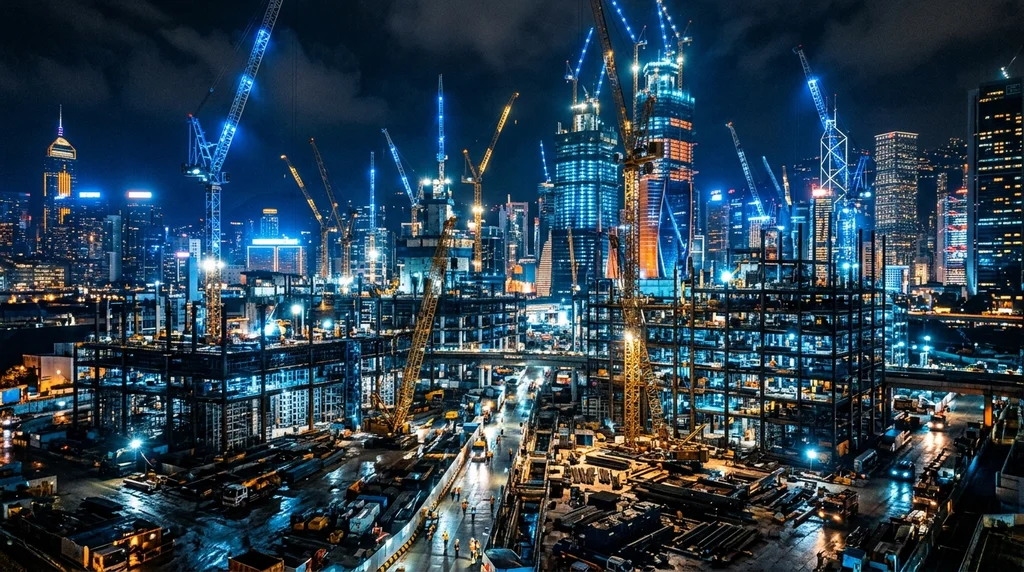
Humanity has always possessed an unquenchable thirst for pushing the boundaries of engineering, architecture, and technology, constantly striving to conquer the land, sea, and even the stars. Over the decades, governments and massive corporations have poured unimaginable amounts of wealth into constructing monumental achievements.
When we look at the most expensive things ever built, we are not just looking at price tags; we are witnessing the physical manifestation of human ambition, scientific advancement, and occasionally, immense bureaucratic miscalculation. Some of these staggering investments have reshaped global economies, while others teeter on the edge of becoming the most expensive abandoned megaprojects that wasted billions.
From colossal space laboratories floating in the vacuum of low Earth orbit to sprawling, futuristic desert metropolises that sound like science fiction, the sheer scale of these endeavors is enough to make anyone’s head spin. To truly understand the scale of these investments, we have to look beyond standard budgets and dive into multi-billion, and sometimes multi-trillion, dollar figures.
What is the single most expensive thing ever built by humans?
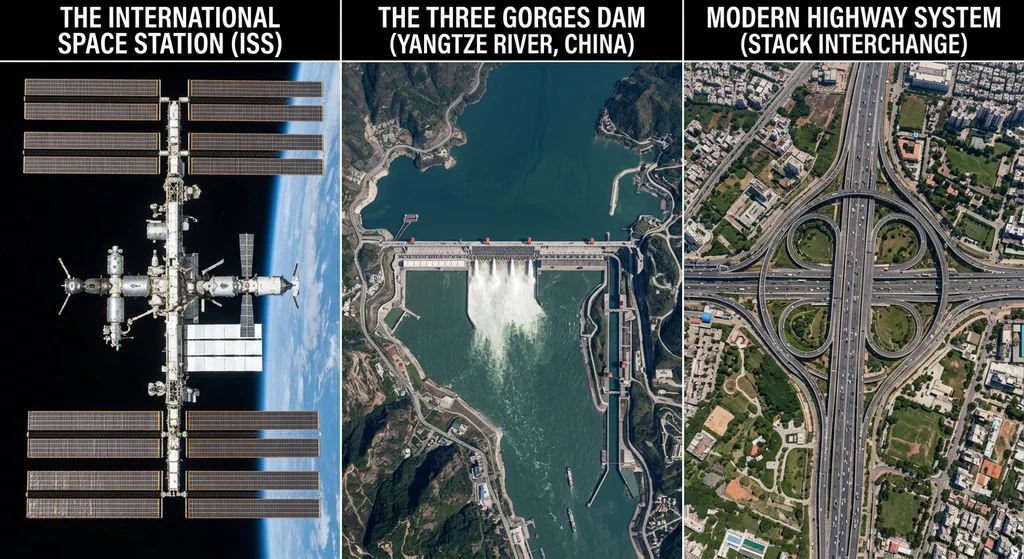
The International Space Station (ISS) is currently the single most expensive thing ever built by humans. Costing an estimated $150 billion to construct and maintain over its lifetime, this marvel of modern engineering is a collaborative effort between five major space agencies, orbiting Earth as a cutting-edge microgravity research laboratory.
Comparing the Giants: A Breakdown of Megaproject Costs
Before we dive deep into the specific details of the most expensive things ever built, it is helpful to visualize just how dramatically the costs of these historical and modern engineering marvels compare to one another. Below is a comprehensive breakdown of these incredible creations, showcasing their estimated total costs and their current operational status.
| Rank | Project Name | Estimated Cost (USD) | Primary Purpose |
|---|---|---|---|
| 1 | Interstate Highway System | $500+ Billion | National Transportation |
| 2 | NEOM Mega-City | $500+ Billion | Futuristic Urban Living |
| 3 | International Space Station | $150 Billion | Space Exploration |
| 4 | Kashagan Oil Field | $116 Billion | Energy Extraction |
| 5 | Al Masjid al-Haram | $100 Billion | Religious Hub |
1. The Interstate Highway System (USA) – $500+ Billion
When calculating the true cost of the most expensive things ever built, infrastructure often takes the absolute top spot. Conceived under President Dwight D. Eisenhower in 1956, the Dwight D.
Eisenhower National System of Interstate and Defense Highways is a sprawling network of controlled-access highways that forms the absolute backbone of American commerce and travel. Spanning nearly 49,000 miles across the United States, this colossal project took decades to fully realize and required an unprecedented amount of concrete, steel, and manual labor.
The original estimated cost was around $25 billion, but due to inflation, expanding scopes, and endless state-level delays, the total historical cost easily exceeds $500 billion in today’s money. The sheer economic impact of this network is immeasurable, allowing for rapid transit of goods, military deployment, and connecting rural areas to booming metropolitan centers. It stands as the largest public works project in human history.
2. NEOM Megacity (Saudi Arabia) – $500 Billion to $1 Trillion
Spearheaded by the Kingdom of Saudi Arabia, NEOM is perhaps the most ambitious and polarizing urban development project of the 21st century. Billed as a futuristic, sustainable utopia built from scratch in the Tabuk Province, NEOM is slated to feature “The Line”—a 170-kilometer-long linear smart city operating with zero cars, zero streets, and zero carbon emissions.
As one of the most expensive things ever built, NEOM’s initial budget was announced at $500 billion, though modern estimates suggest it could easily eclipse $1 trillion by the time the final glass pane is installed.
The sheer logistics of constructing a continuous mirrored city through rugged desert and mountainous terrain require unprecedented architectural innovations. While critics argue the project is an economic gamble and an ecological risk, developers are pushing forward, pouring billions into artificial intelligence integration, automated robotics, and a completely renewable energy grid to power the millions of projected residents.
3. The International Space Station – $150 Billion
Suspended 250 miles above our heads is undeniably the pinnacle of human collaborative engineering. As one of the most expensive things ever built, the International Space Station (ISS) carries a staggering price tag of over $150 billion.
Launched in 1998, this extraordinary endeavor involved the joint efforts of NASA, Roscosmos, JAXA, ESA, and CSA. Building a massive structure piece by piece in the deadly vacuum of space required hundreds of rocket launches, each costing hundreds of millions of dollars just to deliver singular modules.
The ISS serves as a microgravity and space environment research laboratory, allowing scientists to conduct experiments in biology, physics, and meteorology that are completely impossible to replicate on Earth. While its exorbitant cost has been a point of debate, the technological breakthroughs born from the station’s research have impacted everyday terrestrial life, advancing water purification methods, robotic surgery, and high-quality imaging technology.
4. Kashagan Oil Field (Kazakhstan) – $116 Billion
Located in the harsh, unforgiving environment of the Caspian Sea, the Kashagan Field represents the largest oil discovery of the past four decades. However, extracting this “black gold” turned into a financial and engineering nightmare, firmly cementing the facility’s status among the most expensive things ever built. The project was originally estimated to cost around $10 billion, but due to severe technical delays, lethal hydrogen sulfide gas leaks, and treacherous freezing waters, the cost skyrocketed to an eye-watering $116 billion.
The engineering required to overcome the deadly environmental conditions is astounding. Engineers had to construct artificial islands from scratch just to house the drilling equipment, ensuring they could withstand the crushing weight of shifting ice floes in the winter. Despite the catastrophic budget overruns, the field is expected to produce billions of barrels of oil, eventually paying off the astronomical investment.
5. Al Masjid al-Haram (The Grand Mosque) – $100 Billion
In Mecca, Saudi Arabia, stands the holiest site in Islam, Al Masjid al-Haram, or the Great Mosque. To accommodate the rapidly growing number of pilgrims performing the Hajj each year, the Saudi government embarked on an aggressive, multi-decade expansion project.
Valued at an estimated $100 billion, it easily ranks among the top most expensive things ever built. The expansion includes acquiring surrounding commercial land, building towering minarets, and constructing colossal mega-structures like the Abraj Al Bait clock tower adjacent to the mosque.
The architectural scale is difficult to comprehend. The mosque now spans over 356,000 square meters, allowing it to house over 2.5 million worshippers at a single time during peak periods. High-tech infrastructure, including massive centralized air conditioning, intricate underground utility networks, and automated cleaning systems, was installed to ensure the safety and comfort of the massive crowds.
6. King Abdullah Economic City – $100 Billion
Announced in 2005, the King Abdullah Economic City (KAEC) is another mind-blowing mega-project located along the coast of the Red Sea in Saudi Arabia. Designed to be a massive trade and logistics hub to diversify the nation’s oil-dependent economy, KAEC boasts a projected cost of roughly $100 billion. It is one of the most expensive things ever built from scratch, encompassing an area larger than Washington D.C., and features deep-water ports, an industrial valley, and luxury residential districts.
Building an entirely new city on barren desert land requires laying hundreds of miles of electrical grids, water desalination pipelines, and high-speed rail networks. While development has faced delays and economic hurdles over the years, the city continues to expand, positioning itself as a vital future node in global maritime trade and international business relations.
7. California High-Speed Rail – $100+ Billion
Intended to be the crown jewel of American public transit, the California High-Speed Rail project has instead become a masterclass in bureaucratic delays and spiraling budgets. Originally pitched to voters in 2008 with an estimated cost of around $33 billion, the project’s budget has continuously exploded, now projected to surpass $100 billion. As a result, it securely claims a spot on the list of the most expensive things ever built by a regional government.
The vision is undeniably grand: a high-speed bullet train connecting Los Angeles to San Francisco in under three hours, traveling at speeds exceeding 200 miles per hour. However, the sheer cost of land acquisition, environmental reviews, and drilling massive tunnels through the treacherous Sierra Nevada mountains have dragged the timeline out for decades. Despite fierce political opposition, construction continues in the Central Valley.
8. The Gorgon Gas Project (Australia) – $54 Billion
Off the northwest coast of Australia lies Barrow Island, home to one of the largest natural gas resource developments on the planet. The Gorgon Gas Project, operated by Chevron, is a behemoth of modern energy infrastructure. With construction costs reaching an estimated $54 billion, it is widely considered one of the most expensive things ever built in the energy sector. The facility is designed to extract, liquefy, and export millions of tons of natural gas to the Asian market annually.
What makes Gorgon uniquely expensive is its strict environmental protocols. Barrow Island is a Class A nature reserve, home to rare wildlife. To preserve the ecosystem, the project integrated a massive carbon dioxide injection project—the largest of its kind globally—designed to capture and bury millions of tonnes of greenhouse gases deep beneath the earth’s surface rather than venting them into the atmosphere.
9. The Three Gorges Dam (China) – $31 Billion
The Three Gorges Dam in China is an absolute marvel of hydraulic engineering and power generation. 5 miles across the Yangtze River, it is the world’s largest power station in terms of installed capacity.
Costing around $31 billion, it easily qualifies as one of the most expensive things ever built. The dam was constructed not only to generate clean hydroelectric power to fuel China’s booming economy but also to control the devastating flooding that historically plagued the river basin.
The sheer scale of the concrete and steel utilized in its construction is unprecedented. However, the project was highly controversial due to the environmental displacement it caused; the rising reservoir waters forced the relocation of over 1.3 million people and submerged numerous archaeological sites. Yet, its engineering prowess remains undisputed, successfully holding back millions of cubic meters of water.
10. ITER Tokamak Reactor (France) – $25+ Billion
If humanity wants to solve the global energy crisis forever, replicating the power of the sun on Earth is the ultimate goal. The International Thermonuclear Experimental Reactor (ITER), currently under construction in southern France, is the world’s largest magnetic confinement plasma physics experiment. As a collaborative effort funded by 35 nations, ITER’s budget has swelled from an initial $6 billion to over $25 billion, making it one of the most expensive things ever built for scientific research.
The facility aims to prove the feasibility of nuclear fusion as a large-scale and carbon-free source of energy. The engineering required is bordering on science fiction; the core of the machine will reach temperatures of 150 million degrees Celsius—ten times hotter than the core of the sun. The colossal magnets required to contain this searing plasma are so heavy that the building housing them had to be reinforced with thousands of tons of steel.
Conclusion: The True Cost of Human Progress
Looking at these monumental structures, from sweeping transportation networks to experimental fusion reactors, we realize that the most expensive things ever built are far more than just exercises in spending. They represent humanity’s collective refusal to accept natural limitations. While the financial costs—often soaring into the hundreds of billions—can seem completely unjustifiable at first glance, the long-term technological, economic, and societal benefits often outlive the initial sticker shock.
As technology continues to evolve, we can only expect these records to be broken again in the near future, perhaps leading us to marvel at incredible future technologies that will change the world. Whether it’s expanding our reach into the cosmos or building sustainable utopian cities in the desert, human ambition has proven time and again that there is no price tag too high for progress.
Frequently Asked Questions (FAQ)
What is the most expensive thing ever built in space?
The International Space Station (ISS) is the most expensive things ever built in space, with a staggering total cost of over $150 billion shared across multiple global space agencies.
Are the most expensive things ever built actually worth the money?
In most cases, yes. Infrastructure like the Interstate Highway System generated trillions of dollars in economic growth, vastly outperforming its initial cost. However, some megaprojects do fail and become massive financial burdens.
Will a single project ever cost $1 trillion?
It is highly likely. The NEOM megacity project in Saudi Arabia is currently projected by numerous economic analysts to surpass $1 trillion in total development costs before its completion.