
Look, I was genuinely shocked to learn that agriculture wasn’t actually invented by humans. Long before the first ancient cities were built, the natural world was already solving complex culinary puzzles.
From animals cultivating their own crops to fruits designed for beasts that no longer exist, our planet is filled with prehistoric food mysteries. We often think of early survival as simple hunting and gathering, but the truth is far stranger.
If you enjoyed reading about the ancient engineering marvels experts still can’t replicate, you will be absolutely fascinated by these ancient dietary puzzles.
These prehistoric food mysteries force us to rethink the entire timeline of life on Earth. In fact, biologists are still discovering evidence of ancient diets that completely defy modern logic. You can read more about how scientists reconstruct these ancient timelines over at the Smithsonian’s science archives.
What Did Creatures Eat Before Agriculture Existed?
Before human farming, Earth’s inhabitants survived through bizarre biological adaptations, symbiotic relationships, and primitive foraging. These prehistoric food mysteries reveal that animals and early hominids naturally discovered fermentation, fungus farming, and cooking methods millions of years before modern civilization even began.
📋 Table of Contents
- Overview
- 1. The Avocado’s Giant Ghost Pruner
- 2. The 50-Million-Year-Old Ant Farms
- 3. Neanderthal Roasted Flatbreads
- 4. The Drunken Monkey Hypothesis
- 5. The Frozen Mammoth’s Last Meal
- 6. The Toxic Tuber Cooking Puzzle
- 7. The Honeyguide Bird Symbiosis
- 8. Dinosaur Gastroliths
- 9. The Giant Panda’s Bamboo Switch
- 10. The Extinct Cycad Seed Eaters
- FAQ
Exploring the World’s Oldest Dietary Secrets
When we look at the fossil record, we find endless clues about what ancient creatures consumed. However, the how and why often remain completely elusive.
The deeper we dig into prehistoric food mysteries, the more we realize that nature has been experimenting with digestion, cultivation, and food processing since the dawn of time. I am constantly amazed by how early life adapted to extreme dietary challenges.
| # | Mystery Name | Key Fact |
|---|---|---|
| 1 | Avocado Survival | Eaten by giant sloths |
| 2 | Ant Agriculture | Began 50 million years ago |
| 3 | Neanderthal Bread | Cooked 70,000 years ago |
| 4 | Primate Fermentation | Alcohol digestion adapted 10M years ago |
| 5 | Berezovka Mammoth | Froze with fresh buttercups in mouth |
| 6 | Early Tuber Roasting | Hominids learned to detoxify roots |
| 7 | Honeyguide Birds | Ancient human-animal foraging alliance |
| 8 | Dino Stomach Stones | Swallowed rocks to digest tough plants |
| 9 | Panda’s Diet Shift | Carnivores turned strict bamboo eaters |
| 10 | Cycad Seed Dispersal | Toxic plants reliant on extinct beasts |
1. The Avocado’s Giant Ghost Pruner
Every time I slice open an avocado, I wonder how this fruit even exists today. The massive pit inside makes absolutely no evolutionary sense for modern wildlife.
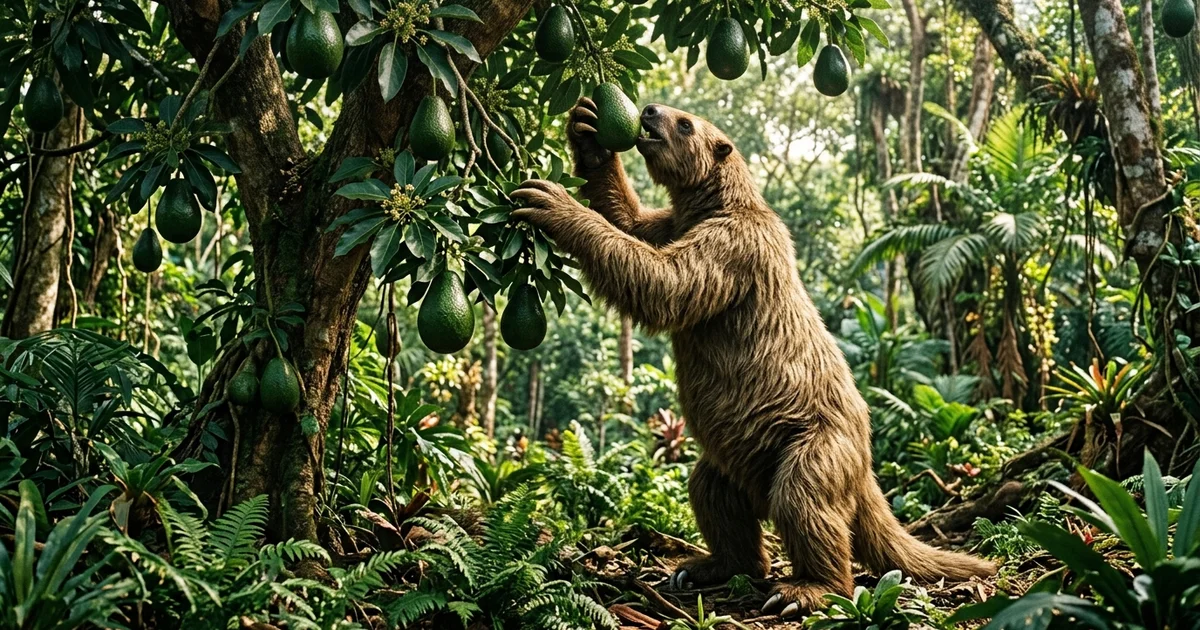
Millions of years ago, the giant ground sloth, which weighed as much as an elephant, would swallow these fruits whole. The giant seed would pass through their digestive tract unharmed, planting new trees across the continent. When the megafauna died out during the Ice Age, the avocado should have immediately gone extinct alongside them.
My personal take on this is that human intervention was a sheer accident of timing. We stepped in right as the fruit was facing extinction, effectively replacing the giant sloth as the avocado’s primary distributor. This remains one of the most incredible prehistoric food mysteries known to botany.
2. The 50-Million-Year-Old Ant Farms
Most of us were taught in school that humans invented agriculture around 10,000 years ago. Well, the tiny leafcutter ant beat us to the punch by roughly 50 million years.
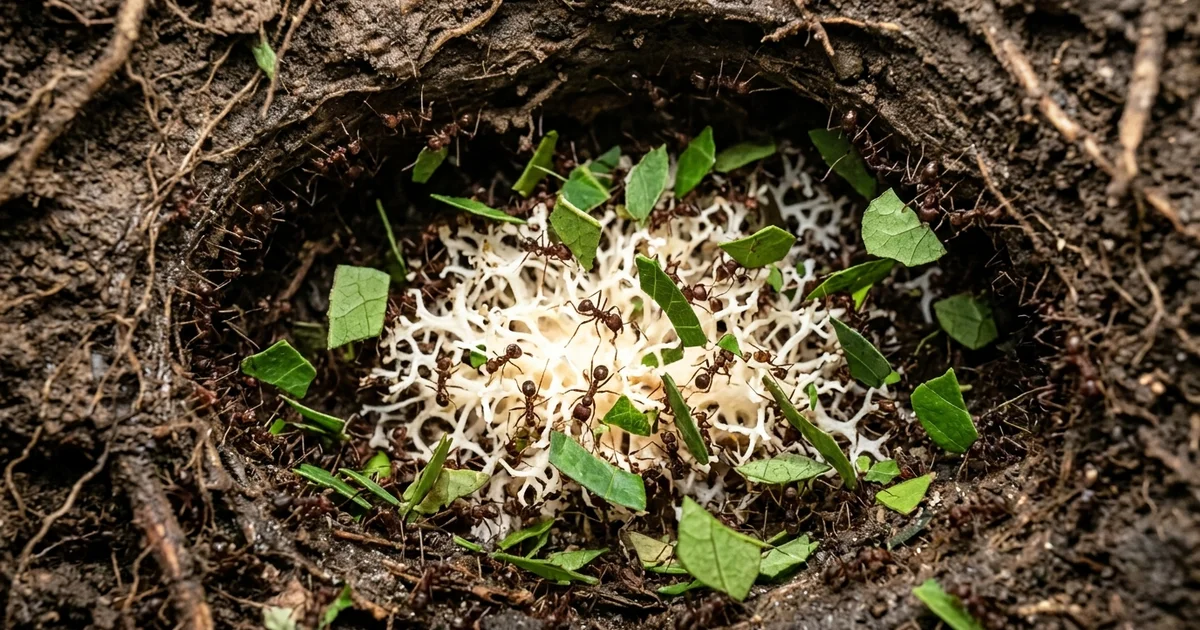
These insects do not actually eat the leaves they spend their entire lives cutting and carrying. Instead, they chew the leaves into a pulp to feed a highly specialized, underground fungus. The ants then harvest this white fungus to feed their entire colony.
I find it absolutely extraordinary that these tiny creatures use natural antibiotics to weed their gardens and protect their crops. It completely changes how we define intelligence and agriculture when bugs mastered farming epochs before humans even existed.
3. Neanderthal Roasted Flatbreads
For decades, popular culture depicted Neanderthals as strict meat-eaters who solely hunted woolly mammoths. Recent microscopic discoveries in the Shanidar Cave in Iraq have completely shattered that myth.
Archaeologists found charred remains of what can only be described as a prehistoric flatbread. These ancient hominids were actually gathering wild mustard seeds, wild legumes, and grasses, then crushing them into a dough and roasting it over open flames.
If you ask me, this profoundly humanizes our evolutionary cousins. The fact that they were seasoning their food with bitter wild plants proves they cared about flavor, adding a culinary twist to these prehistoric food mysteries.
4. The Drunken Monkey Hypothesis
Alcohol consumption is often viewed as a relatively modern human indulgence. However, the biological ability to process ethanol actually developed in our primate ancestors nearly 10 million years ago.
According to the “Drunken Monkey Hypothesis,” early apes needed a way to safely consume fermenting fruit that had fallen to the jungle floor. A genetic mutation allowed them to process the ethanol, giving them a massive caloric advantage over other animals.
I think it is fascinating that our modern preference for a glass of wine is directly linked to apes scavenging rotting fruit. It is one of those brilliant prehistoric food mysteries that perfectly bridges the gap between ancient survival and modern human behavior.
5. The Frozen Mammoth’s Last Meal
In 1900, scientists made a jaw-dropping discovery in Siberia when they unearthed the perfectly preserved Berezovka Mammoth. This massive creature had been frozen so rapidly that its final meal was still trapped inside its mouth.
Researchers found unchewed buttercups, wild beans, and delicate grasses perfectly preserved between its teeth. The sheer speed at which this animal was flash-frozen remains heavily debated among paleontologists today.
My personal theory aligns with the idea that the animal fell into a deep, icy crevasse while grazing on a warm summer day. It is an incredible snapshot of prehistoric life that freezes a single, mundane moment in time for thousands of years.
6. The Toxic Tuber Cooking Puzzle
Early hominids like Homo erectus relied heavily on foraging for roots and tubers when hunting was scarce. The problem is that many wild tubers in the African savanna are naturally toxic and completely indigestible raw.
Somehow, our ancestors figured out that holding these poisonous roots over a fire neutralized the toxins and unlocked massive amounts of calories. The exact moment they made this connection is one of the greatest prehistoric food mysteries in human evolution.
I genuinely believe this specific discovery was the primary catalyst for the rapid expansion of the human brain. Unlocking cooked starches provided the intense caloric energy required to fuel our advanced cognitive development.
7. The Honeyguide Bird Symbiosis
Deep in the African wilderness, there is a wild bird called the Greater Honeyguide that actively seeks out humans. It chirps and flutters, deliberately leading foragers to hidden beehives in the trees.
Once the humans use smoke to subdue the bees and harvest the honey, they leave the nutrient-rich beeswax behind for the bird to eat. Biologists believe this mutualistic relationship evolved millions of years ago with our early ape-like ancestors.
I am absolutely amazed that an un-domesticated animal actively recruits another species for a grocery run. It proves that inter-species communication for food acquisition was happening long before we ever domesticated dogs or horses.
8. Dinosaur Gastroliths
When paleontologists started finding piles of smooth, polished rocks inside the ribcages of fossilized sauropods, they were initially stumped. It turns out these massive herbivores were swallowing stones on purpose.
Because they lacked the proper teeth to chew tough prehistoric vegetation, they used these “gastroliths” inside a muscular stomach pouch to physically grind up the plant matter. This internal rock-tumbling mechanism allowed them to extract nutrients from otherwise indigestible foliage.
The mechanics of their digestion form one of the most fascinating prehistoric food mysteries in paleontology. I often wonder how an animal instinctively knows it needs to swallow a pile of rocks just to avoid starvation.
9. The Giant Panda’s Bamboo Switch
The Giant Panda is technically classified as a carnivore, and its digestive tract is perfectly designed to process meat. Yet, somehow, roughly two million years ago, they completely stopped hunting.
They transitioned to a strict diet of bamboo, a plant so poor in nutrients that they must eat up to 80 pounds of it every single day. They lack the specialized stomachs of cows or sheep, so they barely digest the bamboo they consume.
My analytical take on this is that it was an extreme evolutionary compromise to avoid competing with other apex predators. Solving prehistoric food mysteries like this shows how animals sometimes choose an incredibly lazy, low-calorie lifestyle just to guarantee peace and survival.
10. The Extinct Cycad Seed Eaters
Cycads are ancient, palm-like plants that dominated the landscape during the Jurassic period. They produce massive, brightly colored seed cones that are highly poisonous to almost all modern mammals.
Because the seeds are so heavy, they simply fall to the base of the plant and rot, preventing the species from spreading efficiently. Scientists suspect that specific dinosaurs or long-extinct prehistoric mammals were uniquely adapted to digest these toxic seeds.
Without their ancient consumers, these plants are slowly fading into obscurity. I find it deeply poetic that among all the prehistoric food mysteries, some modern plants are essentially lonely widows, still waiting for a dinosaur that is never coming back.
Final Thoughts
Looking back at how life sustained itself before supermarkets and modern farming is truly eye-opening. We are just scratching the surface of these ancient survival tactics. If you want to dive into more bizarre historical truths, check out our piece on 10 bizarre historical jobs most people don’t know about.
I genuinely believe that understanding these prehistoric food mysteries helps us appreciate the fragility of our own global food chain. Nature has always found a way to adapt, and studying these ancient diets proves that life is endlessly resourceful. To explore more about ancient biology, visit the National Geographic science portal.

Written by the List of Ten Team
We verify every fact using peer-reviewed sources.
Frequently Asked Questions
How do scientists study prehistoric food mysteries?
Researchers analyze fossilized feces (coprolites), stomach contents preserved in ice, and dental wear patterns. They also use stable isotope analysis on ancient bones to determine exactly what types of plants or proteins early creatures consumed.
Did animals invent agriculture before humans?
Yes, absolutely. Leafcutter ants and certain species of termites began cultivating and harvesting complex fungus gardens roughly 50 million years ago, making them the true pioneers of earthly agriculture.
What is an evolutionary anachronism?
An evolutionary anachronism refers to a plant or trait that evolved to interact with a specific animal that is now extinct. The modern avocado is the perfect example, as its massive pit was designed to be eaten and dispersed by giant prehistoric sloths.