
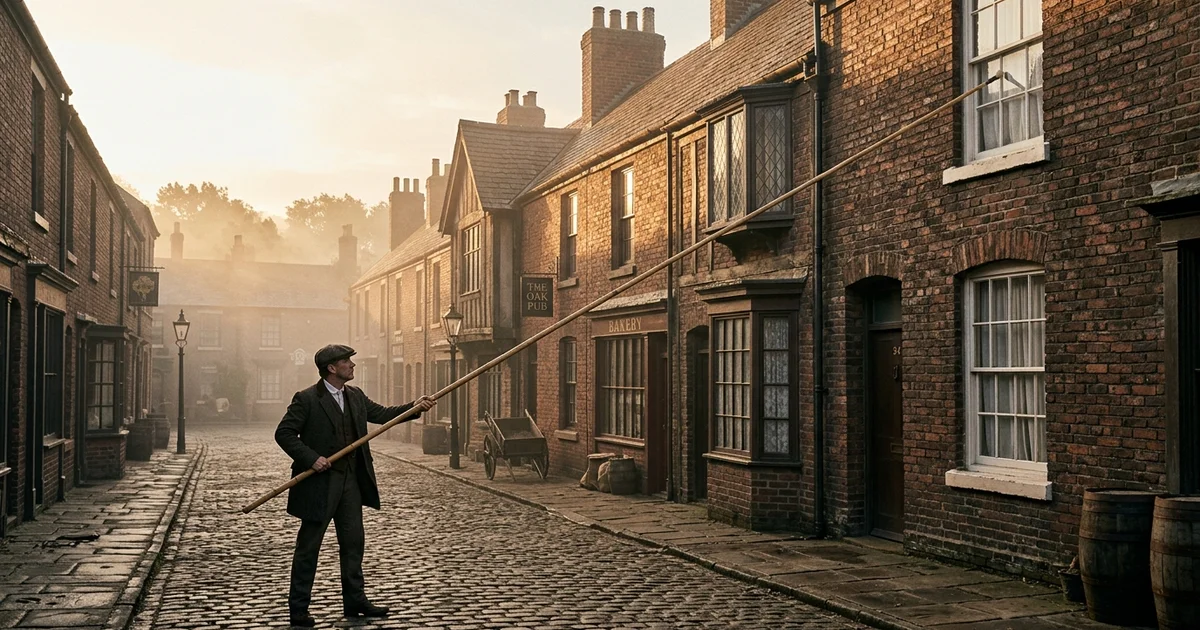
Look, I was genuinely shocked to learn how some of our ancestors actually made a living. Before modern technology took over our daily routines, people had to fill in the gaps with their own bare hands. This led to a fascinating array of bizarre historical jobs that seem entirely fictional to us today.
I recently fell down a rabbit hole on BBC History, and the bizarre ways people earned a paycheck completely blew my expectations out of the water.
You might think your current nine-to-five is repetitive or slightly unusual, but trust me, it is nothing compared to what people did in the past. We often talk about the engineering marvels experts still can’t replicate, but we rarely discuss the average folks keeping society running.
From human alarm clocks to professional hermits, these bizarre historical jobs prove that human ingenuity has always been endlessly creative.
Why did people actually work these bizarre historical jobs?
People worked these bizarre historical jobs primarily out of sheer necessity before automation existed. Society required manual labor to manage time, handle sanitation, and communicate information. Without modern electricity, plumbing, or computers, human workers had to perform highly specific, repetitive tasks to keep daily life functioning smoothly.
📋 Table of Contents
Exploring Forgotten Careers
Diving into the past reveals an extraordinary look at how everyday society functioned. Before microchips and mechanical engines, raw human effort was the only solution to daily problems. Searching through records of bizarre historical jobs gives us a truly unfiltered look at what mattered most to our ancestors.
Below, I have compiled ten of the absolute strangest occupations that were once completely normal.
| # | Name | Key Fact |
|---|---|---|
| 1 | Knocker-Upper | Used long poles to tap on windows and wake clients. |
| 2 | Ornamental Hermit | Lived in wealthy gardens to provide a rustic aesthetic. |
| 3 | Cigar Lector | Read novels aloud to entertain factory workers. |
| 4 | Ice Cutter | Harvested giant blocks of ice from frozen lakes. |
| 5 | Human Computer | Performed complex mathematical equations by hand. |
| 6 | Herb Strewer | Spread sweet herbs on castle floors to mask odors. |
| 7 | Pinsetter | Manually cleared and reset bowling pins. |
| 8 | Link-Boy | Carried a flaming torch to light the way home. |
| 9 | Phrenologist | Felt skull bumps to allegedly predict personalities. |
| 10 | Town Crier | Yelled the daily news out loud in public squares. |
1. The Knocker-Upper
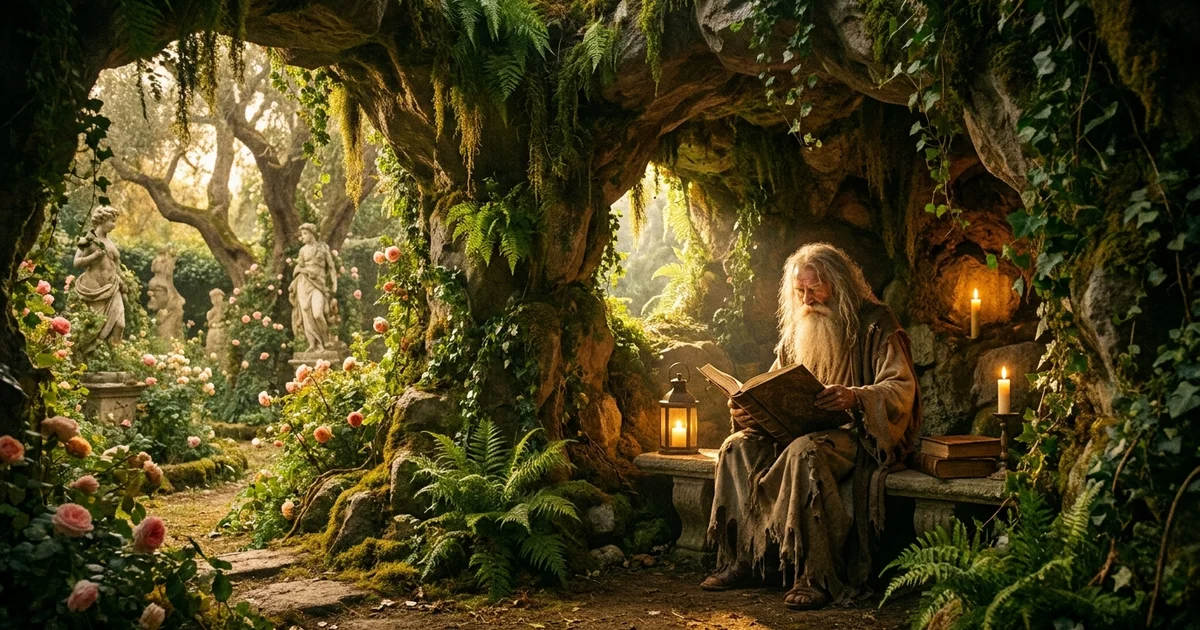
In the 18th century, wealthy landowners in England developed a very strange obsession with rustic garden aesthetics. They built elaborate, moody grottos and caves on their massive country estates. But a cave wasn’t enough; they needed an authentic hermit to live inside it.
Rich aristocrats would place classified ads looking for men willing to live in their garden caves for years at a time. The rules were extraordinarily strict. These men were forbidden from cutting their hair, clipping their nails, or speaking to any of the estate’s guests.
The entire point was to provide a walking, breathing piece of melancholy artwork for the landowner’s friends to admire during evening walks. Among all the bizarre historical jobs out there, getting paid simply to exist in a cave is easily the most eccentric. It was the ultimate status symbol of the era.
It honestly blows my mind that being aggressively antisocial was once a highly paid career path. I know several modern introverts who would absolutely love to live in a wealthy person’s garden and be legally forbidden from making small talk. It is fascinating how luxury trends evolve.
3. The Cigar Factory Lector
Before electric refrigeration became a household standard, people still desperately wanted to keep their food fresh and their drinks cold. The solution was the booming ice trade of the 19th century. Teams of rugged men known as Ice Cutters worked freezing winter shifts on natural lakes.
These workers used massive, horse-drawn saws to score thick ice on ponds and rivers. They then used heavy hand saws to carve out massive rectangular blocks. These blocks were hauled into insulated icehouses, where sawdust kept them surprisingly frozen well into the hot summer months.
It was incredibly difficult labor, requiring immense physical strength and a tolerance for freezing temperatures. This ranks highly among bizarre historical jobs simply because an entire global industry vanished overnight once mechanical fridges were invented. Today, it seems like unimaginable effort just for a cold glass of water.
When you realize how much sheer muscle went into delivering a single block of ice to a residential icebox, you never look at your refrigerator’s automatic dispenser the same way again. It makes me incredibly grateful for modern home appliances.
5. The Human Computer
If you traveled back in time to visit a grand royal palace, the first thing you would notice is the smell. Without modern plumbing and hygiene, medieval and Tudor castles could smell incredibly foul. To combat this, the royal court employed a dedicated Herb Strewer.
This person was responsible for gathering fresh, strong-smelling herbs like lavender, basil, mint, and chamomile. They would scatter these fragrant plants all across the stone floors of the palace. When the king, queen, and nobles walked over the herbs, it released a sweet-smelling oil into the air.
The role actually became a highly prestigious royal appointment in England. Out of all the bizarre historical jobs, this one highlights just how different daily life was without modern sanitation. It was an elegant, aromatic solution to a very unpleasant medieval problem.
The fact that masking terrible odors was an official royal career path is just hilarious to me. It is essentially like being a walking, breathing air freshener for the monarchy. I cannot help but smile at how practical yet theatrical this job really was.
7. The Bowling Alley Pinsetter
Navigating city streets at night before the invention of gas lamps was incredibly daunting. Cities like London were completely pitch-black, full of uneven cobblestones, deep puddles, and opportunistic thieves. If you were out late, you hired a Link-Boy to safely guide you home.
A Link-Boy carried a burning torch, usually made from pitch and tow, to illuminate the dark alleyways for wealthy pedestrians. You would spot them waiting outside theaters, taverns, and wealthy estates. They charged a small fee to walk a few paces ahead of you with their light.
Much like the genius secret communication systems used by merchants, Link-Boys had their own street-smart networks. They knew every shortcut and safe path through the maze of the city. As bizarre historical jobs go, this was an essential service for urban survival.
It is incredible to think that before smartphone flashlights and streetlights, your only way home was paying a stranger with a flaming stick to walk ahead of you. It paints a remarkably vivid, cinematic picture of what nightlife used to feel like.
9. The Phrenologist
Before mass-printed newspapers, radio, or television, the general public needed a reliable way to hear local news. The official Town Crier was tasked with standing in the busiest public squares to shout out the latest announcements. They were the primary source of information for illiterate citizens.
Dressed in highly visible, elaborate uniforms, they would ring a loud handbell to grab the crowd’s attention. They always started with the famous phrase “Oyez, Oyez, Oyez!” which translates to “Hear ye.” They announced everything from new tax laws to local market days.
Harming a Town Crier was strictly illegal, as they were considered the physical voice of the reigning monarch. Among all the bizarre historical jobs, the Town Crier is one of the few that survives today purely for ceremonial and tourist purposes. It was an incredibly demanding job for the vocal cords.
Look, the Town Crier was basically the human equivalent of a smartphone push notification. It is absolutely fascinating how society has always craved breaking news, just delivered in vastly different formats. It shows that human curiosity has never truly changed.
Final Thoughts
Looking back at these wild professions gives us a newfound appreciation for the modern world we live in today. As much as we complain about our daily grinds, at least we aren’t dodging flying wooden pins or standing in freezing water to harvest ice blocks.
Much like the weird ways animals adapt, as seen in highly intelligent animal behaviors, humans have always adapted to their environments. The sheer variety of bizarre historical jobs perfectly highlights the resourcefulness and bizarre creativity of our ancestors.

Written by the List of Ten Team
We verify every fact using peer-reviewed sources.
Frequently Asked Questions
Did ornamental hermits actually have to live outside full-time?
Yes, many contracts legally bound ornamental hermits to remain on the estate grounds for up to seven years at a time. If they left the property or cut their hair, they risked losing their entire promised payment.
Why did the knocker-upper profession eventually die out?
The role of the knocker-upper gradually vanished as affordable, mass-produced mechanical alarm clocks became widely available to the working class. By the 1930s and 1940s, it was cheaper to buy a clock than pay a weekly fee to a human.
Are there any town criers left in the world today?
Yes, but purely for ceremonial and tourist reasons! Many historic towns in the UK, Canada, and Australia still employ a ceremonial town crier to maintain local tradition and open major civic events.