
Look, I was genuinely shocked to learn that some of the weirdest photos on the internet are actually 100% unedited. If there is one thing I have learned from exploring the outdoors, it is that surreal natural phenomena rarely need a Hollywood budget to look completely impossible.
Nature has a funny way of bending light, water, and ice into visual glitches that break our brains.
I used to assume every bizarre nature photo was just heavy Photoshop work. But once you start looking into these bizarre things hidden in nature, you realize the earth is far stranger than any computer graphics.
Let’s look at the absolute craziest examples of these surreal natural phenomena that will make you question your own eyesight.
What exactly causes these surreal natural phenomena?
Most surreal natural phenomena are caused by rare combinations of atmospheric pressure, temperature inversions, and light refraction. When specific weather conditions align perfectly, water droplets or ice crystals scatter light in unusual ways, creating bizarre optical illusions and highly unusual visual displays.
📋 Table of Contents
The Ultimate Visual Glitches in Nature
Before we look at the list, here is a quick overview of the surreal natural phenomena we are about to explore. You might actually recognize a few of these from viral social media posts.
| # | Name | Key Fact |
|---|---|---|
| 1 | Lenticular Clouds | Look exactly like flying saucers |
| 2 | Salar de Uyuni | Creates a boundless mirror effect |
| 3 | Light Pillars | Vertical lasers made of ice crystals |
| 4 | Bioluminescence | Ocean water that glows neon blue |
| 5 | Mammatus Clouds | Clouds shaped like hanging pouches |
| 6 | Undulatus Asperitas | Sky looks like a rough, upside-down sea |
| 7 | Sun Dogs | Creates the illusion of three suns |
| 8 | Penitentes | Jagged, repeating ice spikes |
| 9 | Catatumbo Lightning | A storm that almost never stops |
| 10 | Morning Glory | A singular, endless rolling tube cloud |
1. Lenticular Clouds
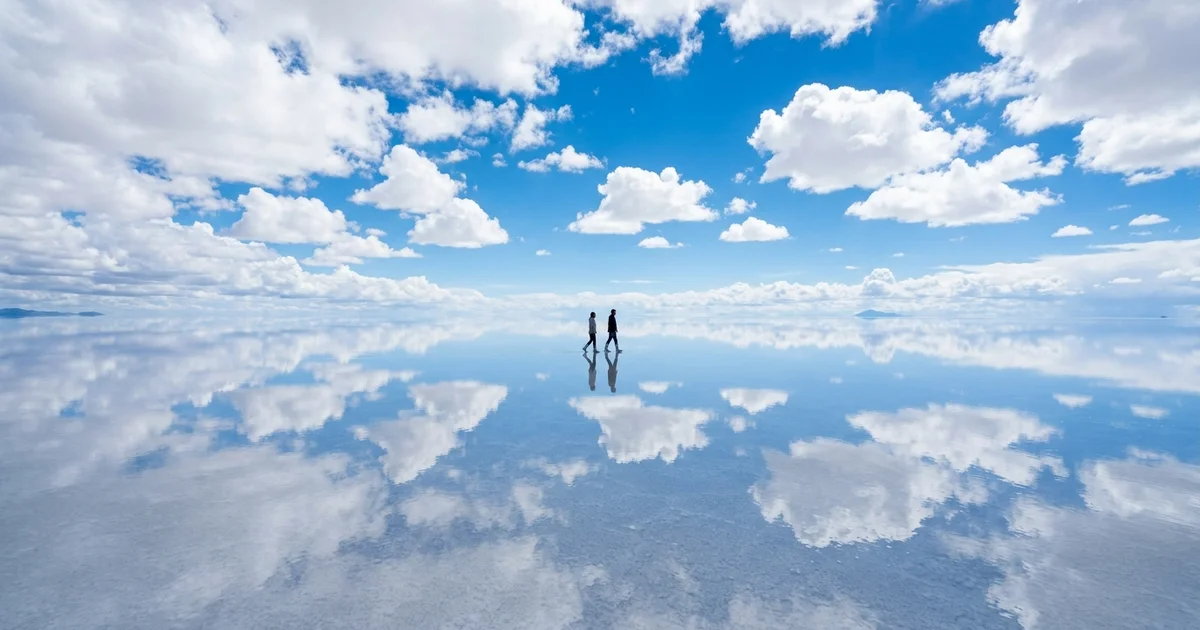
Located in the Andes mountains of Bolivia, the Salar de Uyuni is the world’s largest salt flat. During the dry season, it is a vast expanse of cracked, hexagonal salt tiles.
But during the rainy season, a thin layer of perfectly still water covers the miles of flat ground. This shallow water transforms the area into one of the most breathtaking surreal natural phenomena on Earth.
According to the NASA Earth Observatory, this creates a flawless mirror that perfectly reflects the sky above. I think the wildest part is the complete loss of depth perception when you stand out there.
Because there is no visible horizon line, it genuinely looks like you are floating suspended in the middle of the sky. The lack of reference points makes it look like a glitched-out video game boundary.
3. Light Pillars
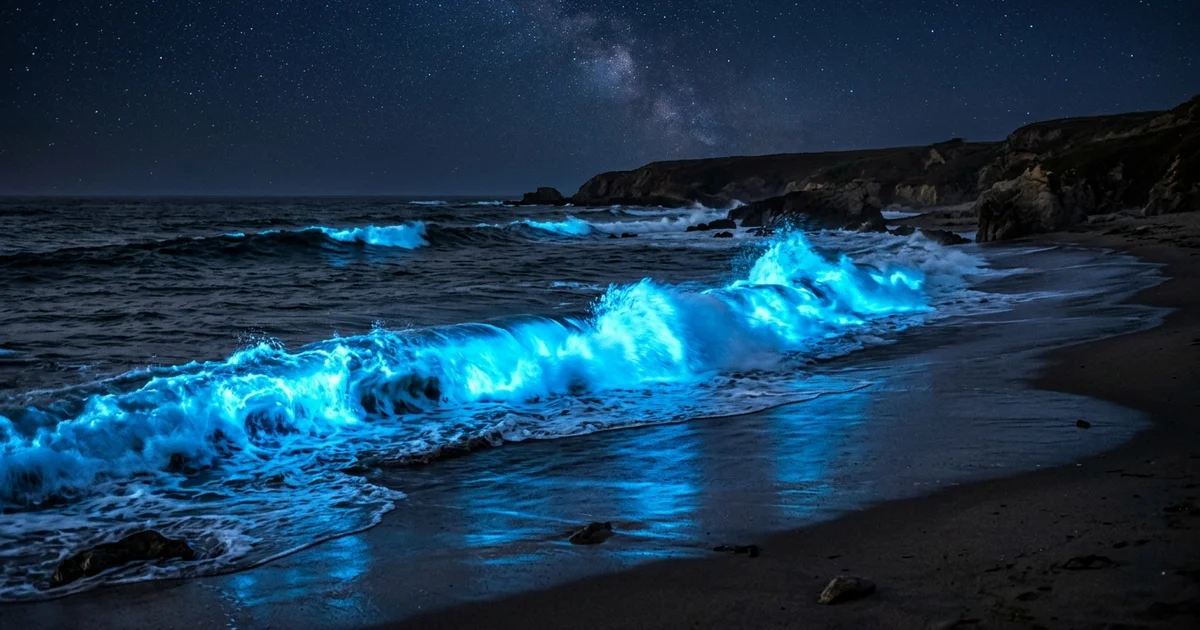
Watching ocean waves crash onto a dark beach in a brilliant shade of neon blue is an unforgettable experience. This glowing water is caused by millions of microscopic plankton called dinoflagellates.
When these tiny organisms are physically disturbed by crashing waves or a passing boat, they emit a flash of blue light. Finding surreal natural phenomena like this feels like stepping straight into a fantasy movie.
The National Geographic society explains that this glow is actually a defense mechanism meant to startle predators. Personally, I think the best part is splashing the water with your hands and watching the neon sparks fly off your fingers.
It completely ruins your sense of reality when the dark ocean suddenly looks like a glowing radioactive spill. It is entirely safe to swim in, but it looks like terrible special effects from a sci-fi film.
5. Mammatus Clouds
If you have ever wanted to know what it feels like to walk on the bottom of the ocean and look up at the waves, just wait for an asperitas cloud to roll in. This cloud formation is intensely chaotic and undulating.
It looks exactly like a rough, turbulent sea that has been flipped upside down. It is a relatively new discovery, finally getting its own official classification in 2017 and adding to our list of surreal natural phenomena.
What I find most fascinating is the sheer terror it inspires. The sky looks so violently stormy and chaotic, yet these clouds usually dissipate without dropping a single drop of rain.
It looks like a poorly rendered 3D skybox in a video game where the texture mapping got warped. The rippling waves are caused by varying wind speeds colliding at different altitudes.
7. Sun Dogs
High in the dry Andes mountains, you can find massive fields of jagged, blade-like snow formations pointing directly at the sun. These are called penitentes, and they are some of the strangest surreal natural phenomena you can find.
They can grow anywhere from a few inches to over 15 feet tall. Because the air is so incredibly dry at high altitudes, the snow does not melt into water when the sun hits it.
Instead, it turns directly into water vapor, a process called sublimation. I think they look exactly like a copy-pasted trap hazard from an old adventure video game.
The resulting landscape is a bizarre forest of frozen daggers that is nearly impossible to hike through. The repeating, identical shapes make the entire environment look completely manufactured.
9. Catatumbo Lightning
The Morning Glory cloud is a solitary, massive roll cloud that can stretch for over 600 miles long. It moves across the sky like a giant rolling pin at speeds up to 37 miles per hour.
They occur somewhat predictably in the Gulf of Carpentaria in Northern Australia during the spring months. The massive tube of vapor is formed by colliding sea breezes creating a rolling wave of air.
I find the sheer scale of this single cloud totally mind-numbing. When you look at it from the ground, it looks like a solid white pipeline dividing the entire atmosphere in half.
Hang glider pilots actually travel to Australia just to “surf” the massive updraft created by the leading edge of this cloud. It is a visual spectacle that proves reality is stranger than fiction.
Final Thoughts
It is genuinely comforting to know that we still live in a world capable of surprising us. You do not need to travel to another planet to find things that look like computer glitches.
Whether you are checking out bizarre historical occupations or chasing after surreal natural phenomena, the truth is always weirder than you think. Get outside, look up at the sky, and you might just catch an optical illusion of your own.

Written by the List of Ten Team
We verify every fact using peer-reviewed sources.
Frequently Asked Questions
Where is the best place to see surreal natural phenomena?
The best locations depend entirely on what you want to see. For atmospheric optical illusions like sun dogs and light pillars, extreme cold climates in Canada or Scandinavia are ideal. For experiencing surreal natural phenomena like bioluminescent shores, coastal regions in California, Puerto Rico, or the Maldives are incredibly reliable.
Are these surreal natural phenomena dangerous?
Most are completely harmless optical illusions, like the Salar de Uyuni mirror or light pillars. However, some weather-related surreal natural phenomena, such as mammatus clouds and lenticular clouds, indicate severe turbulence or incoming violent storms and should be respected from a safe distance.
Can I predict when these events will happen?
A few of them, like the Catatumbo lightning or the Morning Glory clouds, happen very predictably during certain times of the year. Others, like asperitas clouds or light pillars, require spontaneous, highly specific atmospheric conditions that are incredibly difficult for meteorologists to forecast.