
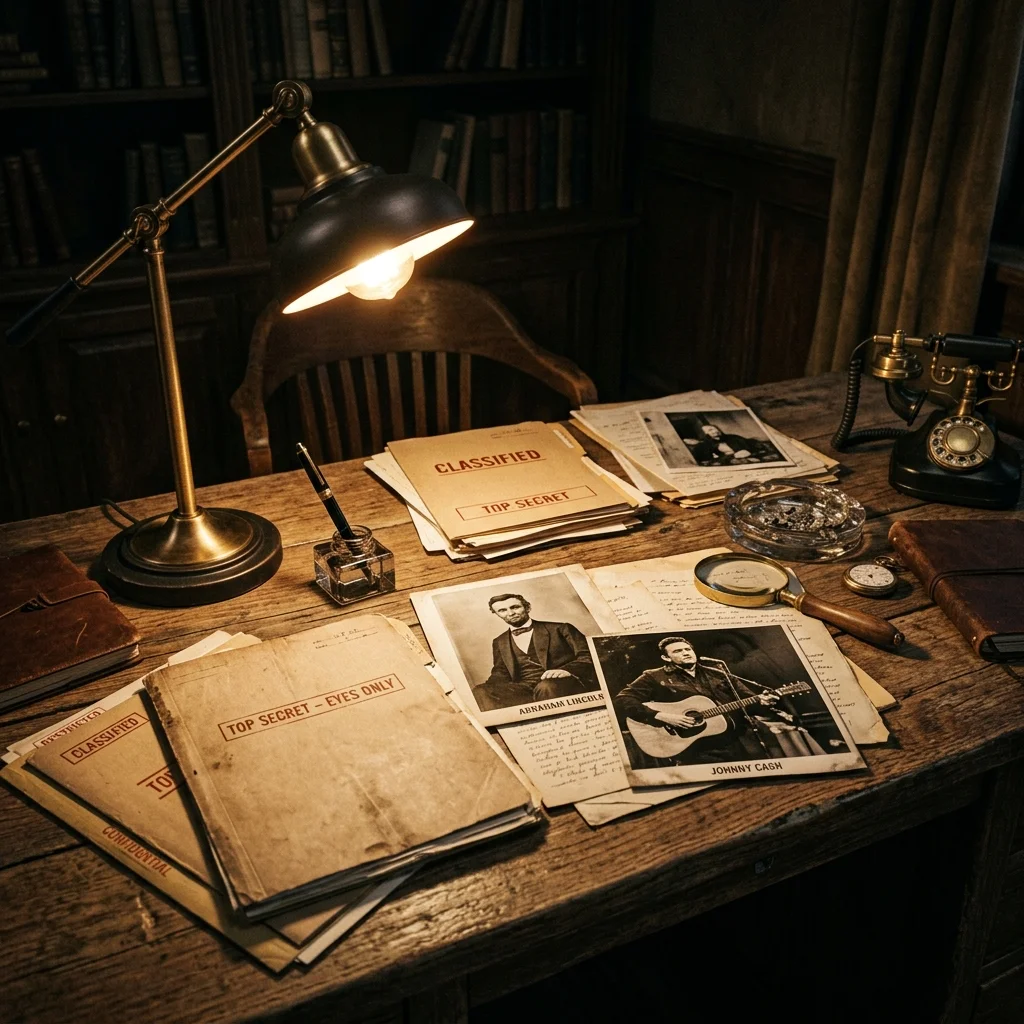
When we look back at the icons who shaped our world, we tend to reduce their entire lives to a single, easily digestible paragraph. I was genuinely shocked to discover just how much of our global narrative glosses over the absolute wildest chapters of human existence.
From legendary musicians acting as military spies to beloved children’s authors running covert seduction rings for intelligence agencies, the unknown stories of famous people are often infinitely more fascinating than the sanitized versions we are taught in school.
It turns out that human beings are brilliantly complex, and the public faces we see in textbooks are usually just the tip of a very bizarre iceberg. frequently highlights how deeply curated historical archives can be, filtering out the messy, extraordinary truths of our past.
What fascinated me most while researching this topic is how these secret lives fundamentally altered the course of history without anyone realizing it at the time. Did you know that the wireless technology you are using to read this very article was invented by a 1940s Hollywood screen siren during her downtime?
Or that one of America’s most beloved presidents was essentially a pioneer of professional wrestling? Much like the mysterious ancient artifacts that baffle modern archaeologists, the hidden lives of these historical heavyweights prove that truth is always stranger than fiction. Let’s dive into ten remarkable tales that history class definitely skipped.
What Are the Most Fascinating Unknown Stories of Famous People?
The most fascinating unknown stories of famous people include Abraham Lincoln’s 12-year career as a champion frontier wrestler, Johnny Cash serving as a top-secret military radio interceptor who first decoded news of Joseph Stalin’s death, and Hollywood actress Hedy Lamarr inventing the frequency-hopping technology that eventually became the foundation for modern Wi-Fi and Bluetooth.
📋 Table of Contents
- A Closer Look at Historical Secrets
- 1. Abraham Lincoln — The Wrestling Champion
- 2. Johnny Cash — The Soviet Codebreaker
- 3. Hedy Lamarr — The Inventor of Wi-Fi
- 4. Roald Dahl — The Suave MI6 Spy
- 5. Fidel Castro — The Extreme Dairy Obsession
- 6. Harriet Tubman — The Master Military Commander
- 7. Charlie Chaplin — Lost His Own Look-Alike Contest
- 8. Theodore Roosevelt — The Bloody 90-Minute Speech
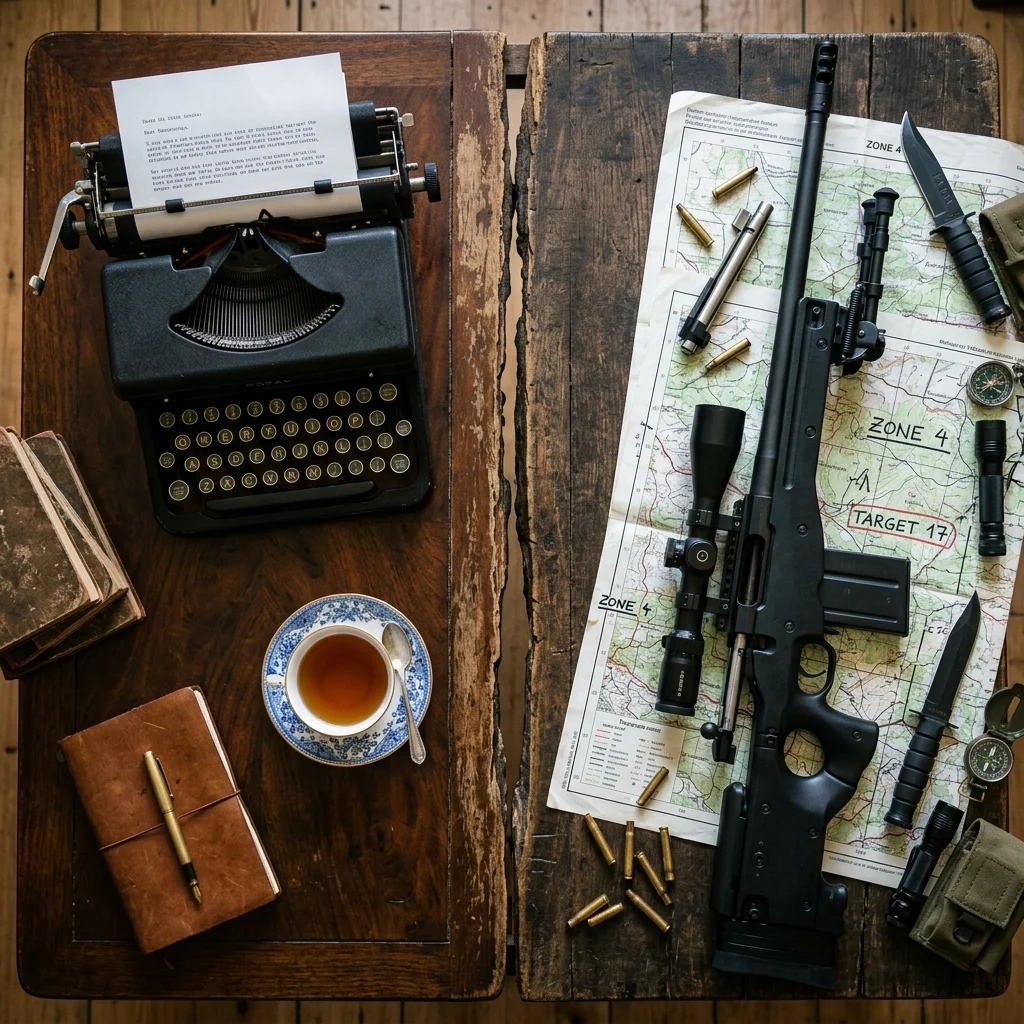
- 9. Dr. Ruth Westheimer — The Elite Combat Sniper
- 10. Julius Caesar — The Pirate Kidnapping
- FAQ
A Closer Look at the Unknown Stories of Famous People
Before we break down the specifics of each extraordinary life, it is incredibly helpful to see just how vastly these hidden talents differ from the public personas we all recognize. It is remarkable how a person’s secondary pursuit—whether out of necessity, patriotism, or sheer boredom—can sometimes eclipse their primary legacy in sheer strangeness.
Here is a quick snapshot of the ten icons we are investigating, highlighting the bizarre contrast between what they are known for and what they secretly did.
| # | Name | Key Fact | Location/Category |
|---|---|---|---|
| 1 | Abraham Lincoln | Won 300 wrestling matches | United States / Politics |
| 2 | Johnny Cash | Decoded Soviet military secrets | United States / Music |
| 3 | Hedy Lamarr | Invented frequency-hopping tech | Austria / Entertainment |
| 4 | Roald Dahl | Served as a covert British spy | United Kingdom / Literature |
| 5 | Fidel Castro | Bred a legendary super-cow | Cuba / Politics |
| 6 | Harriet Tubman | Led a major military assault | United States / Civil Rights |
| 7 | Charlie Chaplin | Failed as his own impersonator | United Kingdom / Cinema |
| 8 | Theodore Roosevelt | Gave speech with a bullet in him | United States / Politics |
| 9 | Dr. Ruth Westheimer | Trained as a lethal military sniper | Germany-Israel / Psychology |
| 10 | Julius Caesar | Befriended and executed pirates | Rome / History |
1. Abraham Lincoln — The Undefeated Wrestling Champion
When I first started digging into the lives of American presidents, I expected to find tales of political intrigue, late-night debates, and perhaps some obscure legal battles.
What fascinated me most, however, was discovering that long before he wore his iconic top hat or delivered the Gettysburg Address, Abraham Lincoln was a legitimate, highly successful competitive grappler. Yes, the sixteenth president of the United States was basically a nineteenth-century superstar of the ring.
Standing at a towering six-foot-four with incredibly long limbs, young Lincoln was an absolute physical powerhouse in his hometown of New Salem, Illinois. He dominated the local athletic scene, using his massive reach and raw farm-boy strength to toss grown men around like ragdolls in dusty frontier rings.
The counter-intuitive angle here is that his wrestling prowess directly fueled his political career. In the brutal world of 1830s frontier politics, intellectual debates did not win over voters—raw toughness did. His most famous match was against a feared local bully named Jack Armstrong, leader of a gang called the Clary’s Grove Boys.
Lincoln didn’t just beat Armstrong; he supposedly picked the man up by the neck and violently shook him like a weed. This stunning display of dominance instantly won him the respect of the entire county, securing him the local votes he needed to launch his first political campaign.
It is incredible to think that the man who held a fractured nation together through its darkest war started his leadership journey by physically throwing people onto the dirt.
2. Johnny Cash — The Soviet Military Codebreaker
There are countless unknown stories of famous people, but the image of the Man in Black sitting in a highly classified military bunker decoding Soviet intelligence is undeniably one of the most jarring. Most of us know Johnny Cash as the rebellious country music outlaw who sang about prisons and heartache. R.
Cash enlisted in the United States Air Force in 1950. He was stationed in Landsberg, West Germany, right at the bleeding edge of the Cold War. Cash possessed an extraordinary, almost superhuman aptitude for interpreting Morse code, allowing him to decipher complex Soviet transmissions with terrifying speed and accuracy.
What makes this historical footnote truly remarkable is the massive global event Cash was secretly a part of. On March 5, 1953, Cash was manning his intercept station when he caught a highly classified Soviet transmission crackling over the airwaves.
As he rapidly decoded the rhythmic dots and dashes, he realized the magnitude of the message: Soviet Premier Joseph Stalin had died.
Because of his exceptional ear for rhythm and code, Johnny Cash was officially the very first Westerner on the planet to know about the death of one of the 20th century’s most infamous dictators.
Music historians later speculated that the relentless, chugging “boom-chicka-boom” rhythm that defined Cash’s entire musical career was deeply influenced by the constant, rhythmic clicking of the Morse code machines he monitored for years.
3. Hedy Lamarr — The Secret Inventor of Modern Wi-Fi
” She starred alongside icons like Clark Gable and Spencer Tracy. However, what fascinated me most is that behind the glamorous Hollywood facade, Lamarr possessed an incredibly brilliant mathematical mind that would ultimately change the course of global technology.
During World War II, she learned that Allied radio-controlled torpedoes were frequently being jammed by German forces, causing them to miss their targets. Unwilling to sit on the sidelines, Lamarr set up a drafting table in her home and began designing a complex solution to bypass Axis interference.
” They realized that if a radio transmitter and receiver jumped between different frequencies simultaneously, in a synchronized pattern similar to the perforated rolls of a player piano, the signal would be virtually impossible to intercept or jam. S.
Navy, but the military tragically dismissed the idea, telling Lamarr she would be better off selling war bonds using her pretty face. It wasn’t until decades later, during the Cuban Missile Crisis, that the military finally adopted her frequency-hopping concept.
Today, Lamarr’s brilliant wartime invention serves as the foundational technology for GPS, Bluetooth, and the Wi-Fi connections that power the modern world.
4. Roald Dahl — The Covert MI6 Seduction Spy
When searching for the unknown stories of famous people, uncovering the secret life of a beloved children’s author is always a startling experience. Roald Dahl is globally celebrated for creating whimsical, slightly dark masterpieces like *Matilda*, *Charlie and the Chocolate Factory*, and *The BFG*.
Yet, long before he was writing about magical chocolate rivers and giant peaches, Dahl was a dashing, highly lethal operative working for British Intelligence during World War II. C.
His mission was straight out of a James Bond novel—which makes perfect sense, considering he worked closely alongside Ian Fleming, the actual creator of James Bond. Dahl’s primary objective in America was to gather sensitive political intelligence and heavily influence American public opinion to support the British war effort. How did he achieve this?
By acting as a sophisticated honeypot. The incredibly charming, six-foot-six British officer famously seduced his way through high-society Washington, targeting powerful American heiresses, congresswomen, and influential journalists. “
5. Fidel Castro — The Extreme Dairy Obsession
Most historical accounts paint Cuban dictator Fidel Castro as a stern, unyielding communist revolutionary who brought the world to the brink of nuclear war. What they entirely fail to mention is his deeply bizarre, lifelong obsession with dairy products, specifically ice cream and cow’s milk.
I found this completely astonishing, as it reveals a quirky, almost comical vulnerability in an otherwise hardened political figure. Castro loved ice cream so intensely that he once ordered his ambassador in Canada to ship him 28 massive containers of Howard Johnson’s ice cream.
Unhappy with relying on foreign imports, Castro declared a national mission to make Cuba the ice cream capital of the world, resulting in the construction of Coppelia, a colossal, UFO-shaped ice cream parlor in Havana that served 30,000 people a day.
But Castro’s obsession didn’t stop at ice cream parlors; it extended deeply into mad-scientist agricultural genetics. Because traditional dairy cows struggled to survive in Cuba’s blistering tropical heat, Castro spearheaded a massive genetic breeding program to create a communist super-cow. The crown jewel of this bizarre initiative was a cow named Ubre Blanca (White Udder).
Castro treated this cow like absolute royalty, providing her with an air-conditioned stable, classical music, and around-the-clock military armed guards. He frequently interrupted high-level state meetings to boast to foreign diplomats about Ubre Blanca’s milk yields, proving that his fixation had fundamentally transcended into political propaganda.
6. Harriet Tubman — The Master Military Commander
Harriet Tubman is universally revered for her profound heroism as a “conductor” on the Underground Railroad, bravely guiding approximately 70 enslaved people to freedom over the course of a decade. However, the textbooks often omit her subsequent evolution into an absolute military mastermind during the American Civil War.
What amazed me was discovering that Tubman didn’t just passively help the Union army; she aggressively commanded them. She built a highly sophisticated espionage ring out of formerly enslaved individuals who mapped out Confederate supply lines, troop movements, and the exact locations of submerged underwater torpedoes (mines) in South Carolina’s rivers.
On the night of June 1, 1863, Tubman utilized all her gathered intelligence to execute the legendary Combahee River Raid. Acting as the lead strategic advisor, she successfully guided three Union steamboats carrying 150 Black soldiers deep into heavily fortified Confederate territory.
Under her direct guidance, the troops dismantled the rebel supply chains, burned plantations to the ground, and triggered a mass exodus of the enslaved. As the boats sounded their whistles, hundreds of enslaved men, women, and children rushed to the riverbanks to be rescued.
In a single night of brilliant tactical command, Harriet Tubman liberated over 700 people, cementing her status as the first woman in American history to lead a major military assault.
7. Charlie Chaplin — Lost His Own Look-Alike Contest
Diving deeper into the unknown stories of famous people brings us to the comedic genius of the silent film era, Charlie Chaplin. By the year 1915, Chaplin was experiencing a level of global fame that was completely unprecedented in human history.
” Across America, theaters and civic groups hosted wildly popular “Charlie Chaplin Look-Alike Contests,” drawing thousands of amateur mimics eager to waddle and twirl their canes for cash prizes.
The story takes a wonderfully ironic turn when Chaplin himself decided to secretly enter one of these contests at a theater in San Francisco. Playing a prank on the judges, he performed his famous Tramp walk, completely confident he would easily sweep the competition.
Incredibly, the judges were utterly unimpressed by the real Charlie Chaplin’s performance. He didn’t win first place. He didn’t even make the top three. The actual creator of the character shockingly placed 20th in the competition.
The judges later noted that his walk wasn’t “exaggerated enough,” proving that public perception of a famous persona can easily become a distorted caricature of the real thing.
8. Theodore Roosevelt — The Bloody 90-Minute Campaign Speech
If you were to look up the definition of raw grit, you would likely find a picture of America’s 26th president, Theodore Roosevelt. While history remembers his conservation efforts and his “speak softly and carry a big stick” diplomacy, his actions on October 14, 1912, are the stuff of pure legend.
Roosevelt was campaigning in Milwaukee, Wisconsin, as a third-party candidate for the Bull Moose Party. 38 caliber revolver.
Most politicians would immediately rush to the hospital, but Roosevelt was built differently. As his aides wrestled the shooter to the ground, Roosevelt coughed into his hands. Noticing there was no blood in his saliva, he correctly deduced that the bullet had not pierced his lung.
The round had actually been severely slowed down by the thick, 50-page manuscript of his speech and a steel eyeglass case resting in his breast pocket. ” He then proceeded to deliver his blistering political speech for 90 consecutive minutes before finally allowing his team to take him to the hospital.
9. Dr. Ruth Westheimer — The Elite Combat Sniper
Among all the unknown stories of famous people, this one is arguably the most jarring contrast of character. For decades, the American public knew Dr. Ruth Westheimer as the incredibly sweet, diminutive, and cheerful German-American sex therapist who gave remarkably blunt advice on late-night television.
Standing at just four-foot-seven inches tall, she seemed like the quintessential, gentle grandmother figure. However, I was completely floored to learn that before her days in radio and television studios, a teenage Karola Siegel (her birth name) was a highly trained, elite sniper operating in the Middle East.
After losing her parents in the Holocaust, she made her way to British-controlled Mandatory Palestine. In the 1940s, she joined the Haganah, a Jewish paramilitary organization. Despite her tiny stature, military commanders quickly noticed her incredible hand-eye coordination and terrifying accuracy with a rifle.
She was rigorously trained as a scout and a sniper, learning how to assemble and disassemble complex Sten submachine guns while entirely blindfolded. Her combat career abruptly ended on her 20th birthday in 1948 when an artillery shell exploded in Jerusalem, sending shrapnel slicing through both of her legs.
Fortunately, she made a full recovery, eventually moving to America to conquer the world of psychology.
10. Julius Caesar — The Confident Pirate Kidnapping
We wrap up our historical deep dive with a story from antiquity that beautifully illustrates the sheer arrogance of Rome’s greatest military commander. In 75 BC, long before he crossed the Rubicon or declared himself dictator for life, a 25-year-old Julius Caesar was sailing across the Aegean Sea.
His vessel was suddenly intercepted by a ruthless band of Cilician pirates, who captured the young aristocrat and held him hostage on a remote island. The pirates demanded a ransom of 20 talents of silver for his release. Rather than cowering in fear, Caesar was deeply insulted.
He laughed in their faces, claiming they clearly didn’t know who they had captured, and aggressively demanded that they raise his own ransom to 50 talents of silver.
For the next 38 days, Caesar essentially treated his deadly captors like his own personal staff. He wrote poetry and forced the pirates to listen to his speeches, scolding them if they didn’t clap loud enough.
He joined in their games, ordered them to keep quiet when he wanted to sleep, and cheerfully promised that as soon as he was freed, he would return with a fleet and crucify every last one of them. The pirates thought it was a hilarious joke from an eccentric rich kid.
It was not a joke. As soon as the ransom was paid, Caesar immediately raised a private naval fleet in Miletus, hunted down the pirates’ island, recovered his silver, and executed them exactly as he had promised.
Final Thoughts on the Unknown Stories of Famous People
History is rarely as clean or straightforward as the textbooks make it out to be. Discovering these unknown stories of famous people genuinely reshaped how I view historical icons. It is a brilliant reminder that humans are wonderfully multidimensional.
A person can write heartwarming children’s books while conducting espionage, or analyze Morse code one day and define American country music the next. Just like the incredible real-life heists that seem too cinematic to be true, these secret lives prove that reality is deeply bizarre. Which of these hidden biographies shocked you the most?
Was it Lincoln’s wrestling matches or Dr. Ruth’s sniper training? Drop a comment below and let me know!

Written by the List of Ten Team
We research and verify every fact in our lists using peer-reviewed sources, official records, and expert interviews. Our goal: content that genuinely surprises and educates curious readers worldwide.
🕒 Last updated: 2026-05-15 — Facts verified and list reviewed for accuracy.
Frequently Asked Questions
Where can I find more unknown stories of famous people?
If you are captivated by the unknown stories of famous people, biographies that focus on their early lives are incredible resources. Institutions like the Smithsonian, the National Archives, and university historical journals frequently publish deeply researched articles highlighting the bizarre, forgotten, or intentionally suppressed chapters of influential historical figures’ lives.
Did Hedy Lamarr actually invent Wi-Fi by herself?
Hedy Lamarr co-invented the foundational technology for Wi-Fi, known as “frequency hopping,” alongside avant-garde composer George Antheil. While she did not invent the modern internet router, her specific method of preventing radio signal jamming is the exact technological basis that allows Bluetooth, GPS, and Wi-Fi networks to function securely today without overlapping.
Was Abraham Lincoln really a professional wrestler?
Yes! Long before his presidency, Abraham Lincoln was a highly competitive frontier catch-as-catch-can wrestler. Competing in Illinois during the 1830s, his massive reach and strength earned him an estimated record of 300 wins and only one defeat. His athletic dominance is officially recognized by the National Wrestling Hall of Fame.
How did Johnny Cash hear about Stalin’s death first?
Before his music career, Johnny Cash served in the United States Air Force as a high-level radio intercept operator in West Germany during the Cold War. Because he possessed an extraordinary aptitude for translating high-speed Morse code, he intercepted and decoded the encrypted Soviet transmission announcing Joseph Stalin’s death in 1953.
For more on this topic, visit National Geographic and Smithsonian Magazine.