
Look, I was genuinely shocked to learn that buildings do not have to be entirely static. We spend our lives walking into structures made of rigid concrete and solid steel, assuming they are permanently locked in place. But out there in the wild world of kinetic architecture, buildings are literally shifting, sliding, and breathing.
Think about it for a second. What if your entire living room could rotate to catch the afternoon sun, or a skyscraper’s outer skin could fold itself up to block a heatwave? I used to think these ideas belonged strictly in science fiction movies.
However, engineers and architects are currently bringing these jaw-dropping concepts into reality to solve very human problems.
These transforming structures are arguably as fascinating as the 10 Incredible Places That Defy The Laws Of Nature, blending brilliant engineering with artistic beauty. Today, I want to show you ten extraordinary structures that literally alter their physical shapes. Let’s look at the buildings that refuse to stand still.
What exactly is a transforming building?
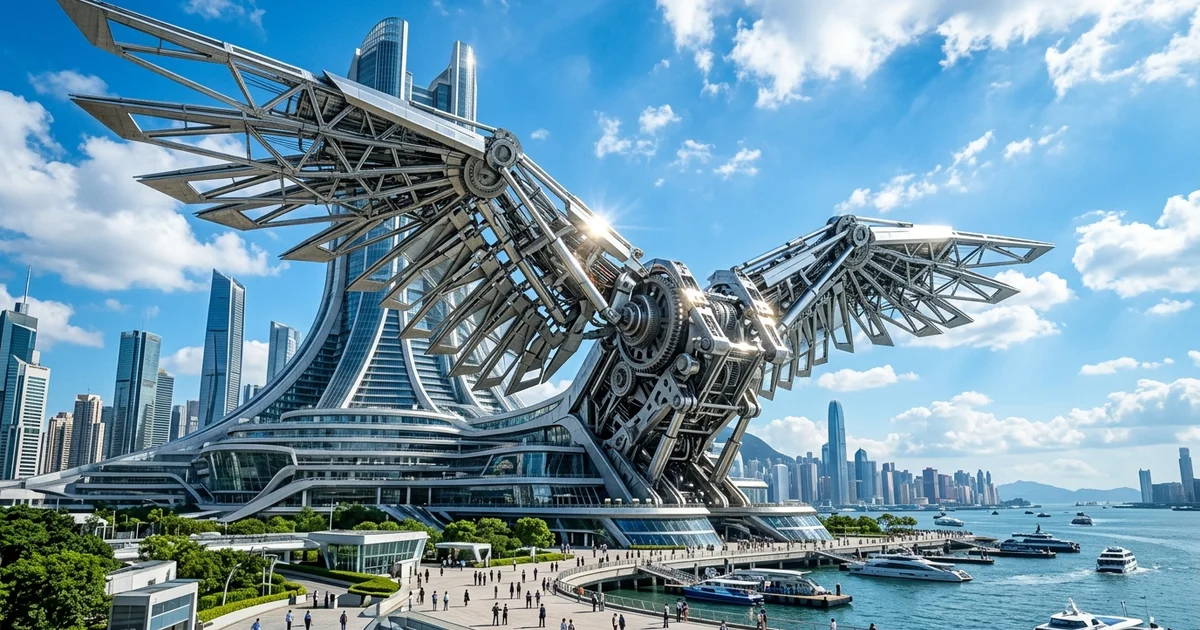
A transforming building utilizes a concept called kinetic architecture, where structural elements physically move to adapt to environmental changes or user needs. Instead of remaining static, these buildings use motors, tracks, or hydraulics to fold, slide, or rotate massive components on demand.
📋 Table of Contents
- Overview
- 1. The Shed (New York City, USA)
- 2. Sharifi-ha House (Tehran, Iran)
- 3. Al Bahr Towers (Abu Dhabi, UAE)
- 4. Kiefer Technic Showroom (Bad Gleichenberg, Austria)
- 5. The Quadracci Pavilion (Milwaukee, USA)
- 6. Bund Finance Center (Shanghai, China)
- 7. Suite Vollard (Curitiba, Brazil)
- 8. The Sliding House (Suffolk, UK)
- 9. Mercedes-Benz Stadium (Atlanta, USA)
- 10. Qizhong Forest Sports City Arena (Shanghai, China)
- FAQ
The Shifting Landscape of Smart Structures
The evolution of kinetic architecture is changing how we interact with our environment. Historically, if a room was too hot, we simply cranked up the air conditioning. Now, we can literally alter the geometry of the building itself.
I find it utterly fascinating that modern designers are returning to nature for inspiration. They watch how a flower tracks the sun or how an insect folds its wings, and they apply those exact mechanical principles to multi-ton skyscrapers. It is a brilliant blend of biology and heavy industrial engineering.
You can even read about the broader impacts of structural engineering and urban design in high-level publications like National Geographic. By allowing buildings to adapt to their surroundings, we are drastically cutting down energy costs and creating healthier spaces. Here are the ten most breathtaking examples of moving buildings on the planet.
| # | Name | Key Fact |
|---|---|---|
| 1 | The Shed | Features an 8-million-pound shell on wheels. |
| 2 | Sharifi-ha House | Motorized rooms turn outward or inward. |
| 3 | Al Bahr Towers | Origami-style sunshades open with the sun. |
| 4 | Kiefer Showroom | 112 folding metal tiles adjust to weather. |
| 5 | Quadracci Pavilion | Massive 217-foot steel wings open and close. |
| 6 | Bund Finance Center | Moving bronze tubes resemble bamboo. |
| 7 | Suite Vollard | Apartment floors rotate 360 degrees. |
| 8 | The Sliding House | A 20-ton timber shell rolls over glass. |
| 9 | Mercedes-Benz Stadium | Roof petals slide open like a camera. |
| 10 | Qizhong Arena | Steel roof blooms like a massive magnolia. |
1. The Shed (New York City, USA)
If you have ever visited Hudson Yards in Manhattan, you might have noticed a massive, quilted-looking structure that seems slightly out of place. This cultural center is a masterclass in kinetic architecture, completely redefining how public spaces operate. The building actually features an eight-million-pound outer shell that rolls on massive steel railway wheels.
When the venue needs to host a massive indoor concert, high-capacity motors push the enormous steel frame outward, instantly doubling the indoor footprint. Once the event is over, the building quietly retracts back into its base to free up the outdoor plaza.
From a structural standpoint, I always assumed heavy steel was strictly static, but seeing The Shed move completely changed my understanding of weight distribution. It operates just like a giant, futuristic telescoping garage door. The sheer power required to push millions of pounds of steel flawlessly across a plaza is an incredible engineering feat.
2. Sharifi-ha House (Tehran, Iran)
Residential housing rarely sees this level of innovation, which makes the Sharifi-ha House so incredibly special. Located in Iran, this luxury home takes residential kinetic architecture to an entirely new level. It features three massive wooden-clad room blocks that physically pivot outward over the street.
During the freezing winter months, the rooms rotate inward to sit flush with the main structure, minimizing heat loss and keeping the family warm. When the scorching summer arrives, a push of a button spins the rooms 90 degrees outward. This exposes massive glass windows and creates deep, shaded terraces for natural cooling.
Solving climate control with literal moving boxes is just plain genius to me. Instead of relying purely on heavy air conditioning units, the house adapts its actual skeleton to the season. It is a brilliant nod to ancient Iranian houses, which traditionally featured specific summer and winter living rooms.
3. Al Bahr Towers (Abu Dhabi, UAE)
The Middle East is known for extreme heat, which makes building highly-glazed glass skyscrapers a massive thermal challenge. The Al Bahr Towers solved this issue with an external automated shading system. This incredible display of sustainable kinetic architecture wraps the entire building in geometric umbrellas.
These massive triangular shades operate on sun-tracking software. As the sun moves across the sky throughout the harsh desert day, the panels individually fold and unfold like massive mechanical origami. This blocks the direct glare from hitting the glass, dropping the internal heat gain dramatically.
Fusing ancient cultural geometry with modern tech is my absolute favorite kind of design. The shades mimic the traditional Islamic ‘mashrabiya’ wooden lattice screens used for centuries to keep houses cool. Seeing hundreds of these mechanical flowers breathe with the sun is visually mesmerizing.
4. Kiefer Technic Showroom (Bad Gleichenberg, Austria)
At first glance, this Austrian medical technology showroom looks like a standard, modern office building. However, the outer skin of the building is entirely dynamic. It represents a highly localized approach to kinetic architecture, featuring 112 large metal tiles covering the glass facade.
These individual panels fold outward and collapse inward depending on the outdoor weather conditions. Inside, occupants can control the panels manually, or let the building’s weather-tracking system manage them. Throughout the day, the exterior of the building constantly ripples and shifts in a chaotic but beautiful dance.
I love how this structure looks like a digital audio equalizer brought into the real world. You never see the exact same building twice because its face is constantly rearranging itself. It totally shatters the idea that an office building needs to look identical from 9 to 5.
5. The Quadracci Pavilion (Milwaukee, USA)
Santiago Calatrava is an architect who designs buildings that look like skeletal creatures, and the Quadracci Pavilion is his moving masterpiece. Serving as an addition to the Milwaukee Art Museum, this building features an enormous wingspan. It is easily one of the most recognizable moving structures in North America.
The “wings” are formally known as the Burke Brise Soleil, consisting of 72 steel fins that span up to 217 feet. They gracefully open every morning to shade the massive glass atrium below. When the museum closes or wind speeds reach dangerous levels, the wings fold completely shut.
There is something incredibly poetic about a heavy steel building “waking up” in the morning alongside the city. It breathes life into the lakefront like a massive robotic bird taking flight. If you want a deep dive into incredible engineering, sites like BBC Science often cover how these mechanical giants are safely maintained.
6. Bund Finance Center (Shanghai, China)
Shanghai is packed with futuristic skyscrapers, but the Bund Finance Center features a cultural center that absolutely steals the show. The building is wrapped in three overlapping tracks of moving bronze tubes. This creates an ever-changing veil around the glass exhibition halls inside.
As the motorized tracks slowly spin around the perimeter, the overlapping bronze pipes create varying levels of transparency. The movement is deliberately slow and fluid, meant to mimic the delicate drape of a theater curtain. When all three layers align, they expose a massive balcony overlooking the river.
To my eye, it looks exactly like a golden harp playing itself in the middle of a massive city. The design was heavily inspired by traditional Chinese bamboo theaters, bridging deep historical roots with ultra-modern machinery. It is a stunning visual reminder that raw metal can look incredibly soft if manipulated correctly.
7. Suite Vollard (Curitiba, Brazil)
Rotating restaurants are fairly common, but entire rotating residential towers are incredibly rare. Suite Vollard in Brazil took the concept of luxury kinetic architecture to the extreme by offering spinning apartments. The tower features 11 identical circular apartment floors stacked on top of each other.
What makes this structure wild is that every single floor operates entirely independently of the others. The central concrete core houses the plumbing and stairs, meaning it stays locked in place. Meanwhile, the outer ring of the apartment can spin 360 degrees in either direction based on the owner’s voice commands.
Imagine waking up to a gorgeous sunrise, only to have your neighbor on the floor above spin their living room right over yours. The logistics of connecting plumbing and electricity to a room that never stops moving boggles my mind.
It reminds me of the complex engineering found in the 10 Incredible Underground Cities That Actually Exist.
8. The Sliding House (Suffolk, UK)
Sometimes the quirky side of kinetic architecture pops up in the middle of a quiet countryside. The Sliding House in England looks like a standard, traditional timber barn at first glance. However, the entire 20-ton wooden exterior of the house sits on hidden railway tracks.
Powered by hidden electric motors, the outer wooden shell literally drives completely off the main house. When it slides backward, it reveals a secondary house made entirely of glass hidden underneath. The owners can stop the moving shell at any point to create a covered courtyard or expose the glass to the sun.
It is genuinely the ultimate convertible home for indecisive weather. You essentially get three completely different architectural layouts for the price of one structure. I love the playful nature of putting a traditional barn on wheels just to hide a hyper-modern glass box inside.
9. Mercedes-Benz Stadium (Atlanta, USA)
Sports stadiums often feature retractable roofs, but usually, they just slide two massive, boring panels apart. The Mercedes-Benz Stadium completely revolutionized massive-scale moving structures. Its roof is composed of eight enormous triangular panels made of advanced polymer materials.
Instead of sliding sideways, the eight panels move simultaneously on linear tracks to create a stunning optical illusion. They slide diagonally, overlapping each other as they pull back. From the inside looking up, the roof appears to twist open exactly like a mechanical camera shutter.
The visual impact of this roof opening still messes with my head every time I see it. It turns a highly functional weather barrier into a theatrical performance for 70,000 fans. Executing a perfect spiral motion with millions of pounds of steel takes unbelievable precision.
10. Qizhong Forest Sports City Arena (Shanghai, China)
This massive tennis stadium in China boasts one of the most elegant moving roofs ever constructed. Designed specifically to host elite global tennis tournaments, the roof was styled after the magnolia, the official city flower of Shanghai. It features eight massive sliding steel petals.
When the weather is clear, the enormous steel petals slide outward and rest flat, completely opening the stadium to the sky. If rain threatens a match, the petals slide inward and slightly upward on a central pivot. As they lock together at the peak, it looks exactly like a giant flower blooming in reverse.
I find it amazing how architects managed to turn a brutalist concrete sports venue into something genuinely poetic. Watching the petals pivot and seal tightly against each other showcases incredible mechanical choreography. It proves that heavy infrastructure can still prioritize delicate, natural beauty.
Final Thoughts
The future of kinetic architecture is undeniably bright as we continue looking for ways to adapt to our changing climate. We are moving away from the era where concrete boxes dominated our skylines.
If you enjoy seeing the impossible become reality, you will likely love our piece on 10 Bizarre Weather Phenomena Most People Don’t Know About. Buildings that shift, twist, and breathe are no longer just concepts; they are the new standard for smart design.

Written by the List of Ten Team
We verify every fact using peer-reviewed sources.
Frequently Asked Questions
Is kinetic architecture safe for residents?
Yes, absolutely. Buildings featuring kinetic architecture undergo rigorous structural testing and use multiple redundant safety systems. The motors and tracks are over-engineered to withstand high winds, extreme weather, and mechanical failures without compromising the core safety of the building.
How expensive is it to maintain kinetic architecture?
Maintaining moving buildings is significantly more expensive than static ones. The hydraulic lifts, steel tracks, and heavy-duty motors require frequent lubrication, software updates, and engineering inspections to prevent massive structural jams.
What are the environmental benefits of kinetic architecture?
The main benefits of kinetic architecture involve natural climate control. By physically moving sunshades or rotating rooms away from direct sunlight, these buildings drastically reduce the amount of electricity needed for air conditioning and artificial heating.